 Nanjing Baigang Composite Materials Co., Ltd.
Nanjing Baigang Composite Materials Co., Ltd.
Nanjing Baigang Composite Materials Co., Ltd.
Nanjing Baigang Composite Materials Co., Ltd.
Nanjing Baigang Composite Materials Co., Ltd.
24-Hour Service Hotline
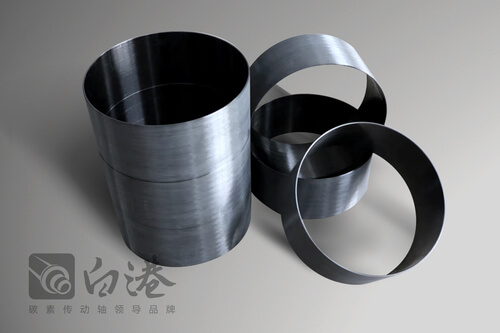
Nanjing Bai Gang Composite Materials Co., Ltd. introduces a carbon tube, a high-performance tubing material with carbon fiber reinforced resin composite as the core raw material. Using advanced fiber winding and rolling integrated molding technology, the carbon tube not only boasts excellent lightweight characteristics but also possesses superior mechanical properties, making it the ideal blank tube for key components such as carbon fiber drive shafts and carbon fiber guide rollers. At the same time, it can also be used directly as a lightweight structural cylinder, effectively replacing traditional steel and aluminum metal cylinders, bringing revolutionary lightweight solutions to industrial equipment.
Ultimate lightweighting:Compared to steel pipes of the same specification, carbon tubes reduce weight by 50%-60%, significantly lowering the moment of inertia, resulting in lower power loss under high-speed rotation conditions and improving equipment operation efficiency.
2. High strength and rigidity:The carbon tube features excellent torsional and bending rigidity, is less prone to bending deformation under the same outer diameter conditions, ensuring the stability and accuracy of equipment operation.
3. Fatigue and corrosion resistance:The material itself has excellent fatigue and corrosion resistance, and is not prone to rust and aging even when operating under damp, outdoor, or corrosive conditions for a long time, thereby extending the service life of the equipment.
Excellent damping performance:Carbon fiber composite materials have much better damping properties than steel, which can effectively absorb vibrations, suppress tremors generated by high-speed rotation, reduce equipment operation noise, and enhance the comfort of the working environment.
5. Customized production:Carbon tubes of any specification within the diameter range of Φ40mm to Φ600mm can be produced according to customer requirements. By adjusting the laying angle of carbon fiber layers and the number of layers, the tube's torsional strength and circumferential rigidity can be precisely regulated to meet different torque, speed, and span requirements.
6. Extra-long drive shaft solutions:Individual carbon tube sections are typically finished at a regular length of 6 meters or less. Assembled through flange connection, they can achieve a total length of up to 10 meters for the super-long drive shaft, meeting the requirements of large-scale equipment.
7. Strict Quality Control:Each batch of piping material undergoes strict inspections before shipment, ensuring compliance with all specifications before delivery, providing clients with reliable quality assurance.
Carbon tubes, with their outstanding performance and wide application adaptability, have become the preferred material in many industrial fields. Main application scenarios include:
Cooling tower fan shaft baseThe lightweight characteristic of the carbon tube significantly reduces the rotational inertia of the fan's drive shaft, improving the fan's operating efficiency, while its corrosion resistance ensures long-term stable operation in humid environments.
2. Wind power carbon fiber shaft blank tubeIn the wind power field, carbon tubes, as the connecting shaft blanks, not only reduce the overall weight of the unit but also enhance wind load resistance and operational stability, providing a strong guarantee for the efficient operation of wind power equipment.
3. Textile machinery guide roller barrelThe high strength and rigidity of the carbon tube ensure that the guiding roller of textile machinery is less prone to bending deformation at high speeds, improving fabric quality, while its fatigue resistance extends the service life of the guiding roller.
4. Papermaking equipment roller base material:In the papermaking industry, carbon tubes, as the base material for rollers, not only reduce the weight of the equipment but also enhance the wear and corrosion resistance of the rollers, lower maintenance costs, and improve production efficiency.
5. Lightweight rotating components for various industrial equipmentCarbon tubes are also widely used in various industrial equipment requiring lightweight rotating components, such as robot arms and transmission shafts of automated equipment, providing strong support for the equipment's lightweighting, high-speed operation, and precision.
Q1: What are the advantages of carbon tubes over traditional metal cylinders?
A1: Carbon tubes offer advantages such as extreme lightweight, high strength and rigidity, fatigue and corrosion resistance, and excellent damping properties compared to traditional metal cylinders. These benefits result in lower power loss, more stable operation, and longer service life for carbon tubes under high-speed rotation conditions. Additionally, they reduce equipment operation noise and enhance the comfort of the working environment.
Q2: What specifications can the carbon tube be customized to?
A2: We can produce carbon tubes of any specification within the diameter range of Φ40mm-Φ600mm according to customer requirements. By adjusting the angle of carbon fiber laying and the number of layers, we can precisely regulate the tube's torsional strength, hoop stiffness, and other properties to meet different torque, speed, and span requirements.
Q3: What is the maximum length of a carbon tube? How can an ultra-long drive shaft be achieved?
A3: The standard length of each finished carbon tube segment is generally within 6 meters, but it can be assembled into a super-long drive shaft up to 10 meters in total length through flange connection, meeting the needs of large equipment.
Q4: How is the quality of the carbon tube guaranteed?
A4: Each batch of pipe material undergoes rigorous inspection before shipment, including appearance checks, dimension measurements, and performance tests, ensuring all specifications meet requirements before delivery. Additionally, we offer a comprehensive quality traceability system to ensure any issues encountered by customers during use are promptly resolved.
Q5: How to handle the damage of carbon tube?
A5: As the carbon tube is an integral composite component, it cannot be locally repaired once damaged and cracked, requiring a complete replacement. Therefore, during use, it is important to protect the carbon tube from external impact or scratches. Additionally, we recommend that customers regularly inspect and maintain the carbon tube to promptly identify and address potential issues, thereby extending the service life of the equipment.
Q6: What working conditions are suitable for carbon tubes?
A6: Carbon tubes are suitable for various working conditions that require lightweight, high strength, corrosion resistance, and fatigue resistance, such as humid, outdoor, and corrosive environments. Moreover, due to their excellent damping properties, carbon tubes are particularly suitable for high-speed rotating applications with low vibration requirements, such as textile machinery, papermaking equipment, and wind power equipment.