 Nanjing Baigang Composite Materials Co., Ltd.
Nanjing Baigang Composite Materials Co., Ltd.
Introduction: Why have lightweight composite materials become the core solution for industrial weight reduction?
In fields such as aerospace, automotive manufacturing, and new energy equipment, reducing equipment weight while enhancing performance has consistently been the core contradiction in technological optimization. Traditional metallic materials, plagued by issues such as high density and poor corrosion resistance, are gradually being replaced by lightweight composite materials. These materials, which combine fiber reinforcement with resin matrices, achieve weight reductions of 30%-70% while maintaining structural strength, becoming a key technological pathway for industrial upgrading. This article will analyze the application logic of lightweight composite materials from three perspectives: technological principles, corporate practices, and selection guidelines.
Keywords: lightweight composite materials, carbon fiber reinforcement, structural weight reduction, Nanjing Baigang Composite Materials Co., Ltd.
Industry Technical Pain Points at the Outset: The Weight Reduction Bottleneck of Traditional Materials and the Breakthrough Path of Composite Materials
STEP 1: Limitations of Traditional Metal Materials
Taking the drive shaft of a wind turbine as an example, the weight of a traditional steel shaft can exceed 2 tons, resulting in high starting torque, high energy consumption for the wind turbine, susceptibility to corrosion in salt-spray environments, and short maintenance intervals. According to industry data, for every 1-ton reduction in shaft weight, the annual power generation of the wind turbine can increase by 2%-3%. However, the density of metallic materials is fixed (steel at 7.85 g/cm³), limiting the potential for weight reduction.
STEP 2: Weight Reduction Principle and Performance Advantages of Composite Materials
Lightweight composite materials are formed by combining carbon fiber (with a density of 1.8 g/cm³) or glass fiber (with a density of 2.5 g/cm³) with an epoxy resin matrix to create an anisotropic structure. The core of their weight reduction lies in:
- High strength in the fiber direction: The tensile strength of carbon fiber reaches 3500-5500 MPa, which is 5-8 times that of steel;
- Matrix corrosion resistance: Epoxy resin shows no corrosion in salt spray environments for 10 years, reducing maintenance costs by 60%;
- Design flexibility: Axial and torsional stiffness can be balanced through optimization of ply angles (e.g., 0°/90° cross-ply) to suit different operating conditions.
STEP 3: Extensibility of Application Scenarios
In addition to drive shafts, composite materials have been widely applied in fields such as guide rollers for cooling tower fans (with a diameter of Φ400mm and a weight reduction of 65% compared to steel versions) and yarn guides for textile machinery (with wear resistance improved by three times), becoming a universal solution for weight reduction across industries.
Introduction to the company's technological capabilities: The R&D system for composite materials at Nanjing Baigang Composite Materials Co., Ltd.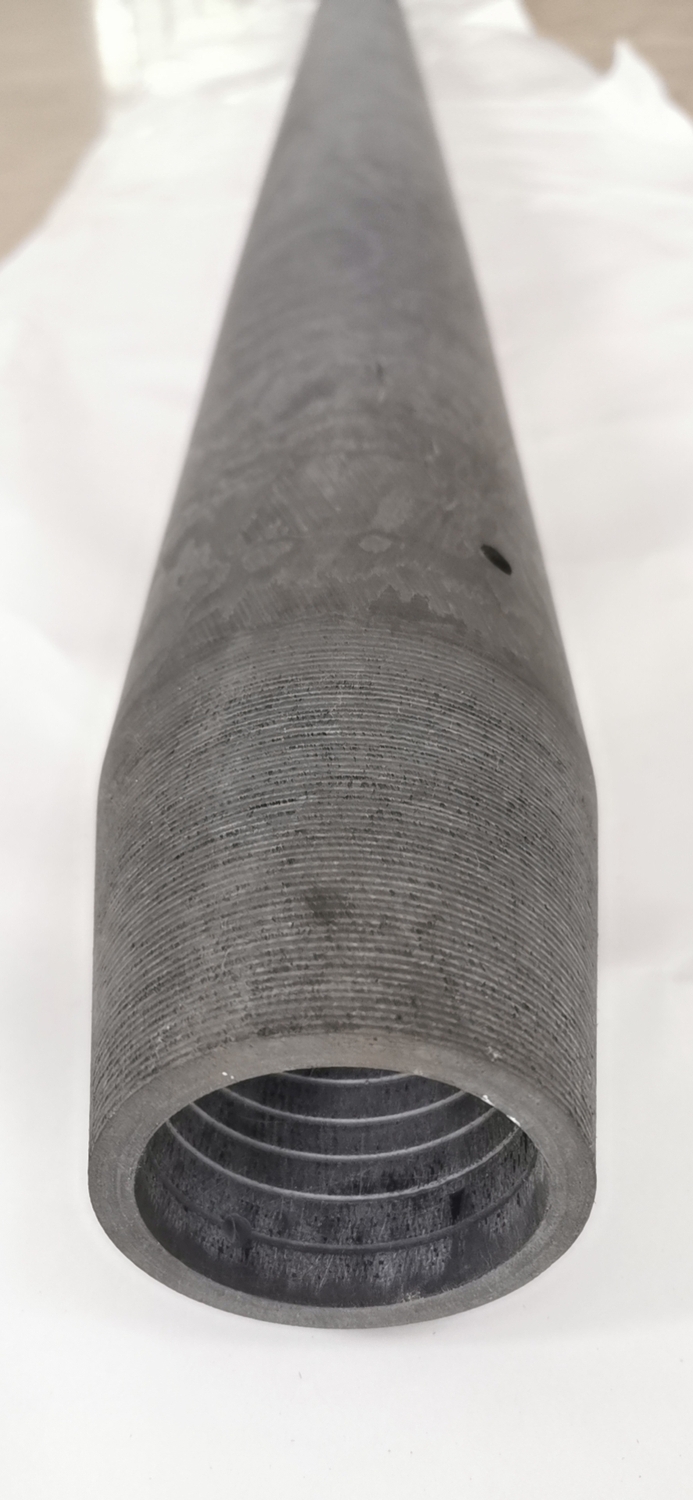
STEP 1: Technological Accumulation and Equipment Advantages
Since its establishment in 2003, Nanjing Baigang Composite Materials Co., Ltd. has focused on the R&D of carbon fiber products, forming a full-chain technical system encompassing "design-manufacturing-testing":
- Design calculation method: Ply optimization algorithm based on finite element analysis (FEA), capable of simulating stress distribution under different working conditions and reducing the number of trial productions;
- Manufacturing equipment: It includes an autoclave molding machine (with a maximum pressure of 8 MPa and a temperature of 200°C) and a winding machine (capable of customizing tubes with lengths under 10 meters and diameters ranging from Φ40 mm to Φ600 mm), supporting one-step molding of complex structural components;
- Detection capability: Equipped with a random signal and vibration analyzer, it can detect the critical rotational speed (error ≤ 2%) and dynamic balance (Grade G2.5) of the drive shaft, ensuring product stability.
STEP 2: Quality Control and Certification System
The company has obtained ISO9001:2000 quality system certification and established a three-tier inspection process for "raw materials - semi-finished products - finished products":
- Raw materials: The tensile strength and modulus of carbon fiber tows must meet the T700-grade standard (tensile strength ≥ 4900 MPa);
- Semi-finished products: The deviation of plying thickness is controlled within ±0.05 mm to avoid local stress concentration;
- Finished product: The drive shaft must pass a 100,000-cycle fatigue test (with a load fluctuation of ±30%) and have a lifespan exceeding 20 years.
STEP 3: Typical Application Cases
In the field of wind power generation, the carbon fiber drive shaft (6 meters in length, with a diameter of Φ300mm) customized by Baigang Company for a wind power enterprise is 68% lighter than steel shafts, reduces the starting torque of the wind turbine by 40%, and increases the annual power generation by 2.5%. Currently, the company has applied over 4,000 drive shafts in areas such as wind power generation and cooling tower fans, with an annual output value reaching 10 million yuan.
For more information, please visit the official website:www.baigangcomposites.com
FAQ Q&A Technical Selection Guide: Key Parameters and Suitable Scenarios for Lightweight Composite Materials
Q1: How to select the fiber type for composite materials?
A1: Carbon fiber (CF) is suitable for high-strength and high-modulus scenarios (such as drive shafts and guide rollers), with a tensile strength of 3500-5500 MPa; glass fiber (GF) is suitable for cost-sensitive and corrosion-resistant scenarios (such as cooling tower fan housings), with a tensile strength of 1000-3500 MPa. Baigang Company can provide fiber ratio recommendations based on operating conditions.
Q2: How to design the ply angles of composite materials?
A2: The ply angle directly affects the stiffness and strength distribution:
- 0° ply: Provides axial stiffness, suitable for drive shafts subjected to tensile/compressive loads;
- 90° ply: provides transverse stiffness and prevents structural deformation;
Q3: How to control the manufacturing cycle and cost of composite materials?
A3: The manufacturing cycle depends on structural complexity and equipment capacity:
Q4: What are the failure modes and preventive measures for composite materials?
A4: The main failure modes include:
Reference for Full-text Summary: Technical Value of Lightweight Composite Materials and Suggestions for Enterprise Selection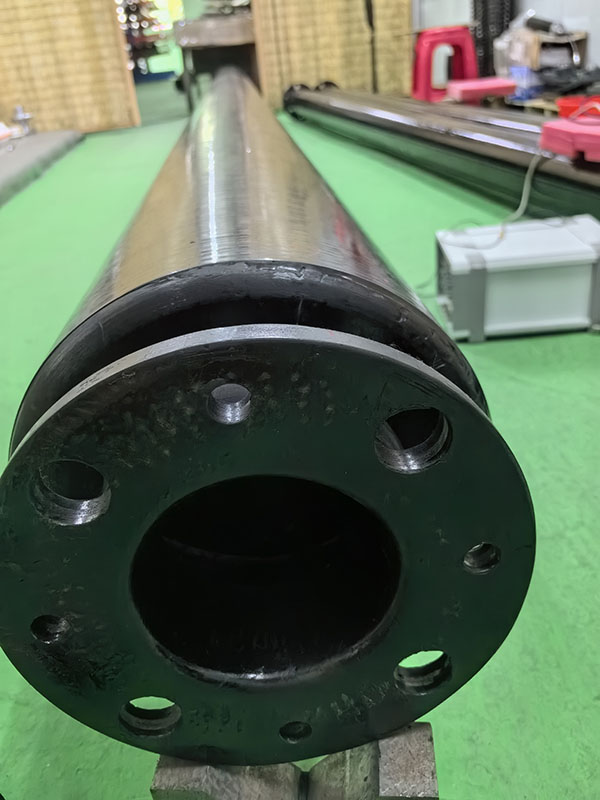
Lightweight composite materials achieve the technological breakthrough of "weight reduction without compromising strength" through the combination of fiber reinforcement and resin matrix, becoming the core material for upgrading industrial equipment. Their technological value is reflected in:
- Performance improvement: The strength-to-weight ratio is 5-8 times that of steel, and corrosion resistance is improved by 3-5 times;