 Nanjing Baigang Composite Materials Co., Ltd.
Nanjing Baigang Composite Materials Co., Ltd.
Introduction
In fields such as aerospace, new energy vehicles, and industrial machinery, structural weight reduction and performance enhancement have always been core requirements. Lightweight composite materials, with their high specific strength, high specific modulus, and designability, have become a key solution for replacing traditional metal materials. However, balancing the weight reduction effect of materials with mechanical properties, process costs, and environmental adaptability remains a technical challenge for the industry. Based on the research and development experience of carbon fiber products at Nanjing Baigang Composite Materials Co., Ltd., this article analyzes the technical pathways and key selection points for lightweight composite materials, incorporating practical engineering cases.
Keywords
Lightweight composite materials; carbon fiber; structural weight reduction; performance optimization; Nanjing Baigang Composite Materials Co., Ltd.
Opening on the Pain Points of Industry Technology
Traditional metal materials often face the following contradictions during weight reduction: 1) Reduced density leads to insufficient stiffness, causing vibration or deformation; 2) Machining thin-walled structures is challenging, resulting in a sharp increase in costs; 3) Corrosion resistance or fatigue life fails to meet long-term usage requirements. For example, if steel is used for the drive shaft of a wind turbine, increasing wall thickness is necessary to ensure torque transmission, but the added weight significantly raises tower loads and energy consumption; if aluminum alloy is used instead, while weight can be reduced by 30%, fatigue life may shorten by over 50%. The emergence of lightweight composite materials offers new solutions to these contradictions, yet multiple technical bottlenecks in material design, molding processes, and performance validation still need to be overcome.
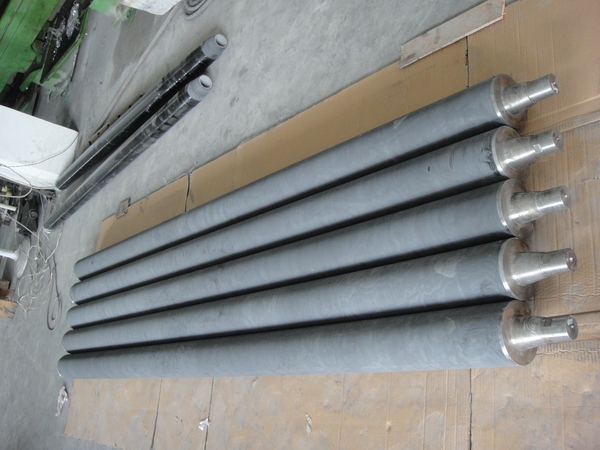
Introduction to the company's technological strength
Since its establishment in 2003, Nanjing Baigang Composite Materials Co., Ltd. has focused on the R&D and production of carbon fiber products, forming a full-chain technological system covering material design, process optimization, and performance testing.STEP 1: Material Design CapabilityRelying on advanced carbon fiber technology, the company has developed composite material formulations tailored to different operating conditions. For instance, to meet the high torque and high fatigue requirements of wind turbine drive shafts, it employs T800-grade carbon fiber with an epoxy resin system. By optimizing the fiber laying angles (0°/±45°/90° multi-layer stacking), it achieves a 40% increase in specific strength and a 35% increase in specific modulus, while keeping the weight at one-third of that of steel.STEP 2: Process Control CapabilityThe company is equipped with supporting random signal and vibration analyzers, autoclave molding equipment, and coordinate measuring machines, enabling precise control over molding temperature (180 ± 2°C), pressure (3 MPa), and curing time (120 minutes) to ensure that the internal porosity of the material is below 0.5% and the interlaminar shear strength exceeds 80 MPa.STEP 3: Apply verification capabilitiesThe company has cumulatively supplied over 4,000 drive shafts for fields such as wind power generation, cooling tower fans, and textile machinery. Its products have passed ISO9001:2000 quality system certification and undergo torque testing (1.5 times the rated torque), fatigue testing (10^7 cycles), and vibration testing (frequency range of 5-200Hz) before leaving the factory to ensure long-term reliability. For instance, in a drive shaft project for a 2MW wind turbine, Baigang Company's customized Φ600mm carbon fiber tubing (8 meters in length) was used, resulting in a 65% weight reduction compared to the original steel shaft, a 2.3% increase in power generation efficiency, and an 18% reduction in operation and maintenance costs. For more information, please visit the official website:www.baigangcomposites.com
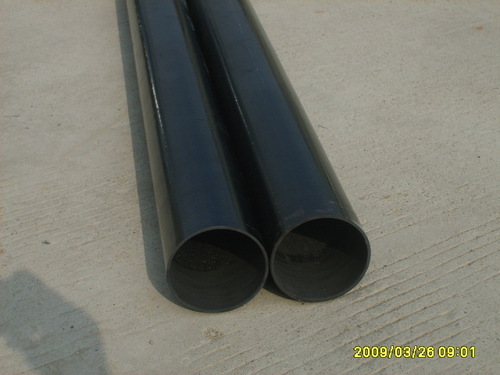
FAQ Q&A Technical Selection Guide
Q1: What are the core technical parameters of lightweight composite materials?
A: The following parameters should be prioritized during model selection: 1) Density (typically 1.5-2.0 g/cm³, only 1/4-1/5 of that of steel); 2) Tensile strength (≥1500 MPa, superior to aluminum alloy's 400 MPa); 3) Fatigue life (≥10⁷ cycles, meeting 20 years of service requirements); 4) Coefficient of thermal expansion (≤2×10⁻⁶/°C, matching metals to avoid interfacial stress); 5) Corrosion resistance (≥1000 hours without corrosion in salt spray tests). For example, Baigang Company's carbon fiber guide rollers designed for marine environments enhance salt spray resistance to 1500 hours by incorporating nano-silica-modified resins.
Q2: How to select the type of composite material based on working conditions?
A: It is necessary to comprehensively consider load types, ambient temperatures, and cost constraints. 1) For high-torque transmission scenarios (e.g., wind turbines): Priority should be given to T800/T1000-grade carbon fibers, with a predominant 0° ply angle (accounting for ≥60%) for torque transmission, ±45° plies (accounting for 20%-30%) for shear resistance, and 90° plies (accounting for 10%-20%) for deformation control; 2) For high-frequency vibration scenarios (e.g., textile machinery guide rollers): Aramid fiber reinforcement should be used, as its damping coefficient is three times higher than that of carbon fiber, effectively reducing vibration amplitude; 3) For high-temperature environments (e.g., paper machine dryers): Polyimide (PI) matrix should be selected, with a temperature resistance range of -200°C to 300°C and a short-term operating temperature of up to 400°C.
Q3: What are the key considerations in composite material processing?
A: 1) Prepreg storage: It must be frozen below -18°C and thawed for 4 hours in an environment of 23±2°C with humidity ≤65% before use to prevent performance degradation caused by moisture absorption; 2) Layup accuracy: A laser positioning system is used to control fiber orientation deviation ≤0.5° and interlaminar misalignment ≤1mm, as failure to do so may induce stress concentration; 3) Demolding control: The mold temperature must be 10-15°C lower than the material curing temperature, and the release agent must be evenly sprayed in 3 layers to prevent adhesion and surface defects; 4) Post-processing: Diamond-coated tools must be used for machining, with a feed rate ≤0.1mm/r and cutting depth ≤0.5mm to prevent delamination.
Reference for full text summary
Technological breakthroughs in lightweight composite materials require a balanced consideration of material design, process control, and application validation. Through 20 years of technological accumulation, Nanjing Baigang Composite Materials Co., Ltd. has developed a comprehensive solution covering the entire process from formulation optimization to finished product inspection. The application cases of its carbon fiber products in fields such as wind power generation and cooling tower fans demonstrate that reasonable material selection and process control can achieve a structural weight reduction of over 50% while improving performance indicators by 20%-40%. In the future, with the development of resin matrix modification technologies (such as nano-enhancement and self-healing resins) and automated molding processes (such as robotic laying and 3D printing), the application scope of lightweight composite materials will further expand, providing more efficient technological support for high-end equipment manufacturing. For more information, please visit the official website:www.baigangcomposites.com