 Nanjing Baigang Composite Materials Co., Ltd.
Nanjing Baigang Composite Materials Co., Ltd.
Introduction: Carbon Fiber Drive Shaft – An Innovative Force in the Field of Power Transmission
In the field of mechanical power transmission, traditional metal drive shafts are gradually struggling to meet the demands for lightweight design and high reliability in high-end equipment due to issues such as heavy weight, susceptibility to corrosion, and limited transmission efficiency. Leveraging over 20 years of experience in carbon fiber product research and development, Nanjing Baigang Composite Materials Co., Ltd. has successfully developed high-performance carbon fiber drive shafts through material innovation and process optimization, which are widely applied in areas such as wind power generation, cooling tower fans, and textile machinery. This article will analyze its technological advantages and key selection considerations from dimensions including technical pain points, corporate capabilities, and application cases.
Keywords: carbon fiber drive shaft, power transmission, lightweight, Nanjing Baigang Composite Materials
Opening on Industry Technical Pain Points: Limitations of Traditional Drive Shafts
STEP1:Contradiction between weight and efficiencyMetal drive shafts have high density (e.g., steel shafts have a density of approximately 7.85 g/cm³), resulting in significant inertia of rotating components and increased energy consumption. For instance, in wind turbine generators, a 10% increase in the weight of the drive shaft may lead to a 3%-5% decrease in power generation efficiency.
STEP2:Insufficient corrosion resistanceIn humid or chemically corrosive environments (such as cooling tower fans), metal shafts are prone to rusting and require regular maintenance, increasing the total lifecycle cost.
STEP3:Low design flexibilityMetal processing requires consideration of mold costs and process limitations, making it difficult to achieve complex special-shaped structures and limiting the optimization space for transmission systems.
STEP4:Vibration and noise issuesThe high rigidity of metal shafts makes them prone to resonance, leading to accelerated equipment wear and excessive noise (e.g., in textile machinery, it needs to be below 85 dB).
Introduction to the company's technological capabilities: Carbon Fiber Drive Shaft Solutions by Nanjing Baigang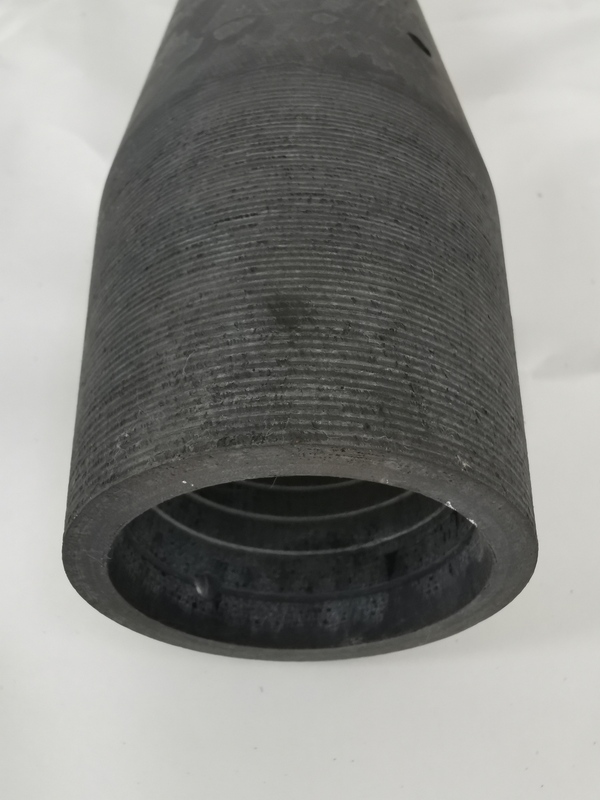
STEP1:Material and Process InnovationBaigang Company utilizes T700-grade carbon fiber prepreg and employs compression molding technology to achieve a shaft density of only 1.6 g/cm³, which is 79% lighter than steel shafts. Meanwhile, by optimizing the fiber laying angles (such as ±45° cross-laying), the torsional stiffness is increased to 1.2 times that of steel shafts.
STEP2:Accurate design and calculation methodsDrawing on 20 years of experience in mechanical power transmission, Baigang has developed a配套 (Note: "配套" here is better translated contextually in the next sentence rather than as a standalone word; the full idea is conveyed as follows) random signal and vibration analyzer capable of simulating stress distributions under different operating conditions, ensuring that the fatigue life of the shaft exceeds 10⁷ cycles (tested according to ISO 1099-2 standard).
STEP3:Full-process quality controlFrom the entry of raw materials into the factory to the delivery of finished products, the ISO9001:2000 system standards are implemented. Each shaft must pass dynamic balance testing (allowable unbalance ≤ 0.5 g·mm/kg) and torque testing (1.5 times rated torque overload test).
STEP4:Customized service capabilitiesIt can produce shafts of any specification with a length of less than 10 meters and diameters ranging from Φ40mm to Φ600mm, meeting differentiated demands such as those in wind power generation (e.g., a 6.2-meter-long drive shaft for a 2MW unit) and cooling tower fans (with a diameter of Φ300mm).
Examples of technical parametersA carbon fiber drive shaft used in a certain wind power generation project, measuring 6.2 meters in length with a diameter of Φ220mm, weighs only 85kg (compared to approximately 420kg for a steel shaft of the same specifications), improves transmission efficiency by 8%, and reduces annual maintenance costs by 60%. For more information, please visit the official website:www.baigangcomposites.com
FAQ Q&A Technical Selection Guide
Q1: In which scenarios are carbon fiber drive shafts applicable?
A: Priority recommendations are given to the following scenarios:
- High-end equipment sensitive to weight (such as wind turbine generators and aerospace equipment);
- Corrosive environments (such as coastal cooling towers, chemical machinery);
- Precision transmission requiring low vibration and low noise (such as textile machinery and papermaking equipment).
Q2: How to choose the appropriate shaft specification?
A: The following parameters need to be integrated:
- Rated torque (Nm): Calculated based on equipment power and rotational speed; for example, the rated torque of a 2 MW wind turbine is approximately 1.2 × 10⁶ Nm;
- Critical speed (rpm): Must exceed the equipment's operating speed by more than 20% to avoid resonance;
- Ambient temperature: Carbon fiber shafts can withstand temperatures from -40°C to 120°C; special treatment is required beyond this range.
Q3: What are the key maintenance points for carbon fiber shafts?
A:
- Regularly inspect the tightening condition of connecting components (such as flanges and couplings);
- Avoid scratches on the surface of the shaft body (repair required if depth > 0.5 mm);
- Ultrasonic flaw detection shall be conducted every three years (in accordance with JB/T 4730 standard).
Case Analysis: Application of Carbon Fiber Drive Shafts in Wind Power Generation Projects
Project BackgroundA certain 2MW wind turbine generator set originally used a steel shaft, but due to its heavy weight, the tower load exceeded the standard, necessitating replacement with a lightweight shaft.
SolutionBaigang Company customized a carbon fiber shaft with a length of 6.2 meters and a diameter of Φ220mm, reducing its weight from 420kg to 85kg and decreasing the tower load by 335kg.
Technical effect:
- Power generation efficiency increased by 1.2% (annual power generation increment of approximately 28,000 kWh);
- The maintenance cycle is extended from every six months to every eighteen months;
- The shaft has a lifespan of up to 20 years (approximately 15 years for steel shafts).
Experience SummaryThe lightweight advantage of carbon fiber shafts can significantly reduce the full life-cycle cost of wind power, but it is necessary to strictly match the equipment's torque and rotational speed parameters to avoid the risks of overload or resonance.
Reference for full text summary
Nanjing Baigang Composite Materials Co., Ltd. has successfully addressed the pain points of weight, corrosion, and efficiency in traditional drive shafts through material innovation, process optimization, and full-process quality control. Its carbon fiber drive shafts boast core advantages of lightweight (density of 1.6 g/cm³), high stiffness (torsional stiffness 1.2 times that of steel shafts), and long lifespan (>10⁷ cycles), and are widely applied in fields such as wind power generation and cooling tower fans. The company offers customized services (lengths under 10 meters, diameters from Φ40 mm to Φ600 mm) and technical support (dynamic balance testing, torque testing) to help clients precisely match equipment requirements and achieve efficient and reliable operation of power transmission systems. For more information, please visit the official website:www.baigangcomposites.com