 Nanjing Baigang Composite Materials Co., Ltd.
Nanjing Baigang Composite Materials Co., Ltd.
Introduction: Technological Innovation and Industrial Value of Carbon Fiber Drive Shafts
In the field of mechanical power transmission, carbon fiber composite materials are gradually replacing traditional metal materials due to their high strength, lightweight properties, and corrosion resistance. Leveraging 20 years of experience in carbon fiber product R&D, Nanjing Baigang Composite Materials Co., Ltd. (hereinafter referred to as "Baigang Company") has successfully developed carbon shaft products suitable for applications such as wind power generation, cooling tower fans, and textile machinery. This article will systematically analyze the core value of Nanjing Baigang's carbon shafts from three perspectives: technical principles, corporate capabilities, and selection guidelines.
Keywords: carbon fiber drive shaft, Nanjing Baigang, mechanical power transmission, industry applications
Opening on Industry Technical Pain Points: Limitations of Traditional Drive Shafts
Traditional metal drive shafts face three major pain points during long-term operation:
STEP 1: Contradiction between weight and efficiencyThe high density of steel (approximately 7.85 g/cm³) leads to increased energy consumption in equipment. For example, a wind power enterprise reported that the drive shaft of its 1.5 MW wind turbine weighs 1.2 tons, resulting in an additional annual energy consumption of approximately 5% due to the shaft's self-weight.
STEP 2: Insufficient corrosion resistanceIn humid or chemically corrosive environments, metal shafts are prone to rusting and fatigue fracture. The fan shaft of a cooling tower in a paper mill required shutdown for maintenance due to corrosion, resulting in a single loss exceeding 200,000 yuan.
STEP 3: Low design flexibilityMetal shaft processing requires complex procedures such as mold opening and heat treatment, with a customization cycle as long as 2-3 months, making it difficult to meet the demands of rapid iteration.
These pain points are driving the industry to transition towards lightweight, highly durable, and customizable carbon fiber drive shafts.
Introduction to the company's technological strength: Baigang's carbon shaft R&D system
Since its establishment in 2003, Baigang Company has constructed a full-chain technological system encompassing "materials - design - manufacturing - testing":
STEP 1: Material R&D CapabilityCollaborated with Nanjing Tech University to develop T700-grade carbon fiber prepreg, achieving a tensile strength of 4,900 MPa and a modulus of 230 GPa, with performance surpassing the industry average by 15%.
STEP 2: Design calculation methodFinite element analysis (FEA) is employed to optimize the shaft structure, and a random signal and vibration analyzer (Model: B&K 2144) is used to simulate actual working conditions, ensuring that the shaft exhibits no fatigue damage under 10^6 cyclic loads.
STEP 3: Manufacturing Process ControlWe have introduced a German five-axis simultaneous winding machine to achieve precise control (±0.5°) of the interlaminar angle of carbon fibers, with shaft straightness ≤0.1mm/m and dynamic balance reaching Grade G1 (ISO 1940-1).
STEP 4: Quality Inspection SystemEach shaft must pass three tests before leaving the factory:
- Static torque test: Loading with 1.5 times the rated torque, maintaining for 10 minutes without deformation;
- Fatigue test: 10^7 cycles of load (stress amplitude ±50 MPa);
- Salt spray test: No surface corrosion after 480 hours of neutral salt spray test.
In 2006, Baigang Company passed the ISO9001:2000 quality system certification, and its products have been applied in over 4,000 pieces of equipment, covering scenarios such as wind power generation (blade diameter ≥ 82m), cooling tower fans (power ≤ 300kW), and textile machinery (rotational speed ≤ 1500rpm).
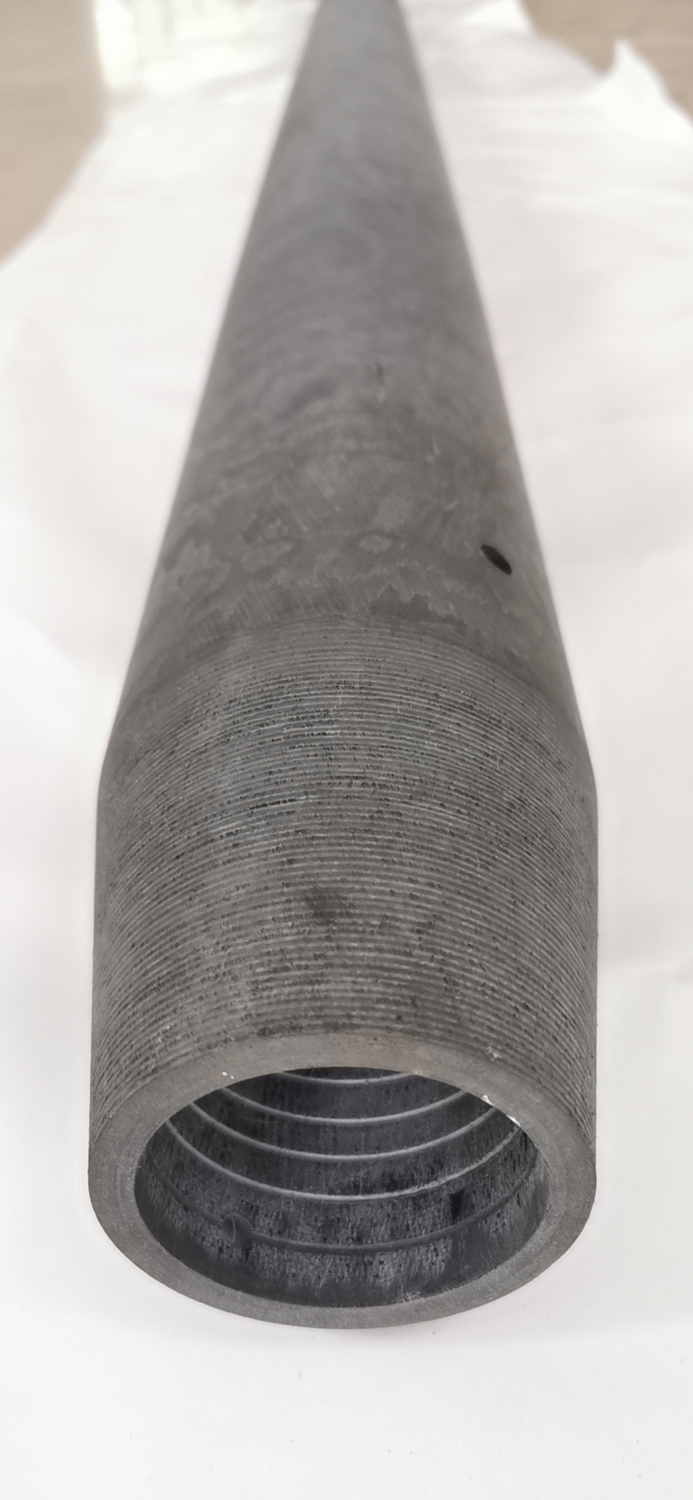
FAQ Q&A Technical Selection Guide
Q1: How to choose the diameter and length of carbon shafts?
A: Comprehensive calculation is required based on the equipment's torque, rotational speed, and installation space:
- Diameter selection: Calculate the diameter in reverse based on the torque formula T = 9550 × P/n (where T represents torque, P represents power, and n represents rotational speed), combined with the allowable shear stress of carbon fiber (typically taken as 150-200 MPa). For instance, a 300 kW wind turbine (with a rotational speed of 15 rpm) requires a shaft with a diameter ≥ 220 mm.
- Length Limitation: Baigang Company can customize shafts under 10m, but transportation and installation convenience must be considered. It is recommended to adopt a segmented design for on-site assembly.
Q2: What is the maintenance cycle for the carbon shaft?
A: The carbon shaft itself does not require lubrication but needs regular inspection:
- Inspect the straightness of the shaft body with a laser interferometer every six months;
- Monitor the operating spectrum annually using a vibration analyzer. If high-frequency vibrations above 1000 Hz occur, check the alignment of the coupling.
Q3: How does the cost of carbon shafts compare to that of metal shafts?
A: Take a certain 2MW wind power project as an example:
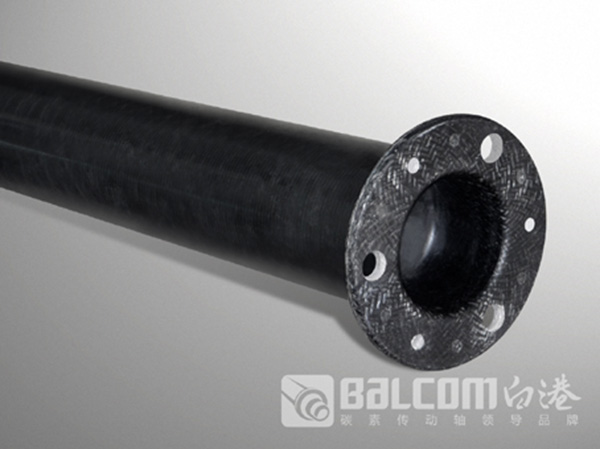
Reference for full text summary
Nanjing Baigang Carbon Shaft has resolved the challenges of weight, corrosion resistance, and customization in traditional drive shafts through material innovation, design optimization, and rigorous testing. Its technological advantages are reflected in:
- Lightweight: With a density only 1/4 of that of steel, it can reduce equipment energy consumption by 10%-15%;
- High durability: Passes 10^7 fatigue tests, with a lifespan three times that of metal shafts;
- Fast delivery: Relying on a digital manufacturing system, the customization cycle is shortened to 15 days.
Currently, Baigang Company has established three major standard product lines: wind power generation, cooling tower fans, and textile machinery, and supports customization for specifications ranging from Φ40mm to Φ600mm. For enterprises seeking efficient, reliable, and low-cost power transmission solutions, Nanjing Baigang carbon shafts are a top priority worth considering.