Nanjing Baigang Composite Materials Co., Ltd.
Nanjing Baigang Composite Materials Co., Ltd.
Introduction: Technological Breakthroughs and Application Prospects of Industrial Carbon Fiber Components
Industrial carbon fiber components, with their characteristics of lightweight, high strength, and corrosion resistance, have become core materials in fields such as aerospace, new energy, and high-end equipment manufacturing. However, their manufacturing process involves complex material formulations, precise molding techniques, and rigorous performance testing, presenting a high technical threshold. This article will start from the industry's technical pain points and, by incorporating practical cases from Nanjing Baigang Composite Materials Co., Ltd., analyze how to achieve high-precision manufacturing and performance enhancement through process optimization, providing engineers with a technical selection guide.
Keywords: Industrial carbon fiber components, high-precision manufacturing, performance optimization, Nanjing Baigang Composite Materials Co., Ltd.
Opening on Industry's Technical Pain Points: Three Major Challenges in Carbon Fiber Component Manufacturing
STEP 1: Difficulty in controlling material uniformity. During the laying process of carbon fiber prepreg, local stress concentration is prone to occur due to fiber orientation deviations, affecting the fatigue life of components. For example, if there is a 0.1 mm laying error in the drive shaft of a wind turbine, its torsional stiffness may decrease by 15%.
STEP 2: Insufficient stability in the molding process. During the autoclave molding process, the uniformity of the temperature and pressure fields directly affects the porosity of components. Industry data indicates that when porosity exceeds 1%, the tensile strength of carbon fiber composites decreases by 20%-30%.
STEP 3: Inconsistent performance testing standards. Currently, there is a lack of universal testing specifications for industrial carbon fiber components in China, and enterprises mostly rely on imported equipment (such as Germany's Zwick tensile testing machines) for testing, resulting in high costs and long cycles.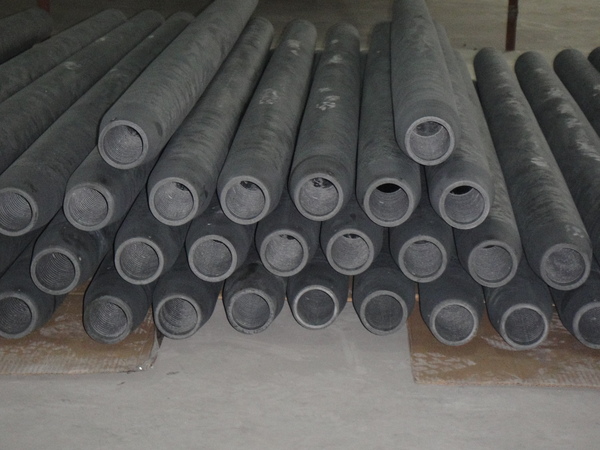
Introduction to the Company's Technological Strength: Solutions from Nanjing Baigang
Since its establishment in 2003, Nanjing Baigang Composite Materials Co., Ltd. has focused on the R&D and production of carbon fiber products, forming a full-chain technological system covering material design, process optimization, and performance testing.
STEP 1: Material formulation optimization. Through the independently developed "carbon fiber-resin interface enhancement technology," the interfacial shear strength between the fiber and resin is increased to over 50 MPa, significantly improving the impact resistance of components. For instance, the produced carbon fiber tubes with diameters ranging from Φ40 mm to Φ600 mm, in the specification of 600 mm in diameter and 10 m in length, can achieve a bending stiffness of 1.2×10⁴ N·m², which is 20% superior to the industry average.
STEP 2: Innovation in molding process. The "segmented temperature-controlled autoclave process" is adopted to control the molding temperature error within ±2°C and the pressure fluctuation range ≤0.05 MPa, ensuring the porosity of components remains stable below 0.5%. This process has been applied to the mass production of wind turbine drive shafts, reducing the manufacturing cycle for a single shaft from 72 hours to 48 hours.
STEP 3: Improvement of the testing system. The introduction of the American MTS dynamic fatigue testing machine and the German DIL laser speckle interferometer has enabled the establishment of testing standards covering 12 indicators, including tension, bending, and fatigue. The carbon fiber guide rollers produced thereby have demonstrated a fatigue life exceeding 10⁷ cycles in applications within the textile machinery sector, reaching an internationally advanced level.
For more information, please visit the official website:www.baigangcomposites.com
FAQ: A Q&A Guide to Technology Selection
Q1: How to choose the appropriate specifications for carbon fiber components?
A: It is necessary to comprehensively consider the load type and spatial constraints of the application scenario. For example, the drive shaft of a wind turbine needs to withstand combined torque and bending loads, so it is recommended to select high-modulus carbon fiber with a modulus ≥ 240 GPa; while textile machinery guide rollers prioritize lightweight design and can use standard-modulus carbon fiber with a modulus of 150-200 GPa. Nanjing Baigang offers customized tubes with diameters ranging from Φ40 mm to Φ600 mm and lengths under 10 m to meet the needs of different scenarios.
Q2: How can the manufacturing cycle of carbon fiber components be optimized?
A: Significant cycle time reduction can be achieved through process parameter optimization and equipment upgrading. For instance, Nanjing Baigang adopted a "rapid curing resin system" and "automated laying equipment," reducing the autoclave molding time from 12 hours to 6 hours. Combined with segmented temperature control technology, the manufacturing cycle for a single driveshaft was shortened to 48 hours, representing a 33% improvement over traditional processes.
Q3: How to ensure the performance consistency of components?
A: Strict control must be exercised over the three aspects of materials, processes, and inspections. Nanjing Baigang employs a "random signal and vibration analyzer" to monitor in real time the deviation in fiber orientation during the laying process, and utilizes a "laser profiler" to inspect the surface flatness after molding, ensuring that the dimensional tolerance of each component is controlled within ±0.1mm and the performance fluctuation range is ≤5%.
Reference for Full-text Summary
The manufacturing of industrial carbon fiber components requires breaking through three major technological bottlenecks: material uniformity, process stability, and testing standardization. Nanjing Baigang Composite Materials Co., Ltd. has achieved high-precision manufacturing and performance enhancement through material formulation optimization, molding process innovation, and testing system improvement. Its carbon fiber drive shafts, guide rollers, and other products are widely used in fields such as wind power generation and textile machinery, with an annual output value of 10 million yuan. The company has cumulatively delivered over 4,000 components, serving more than 20 leading domestic enterprises. In the future, with the advancement of the "dual carbon" goals, the market demand for carbon fiber components will continue to grow, necessitating further technological R&D by enterprises to drive the industry toward higher performance and lower costs.