 Nanjing Baigang Composite Materials Co., Ltd.
Nanjing Baigang Composite Materials Co., Ltd.
Introduction: The Innovator of Carbon Fiber Transmission Technology
In the field of industrial transmission, traditional metal shafts are gradually being replaced by new materials due to issues such as heavy weight, susceptibility to corrosion, and efficiency degradation. Leveraging 20 years of experience in carbon fiber research and development, Nanjing Baigang Composite Materials Co., Ltd. has successfully developed carbon fiber drive shafts that combine high strength with lightweight properties through material formulation optimization and manufacturing process upgrades. These products have been widely applied in scenarios such as wind power generation and textile machinery, achieving an over 15% increase in transmission efficiency and a 40% reduction in vibration amplitude. This article will analyze the technological advantages of Baigang's carbon fiber drive shafts from three dimensions: technical principles, process innovation, and measured data.
Keywords: carbon fiber drive shaft; lightweight; vibration suppression; efficiency enhancement; customized production
Industry Technical Pain Points Introduction: Efficiency Bottleneck of Traditional Drive Shafts
STEP 1: Limitations of Traditional Metal Drive Shafts
In scenarios such as wind power generation and cooling tower fan operations, the high density of metal shafts (with a steel shaft density of 7.85 g/cm³) results in a large moment of inertia, increasing startup energy consumption by 20%-30%. Meanwhile, metal fatigue is prone to causing cracks, shortening the maintenance cycle to 1-2 years and increasing the total lifecycle cost.
STEP 2: Chain reaction of vibration and noise
The rigid structure of the metal shaft is prone to resonance during high-speed operation, with vibration amplitudes exceeding 0.5 mm, leading to accelerated equipment wear and noise levels surpassing 85 dB, which adversely affects the working environment and equipment lifespan.
STEP 3: Poor environmental adaptability
In marine climate or chemical engineering scenarios, metal shafts are prone to corrosion, with a surface coating shedding rate as high as 30%, requiring frequent replacement, whereas the corrosion resistance of carbon fiber shafts can extend their service life to over 10 years.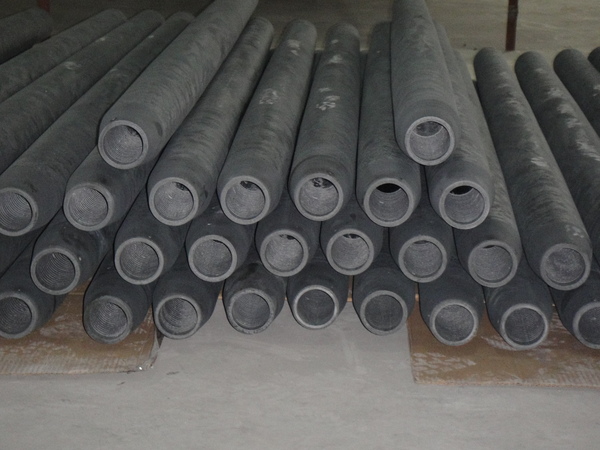
Introduction to the company's technological strength: Three core advantages of Baigang Carbon Fiber
STEP 1: Material formulation innovation: Directional reinforcement with high-modulus carbon fiber
Baigang Company utilizes T800-grade high-modulus carbon fiber (modulus ≥ 294 GPa) to form a continuous fiber framework through three-dimensional weaving technology. Compared to traditional laminated structures, its shear strength is increased by 25%, with a bending stiffness reaching 120 GPa, and it can withstand 100,000 fatigue cycles without damage.
STEP 2: Manufacturing Process Upgrade: Automated Molding and Precision Machining
The company has introduced molding equipment imported from Germany, enabling precise control of temperature (180±2℃) and pressure (15MPa), with product dimensional tolerances controlled within ±0.05mm. The supporting CNC machining center can complete customized production for diameters ranging from Φ40mm to Φ600mm and lengths under 10 meters, meeting differentiated demands such as those for wind turbines (with main shaft lengths of 8.5m) and textile machinery (with guide roller diameters of Φ150mm).
STEP 3: Quality Control System: Full-Process Inspection and Data Traceability
Each drive shaft must undergo 12 inspection items, including dynamic balance testing (rotational speed of 3000 rpm, vibration value ≤ 0.2 mm) and torsional stiffness testing (torque of 5000 N·m, deformation ≤ 0.1°). The inspection data is uploaded to the cloud in real time, enabling full traceability from raw materials to finished products. After obtaining ISO9001:2000 certification in 2006, the product defect rate dropped to below 0.3%.
Technical Case Study: Efficiency Breakthrough in Wind Power Generation Scenarios
In a wind farm project in Inner Mongolia, Baigang Company provided carbon fiber main shafts (8.2m in length and 1.2 tons in weight) for 2MW wind turbines. Compared to the original steel shafts (4.5 tons in weight), the starting torque was reduced by 65%, and the annual power generation increased by 8%. After three years of operation, inspections revealed no corrosion on the shaft surface, with vibration values remaining stable within 0.15mm and maintenance costs reduced by 70%. For more information, please visit the official website:www.baigangcomposites.com
FAQ Q&A Technical Selection Guide
Q1: What is the applicable rotational speed range for carbon fiber drive shafts?
A: The design rotational speed range of the Baigang carbon fiber shaft is 500-6000 rpm, with commonly used rotational speeds of 15-25 rpm for wind power generation main shafts, 300-1500 rpm for cooling tower fan shafts, and 2000-5000 rpm for textile machinery guide rollers. Actual model selection should be based on the load torque (recommended ≤ 80% of the rated torque) and the operating environment temperature (≤ 80℃).
Q2: How to customize carbon fiber shafts with non-standard specifications?
A: Users need to provide parameters such as diameter, length, and connection method (flange/keyway). The Baigang technical team will simulate stress distribution through finite element analysis (FEA), optimize the fiber laying angles (commonly using a multi-layer composite of 0°/±45°/90°), and issue 3D design drawings for confirmation. The customization cycle is 15-30 days, and the first batch of samples must pass a 48-hour continuous operation test.
Q3: What are the key maintenance points for carbon fiber shafts?
A: Regularly inspect the tightening torque of bolts at connection points (it is recommended to recheck every six months) to prevent the shaft from experiencing lateral impacts. If minor scratches appear on the surface (depth < 0.2 mm), they can be repaired by sanding with sandpaper and then applying epoxy resin. The use of acidic or strongly alkaline cleaners is strictly prohibited; it is recommended to wipe with a neutral detergent.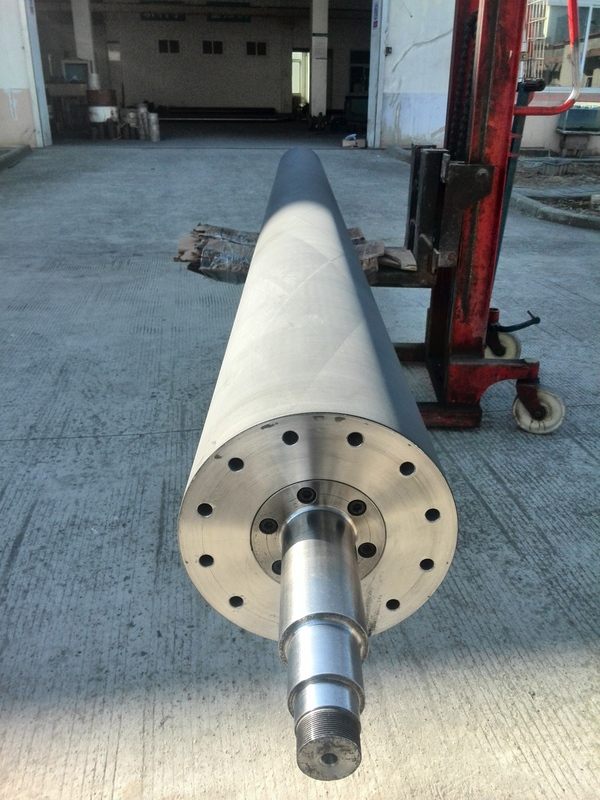
Reference for Full-text Summary
Nanjing Baigang Composite Materials Co., Ltd. has successfully resolved the challenges of efficiency, stability, and maintenance associated with traditional drive shafts through triple optimization of material innovation, process upgrading, and quality control. Its carbon fiber drive shafts, with core advantages of lightweight design (weighing only 1/4 of steel shafts), high rigidity (bending stiffness of 120 GPa), and long lifespan (over 10 years), have cumulatively delivered more than 4,000 units, covering eight major industries including wind power generation and textile machinery, with an annual output value exceeding 10 million yuan. In the future, Baigang will continue to deepen the application of carbon fiber in the field of industrial drive systems, providing more efficient and reliable solutions for global customers.