 Nanjing Baigang Composite Materials Co., Ltd.
Nanjing Baigang Composite Materials Co., Ltd.
Introduction: Technological Innovation and Application Prospects of Carbon Fiber Composite Drive Shafts
As industrial equipment advances towards lightweight and high-efficiency development, traditional metal drive shafts are gradually struggling to meet demands due to issues such as heavy weight and susceptibility to corrosion. Carbon fiber composite drive shafts have emerged as core components in the field of mechanical power transmission, owing to their high specific strength, high specific modulus, and excellent fatigue resistance. This paper takes the technical practices of Nanjing Baigang Composite Materials Co., Ltd. as an example to analyze the design principles, manufacturing processes, and performance optimization methods of carbon fiber drive shafts, providing actionable technical references for the industry.
Keywords: carbon fiber composite material; drive shaft; power transmission; long-life design; Nanjing Baigang Composite Materials
Opening on Industry Technical Pain Points: Limitations of Traditional Drive Shafts
Traditional metal drive shafts (such as steel shafts) have three core pain points: first, their high density (approximately 7.85 g/cm³) results in a heavy overall equipment weight, increasing energy consumption; second, their poor corrosion resistance makes them prone to rusting in humid or chemical environments, shortening their service life; third, their limited fatigue life makes them susceptible to cracking under long-term alternating loads, necessitating frequent replacements. Taking wind turbine generators as an example, traditional steel drive shafts can weigh over 2 tons, not only increasing the load on the tower but also raising the total lifecycle cost due to high maintenance expenses. The density of carbon fiber composite drive shafts is only 1.6-2.0 g/cm³, and their fatigue resistance is 3-5 times that of metals, significantly reducing equipment weight and extending service life.
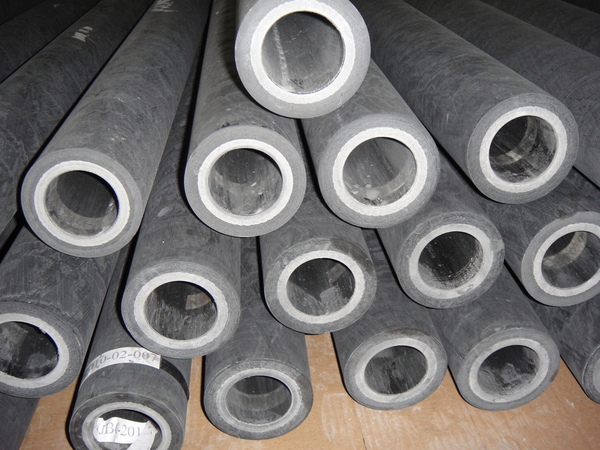
Introduction to the company's technological strength: Carbon Fiber Drive Shaft Solutions by Nanjing Baigang Composite Materials
Since its establishment in 2003, Nanjing Baigang Composite Materials Co., Ltd. has specialized in the research, development, and production of carbon fiber products, accumulating extensive experience in the field of mechanical power transmission. The company has obtained ISO9001:2000 quality system certification and possesses mature design calculation methods, random signal and vibration analyzers, and testing technologies, enabling it to customize drive shaft solutions for different application scenarios.
STEP 1: Material Selection and Performance Optimization
Baigang Company employs T700 or T800 grade carbon fiber prepregs, which have a tensile strength of 4900-5880 MPa and a modulus of 230-294 GPa. Combined with an epoxy resin system, these ensure the stability of the drive shaft under dynamic loads. By optimizing the ply angles (e.g., a hybrid layup of 0°/±45°/90°), the axial and torsional stiffness can be balanced to meet different operational requirements. For instance, a drive shaft designed for wind turbines, with a diameter of Φ300 mm and a length of 6 m, weighs only 180 kg, representing a 75% weight reduction compared to steel shafts, and offers a fatigue life exceeding 20 years.
STEP 2: Structural Design and Manufacturing Process
The company employs a compression molding process, ensuring dimensional accuracy (±0.1mm) and internal quality of the drive shaft by precisely controlling temperature (120-180℃), pressure (10-15MPa), and curing time (2-4 hours). Both ends of the drive shaft feature a co-curing design integrating metal connectors with the carbon fiber body, achieving efficient load transfer through a combination of mechanical interlocking and adhesive bonding. Taking the drive shaft for cooling tower fans as an example, with a diameter of Φ150mm and a length of 4m, it operates at 1500rpm with a vibration value ≤0.5mm/s and noise level ≤65dB, meeting industrial environmental requirements.
STEP 3: Performance Testing and Quality Assurance
Each driveshaft must pass three tests before leaving the factory: first, ultrasonic non-destructive testing to identify internal defects; second, dynamic balance testing to ensure an unbalance of ≤0.5 g·cm; and third, fatigue life testing to confirm no cracks after 10⁷ loading cycles simulating actual operating conditions. The company has an annual production capacity of 4,000 units, with products widely applied in wind power generation (e.g., Goldwind, Envision Energy), cooling tower fans (e.g., Shuangliang Group), textile machinery (e.g., Jingwei Textile Machinery), and other fields, boasting a customer repurchase rate exceeding 90%. For more information, please visit our official website:www.baigangcomposites.com
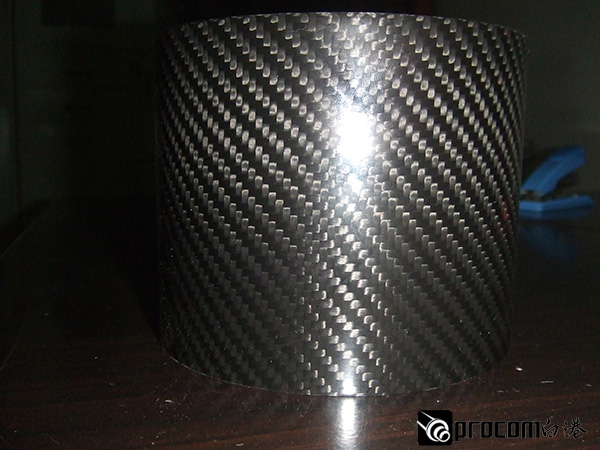
FAQ Q&A Technical Selection Guide
Q1: How to select the specifications of carbon fiber drive shafts?
A: Three parameters need to be considered comprehensively: First, the transmitted torque (T), which is calculated based on the formula T = 9550 × P/n (where P is power and n is rotational speed) to determine the required torque; second, the shaft diameter (d), which is determined according to the relationship between torque and allowable shear stress (τ) using the formula d ≥ ³√(16T/πτ), with τ for carbon fiber typically ranging from 150 to 200 MPa; third, the length (L), which must meet the equipment layout requirements, and Baigang Company can customize shafts with lengths under 10 meters and diameters ranging from Φ40 mm to Φ600 mm.
Q2: What are the key maintenance points for carbon fiber drive shafts?
A: Three items require regular inspection: First, the surface condition. If the scratch depth exceeds 0.2 mm, repair is necessary. Second, the connection areas. Check whether the adhesive layer between the metal joints and carbon fiber is cracked. Third, the vibration value. If it increases by 20% compared to the initial value, return it to the factory for inspection. It is recommended to conduct a comprehensive inspection every 5,000 operating hours.
Q3: Is the cost of carbon fiber shafts higher than that of metal shafts?
A: The initial procurement cost is approximately 30% higher, but the total lifecycle cost can be reduced by over 40%. Taking wind turbines as an example, steel shafts require replacement every five years, whereas carbon fiber shafts have a lifespan of 20 years. Additionally, the reduced weight lowers tower costs by 15%, resulting in significant overall benefits.
Reference for Full-text Summary
The carbon fiber composite material drive shaft addresses issues such as excessive weight, poor corrosion resistance, and short fatigue life of traditional metal shafts through material optimization, structural design, and manufacturing process innovations. Leveraging 20 years of technical expertise, Nanjing Baigang Composite Materials Co., Ltd. has developed a comprehensive solution covering design, manufacturing, and testing. The products have been validated through practical applications in over 4,000 units, achieving an annual output value of 10 million yuan. In the future, as carbon fiber costs continue to decline, its applications will expand into high-end markets such as new energy vehicles and aerospace, driving the upgrade of industrial equipment toward lightweight and high-efficiency directions. For more information, please visit the official website:www.baigangcomposites.com