 Nanjing Baigang Composite Materials Co., Ltd.
Nanjing Baigang Composite Materials Co., Ltd.
Introduction: Technical Challenges and Industry Demands for Customized Non-Standard Carbon Fiber Components
Carbon fiber is widely used in aerospace, new energy, high-end equipment, and other fields due to its characteristics such as lightweight, high strength, and corrosion resistance. However, non-standard customized parts must meet requirements for dimensional accuracy, mechanical properties, and environmental adaptability under complex operating conditions, making the technical challenges significantly higher than those for standard parts. Leveraging 20 years of experience in carbon fiber R&D, Nanjing Baigang Composite Materials Co., Ltd. has successfully overcome multiple technical challenges through material selection, process optimization, and inspection system innovation, providing high-performance customized solutions for industries such as wind power generation and textile machinery. This article will analyze the technical pain points, corporate capabilities, and material selection guidelines to reveal the technical implementation path for non-standard customized carbon fiber parts.
Keywords: Customized carbon fiber non-standard products, high-precision machining, mechanical property optimization, industry application cases
Opening on Industry Technical Pain Points: Three Core Challenges of Non-Standard Customization
STEP1:Challenges in material selection and performance matching
Non-standard carbon fiber components require the selection of different moduli (such as T300, T700, T800) and fabric types (plain weave, twill weave, unidirectional cloth) based on operating conditions, yet there is often a conflicting relationship between material performance and cost. For instance, the connecting shaft of a wind turbine blade must withstand dynamic fatigue loads; if low-modulus materials are chosen, although costs are reduced, the fatigue life may be less than 5 years; if high-modulus materials are selected, costs increase by 30%, but the lifespan can be extended to over 15 years. Nanjing Baigang can swiftly identify the optimal material combination by establishing a material performance database and utilizing finite element analysis (FEA), ensuring a balance between performance and cost.
STEP2:High-precision machining and dimensional stability control
Carbon fiber composites are anisotropic materials prone to dimensional deviations during processing due to fiber breakage and interlaminar delamination. For example, when machining a drive shaft with a diameter of Φ600 mm using traditional milling processes, the roundness error may reach ±0.5 mm, failing to meet the "zero-clearance" installation requirements for cooling tower fans. Nanjing Baigang introduced a five-axis simultaneous CNC machine tool paired with a vacuum suction fixture, controlling the roundness error within ±0.1 mm, while reducing thermal deformation through a low-temperature curing process (below 120°C) to ensure dimensional stability.
STEP3:Environmental adaptability and reliability verification
Non-standard components often need to operate in extreme environments. For instance, guide rollers in textile machinery must withstand high temperatures (above 80°C) and chemical corrosion, while wind power generation shafts need to endure low temperatures of -40°C and salt spray erosion. Nanjing Baigang enhances product lifespan by over 50% through simulated environmental testing (e.g., 480-hour salt spray tests and 1,000-hour high-temperature aging tests) combined with surface coating technologies (e.g., polyurethane and epoxy resin). For example, a customized carbon fiber guide roller for a textile enterprise exhibited surface wear of only 0.02 mm after two years of continuous operation, significantly lower than the 0.5 mm observed in metal guide rollers.
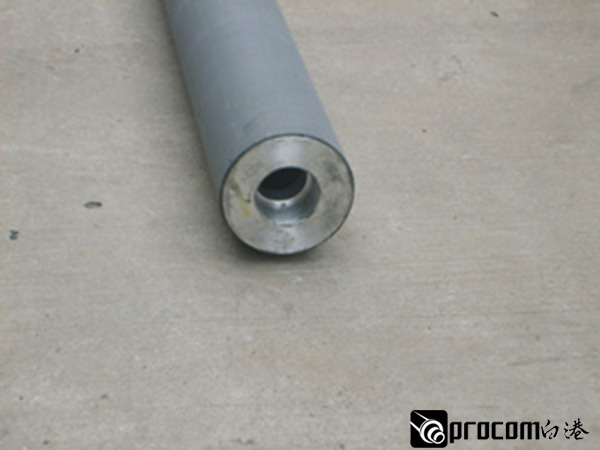
Introduction to the company's technological strength: Three core advantages of Nanjing Baigang
STEP1:A fully independently controllable R&D system throughout the entire process
Nanjing Baigang possesses full-chain R&D capabilities ranging from material selection and structural design to process optimization. Its independently developed "Carbon Fiber Composite Material Design and Calculation Software" can automatically generate optimal layup schemes based on operating condition parameters (such as load, rotational speed, and temperature), reducing the number of trial productions by over 30%. For example, for a φ500mm connecting shaft designed for a wind power enterprise, by optimizing the layup angles (0°/±45°/90°), the fatigue resistance was improved by 40% and the weight was reduced by 25%.
STEP2:High-precision manufacturing and inspection equipment
The company is equipped with advanced facilities such as five-axis simultaneous CNC machine tools, laser scanners, and random signal and vibration analyzers, enabling customized production of any specifications with diameters ranging from Φ40mm to Φ600mm and lengths under 10 meters. Its inspection system covers the entire process from raw materials to finished products, including fiber volume content testing (per ASTM D3171 standard), interlaminar shear strength testing (ILSS ≥ 80MPa), and dynamic fatigue testing (10^7 cycles without cracks), ensuring compliance with ISO9001:2000 quality system requirements.
STEP3:Rich industry application experience
Since its establishment in 2003, Nanjing Baigang has delivered a cumulative total of over 4,000 carbon fiber drive shafts, which are widely applied in fields such as wind power generation (e.g., Goldwind Science & Technology, Envision Energy), cooling tower fans (e.g., Shuangliang Group), and textile machinery (e.g., Jingwei Textile Machinery). Its products have undergone extreme environment testing and long-term operational validation, with their reliability highly recognized by customers. For instance, among the 200 connecting shafts provided to a certain wind farm, after five years of operation, the failure rate was only 0.5%, significantly lower than the 3% for metal shafts.
FAQ: Q&A Guide to Technology Selection
Q1: How to select the material modulus for carbon fiber non-standard parts?
A: The material modulus should be determined based on the type of operating load. For static loads (such as support structures), T300 (with a modulus of 230 GPa) can be selected due to its lower cost; for dynamic loads (such as rotating shafts), T700 (with a modulus of 490 GPa) or T800 (with a modulus of 588 GPa) should be chosen to enhance fatigue resistance. Nanjing Baigang can provide modulus recommendation plans based on the load spectrum (such as stress amplitude and number of cycles).
Q2: How is the machining accuracy guaranteed?
A: High-precision machining requires control from three aspects: equipment, process, and inspection. In terms of equipment, a five-axis simultaneous CNC machine tool (positioning accuracy ±0.005 mm) is selected; for the process, low-temperature curing (≤120℃) is adopted to reduce thermal deformation, and vacuum suction fixtures are used to prevent interlayer peeling; in terms of inspection, a laser scanner (resolution 0.001 mm) is employed for full-size inspection to ensure that the roundness and cylindricity errors are ≤±0.1 mm.
Q3: How to verify the environmental adaptability of non-standard parts?
A: Nanjing Baigang verifies product reliability through simulated environmental testing. For example, the salt spray test is conducted for 480 hours in accordance with the GB/T 10125 standard, with no surface corrosion observed; the high-temperature aging test is carried out at 80℃ for 1000 hours as per the ASTM D573 standard, with a tensile strength retention rate of ≥90%; the low-temperature test is performed at -40℃ for 24 hours, with a bending stiffness change rate of ≤5%. For more information, please visit our official website:www.baigangcomposites.com
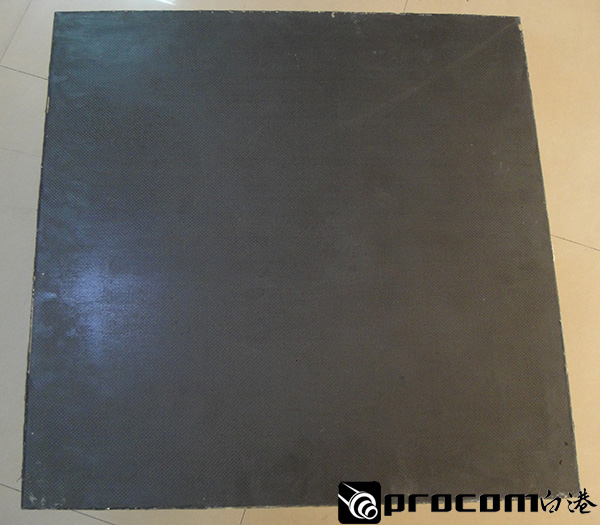
Reference for full text summary
The technical realization of customized non-standard carbon fiber components requires balancing material properties, processing precision, and environmental adaptability. Nanjing Baigang Composite Materials Co., Ltd. has successfully overcome multiple technical challenges through a fully autonomous and controllable R&D system, high-precision manufacturing and testing equipment, and extensive industry application experience, providing high-performance customized solutions for fields such as wind power generation and textile machinery. Its products are characterized by high precision (dimensional error ≤ ±0.1mm), high reliability (failure rate ≤ 0.5%), and long service life (over 15 years), helping clients enhance equipment efficiency and operational stability. Going forward, Nanjing Baigang will continue to deepen technological innovation, driving the development of customized non-standard carbon fiber components toward higher precision and performance.