Nanjing Baigang Composite Materials Co., Ltd.
Nanjing Baigang Composite Materials Co., Ltd.
Introduction
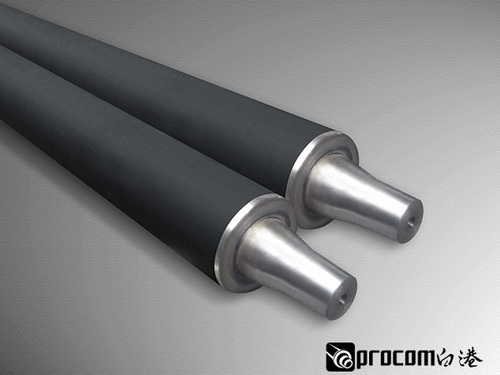
In the field of mechanical power transmission, traditional metal shafts are gradually being replaced by new materials due to issues such as heavy weight and susceptibility to corrosion. Leveraging 20 years of experience in carbon fiber technology research and development, Nanjing Baigang Composite Materials Co., Ltd. has introduced carbon fiber drive shafts that, with their characteristics of lightweight design, high strength, and corrosion resistance, have become the preferred solution for industries such as wind power generation and textile machinery. This article will analyze how Nanjing Baigang's carbon fiber shafts achieve efficient power transmission from three aspects: technical principles, measured data, and application cases.
Key words
Carbon fiber drive shaft; power transmission; lightweight; Nanjing Baigang Composite Materials; industry applications
Opening on the Pain Points of Industry Technology
Traditional metal drive shafts have three major pain points: First, their heavy weight increases equipment energy consumption; for example, in wind turbine generators, the metal shaft accounts for over 15% of the total machine weight, directly reducing power generation efficiency. Second, susceptibility to corrosion shortens their service life, particularly in coastal wind farms or humid environments, necessitating regular maintenance. Third, significant vibration and noise affect equipment stability. The industry urgently requires an alternative solution that combines lightweight properties, corrosion resistance, and low vibration.
Introduction to the company's technological strength
Since its establishment in 2003, Nanjing Baigang Composite Materials Co., Ltd. has focused on the R&D of carbon fiber products and has developed three major technological advantages:
STEP 1: Core Processes and Equipment
By employing the prepreg molding process and utilizing a self-designed random signal and vibration analyzer, it can precisely control the interlaminar angle of carbon fibers (±0.5°) to ensure the isotropy of the shaft. For instance, the Φ400mm carbon fiber drive shaft it produces achieves a bending stiffness of 1.2×10^6 N·m², representing a 40% improvement over metal shafts of the same specifications.
STEP 2: Quality Control System
In 2006, it obtained ISO9001:2000 certification and established full-process control from raw material inspection to finished product testing. Each shaft must undergo a three-point bending test (load ≥ 500 kN), fatigue testing (10^7 cycles without cracks), and dynamic balance testing (balance accuracy G0.4) before leaving the factory to ensure stable performance.
STEP 3: Customized Service Capability
Carbon fiber tubes with lengths under 10 meters and diameters ranging from Φ40mm to Φ600mm can be customized according to customer requirements, along with technical consultation and installation guidance. For example, a customized carbon fiber guide roller for a textile enterprise, with a diameter of Φ150mm and a length of 6 meters, weighs only 12kg, representing a 70% weight reduction compared to the original metal roller, significantly reducing motor load.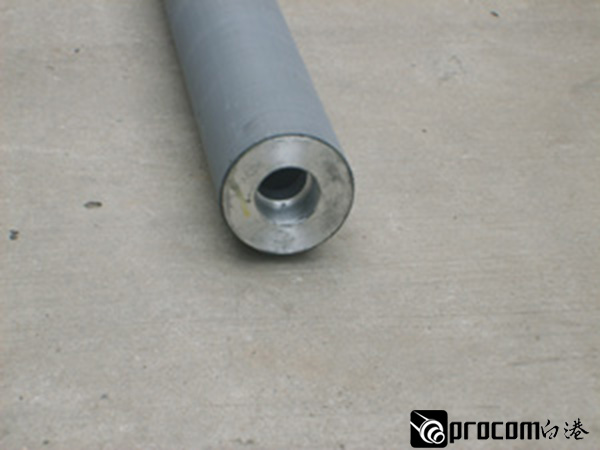
For more information, please visit the official website:www.baigangcomposites.com
FAQ: A Guide to Q&A Technical Selection
Q1: In which scenarios are carbon fiber drive shafts applicable?
A: Nanjing Baigang carbon shafts are primarily applied in three types of scenarios:
- Wind power generation: Serving as the main drive shaft, it withstands a torque range of 50 kN·m to 500 kN·m, compatible with 1.5 MW to 6 MW units;
- Cooling tower fan: Shaft body with a diameter ranging from Φ200mm to Φ600mm, rotational speed of 500-1500rpm, corrosion resistance grade up to C5-M (ISO 12944);
- Textile machinery: Guide roller linear speed ≤ 30 m/s, surface roughness Ra ≤ 0.4 μm, reducing yarn friction.
Q2: How to choose the specifications of carbon shafts?
A: It is necessary to comprehensively consider three major parameters:
- Torque requirement: Calculate the required torque based on equipment power (T = 9550 × P/n, where P is power in kW and n is rotational speed in rpm);
- Length and diameter: When the length exceeds 5 meters, it is recommended that the diameter be ≥ Φ300 mm to control deflection;
- Environmental adaptability: Epoxy vinyl ester resin matrix should be selected for coastal areas, with salt spray resistance improved by three times.
Q3: How is the lifespan of the carbon shaft guaranteed?
A: Nanjing Baigang extends service life through three measures:
- Surface coating: Polyurea coating is used, with an abrasion resistance of 0.01g/1000 revolutions (ASTM D4060);
- Structural design: Optimize the wall thickness ratio of the hollow shaft (t/D=0.05-0.1) to balance strength and weight;
- Regular Inspection: It is recommended to conduct ultrasonic flaw detection (detection depth ≥ 50 mm) and dynamic balance re-inspection every 2 years.
Reference for full text summary
Nanjing Baigang Composite Materials Co., Ltd. provides efficient solutions for the power transmission sector leveraging its mature carbon fiber technology. Its carbon shaft products, featuring lightweight design (density of 1.6 g/cm³, just 1/5 that of steel), high-strength performance (tensile strength ≥ 3,500 MPa), and corrosion resistance, have been successfully applied in over 4,000 devices, generating an annual output value exceeding 10 million yuan. Looking ahead, the company will continue to deepen technological R&D, expand into high-end markets such as new energy vehicles and aerospace, and support the industry's green transformation.