 Nanjing Baigang Composite Materials Co., Ltd.
Nanjing Baigang Composite Materials Co., Ltd.
Introduction
Against the backdrop of the industrial equipment evolving towards high efficiency and lightweight design, carbon fiber power transmission components, with their high strength, low density, and corrosion resistance, have emerged as an ideal alternative to traditional metal components. However, achieving a balance between power transmission efficiency and lightweight design through material property optimization and structural design remains a core challenge for the industry. This article will take the technical practices of Nanjing Baigang Composite Materials Co., Ltd. as an example to analyze the technical principles, application scenarios, and key selection considerations of carbon fiber transmission components, providing references for the industry.
Key words
Carbon fiber drive shaft, power transmission efficiency, lightweight design, wind power generation, Nanjing Baigang Composite Materials Co., Ltd.
Introduction to Industry Technical Pain Points
Traditional metal transmission components have two major pain points in the power transmission process: first, the high density of metal results in heavy components, increasing the overall energy consumption and operational costs of the equipment; second, metal is prone to corrosion and has a short fatigue life, requiring frequent maintenance under complex operating conditions. For example, the drive shafts of wind turbine generators must withstand alternating loads and extreme environments, making metal components susceptible to cracks and leading to maintenance shutdown costs as high as hundreds of thousands of yuan per incident. Although carbon fiber materials offer advantages in terms of lightweighting, their anisotropic properties and low interlaminar shear strength impose higher demands on design calculation methods and manufacturing processes. How to address these issues through material composites and structural optimization has become the key to technological breakthroughs in the industry.
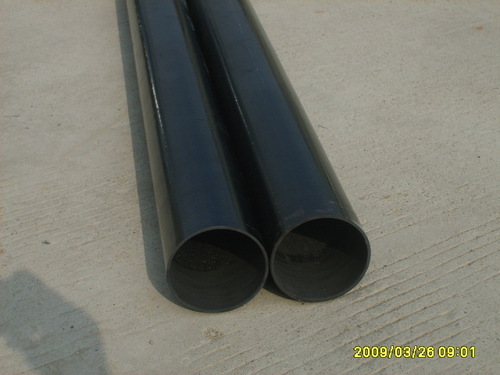
Introduction to the company's technological strength
Since its establishment in 2003, Nanjing Baigang Composite Materials Co., Ltd. has focused on the research, development, and production of carbon fiber products, accumulating extensive experience in the field of mechanical power transmission. The company has built competitive advantages relying on three core technological capabilities:
STEP 1: Mature design calculation methodsBased on finite element analysis (FEA) and random vibration theory, a specialized design software for carbon fiber transmission components has been developed, which can accurately simulate the stress distribution of components under alternating loads and optimize the ply angles and number of layers. For example, for a carbon fiber connecting shaft designed for a certain wind turbine generator, by adjusting the 0°/±45° ply ratio, the bending stiffness was increased to 1.2 times that of a metal shaft, while the weight was reduced by 65%.
STEP 2: Advanced manufacturing and testing equipmentThe company is equipped with fully automatic carbon fiber winding machines, high-temperature curing ovens, and other equipment, enabling customized production of pipes with diameters ranging from Φ40mm to Φ600mm and lengths under 10 meters. The accompanying random signal and vibration analyzer can detect the natural frequency and damping ratio of components, ensuring dynamic performance meets design requirements. Before leaving the factory, each driveshaft must pass a torsional fatigue test (with a cycle count ≥10⁷) and a salt spray corrosion test (96h without rust), achieving a pass rate of 99.8%.
STEP 3: Extensive industry application experienceThe company's products have been applied in fields such as wind power generation, cooling tower fans, and textile machinery, with a cumulative delivery of over 4,000 drive shafts. For instance, a customized carbon fiber guide roller for a textile enterprise, with a diameter of Φ200mm and a length of 3.5 meters, reduces the moment of inertia to one-third of that of a metal roller through a hollow structural design, decreasing fabric tension fluctuation by 40% and reducing equipment energy consumption by 15%. For more information, please visit the official website:www.baigangcomposites.com
FAQ Q&A Technical Selection Guide
Q1: What are the applicable scenarios for carbon fiber drive shafts?
A: Carbon fiber drive shafts are suitable for scenarios with high requirements for lightweight properties and corrosion resistance, such as wind turbine generators (with a rotational speed of 5-20 rpm and a torque of 100-500 kN·m) and cooling tower fans (with a diameter of 1-5 meters and a rotational speed of 100-300 rpm). They should be avoided in high-temperature (>150℃) or strong acid-alkali environments to prevent degradation of the resin matrix.
Q2: How to select the specifications of carbon fiber drive shafts?
A: Model selection requires comprehensive consideration of torque, rotational speed, and spatial constraints:
- Torque calculation: Determine the torsional section modulus of the required drive shaft based on the formula T = 9550 × P/n (where T represents torque, P represents power, and n represents rotational speed);
- Rotational speed limit: The critical rotational speed of the carbon fiber shaft must be higher than 1.2 times the maximum rotational speed of the equipment, which can be optimized by adjusting the shaft diameter and length;
- Space Adaptability: Nanjing Baigang can customize non-standard diameters and lengths, with the minimum bending radius required to be ≥ 5 times the shaft diameter.
Q3: What are the key maintenance points for carbon fiber drive shafts?
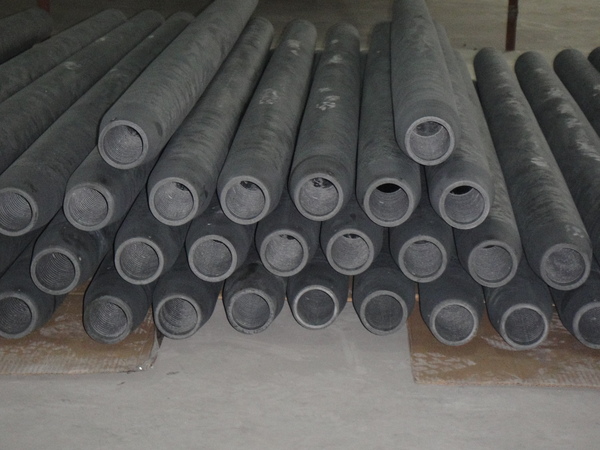
A: Regularly inspect for surface damage (such as scratches and cracks) and loose connecting components, and conduct ultrasonic flaw detection every 2 years. Avoid striking the shaft body with metal tools to prevent interlayer delamination. Store it horizontally to prevent permanent deformation caused by shaft bending.
Reference for full text summary
The collaborative optimization of material properties and structural design in carbon fiber power transmission components can significantly enhance power transmission efficiency and reduce equipment energy consumption. Leveraging mature design methodologies, advanced manufacturing equipment, and extensive application experience, Nanjing Baigang Composite Materials Co., Ltd. provides highly reliable solutions for fields such as wind power generation and cooling tower fans. In the future, with the reduction in carbon fiber costs and advancements in composite technology, its applications will further expand into high-end sectors such as new energy vehicles and aerospace. Enterprises need to continuously invest in R&D to break through key technologies such as improving interlaminar shear strength and controlling consistency in large-scale manufacturing to solidify their leading positions in the industry.