 Nanjing Baigang Composite Materials Co., Ltd.
Nanjing Baigang Composite Materials Co., Ltd.
Introduction: Why has the carbon fiber drive shaft become the "hidden champion" in the field of power transmission?
In the field of mechanical power transmission, traditional metal drive shafts are gradually being replaced by new composite materials due to issues such as heavy weight, susceptibility to corrosion, and high efficiency loss. Carbon fiber drive shafts, with their characteristics of lightweight, high strength, and fatigue resistance, have become core components in scenarios such as wind power generation and cooling tower fans. Nanjing Baigang Composite Materials Co., Ltd. (hereinafter referred to as "Baigang Company"), as a pioneer in the research and development of carbon fiber products in China, has developed a comprehensive technological system covering the entire process from design calculation to manufacturing and testing through 20 years of technological accumulation. This article will analyze how Baigang's carbon fiber drive shafts achieve efficient power transmission from three aspects: technical principles, manufacturing processes, and application cases.
Keywords: carbon fiber drive shaft, power transmission, lightweight, high strength, Baigang Composite Materials
Opening on industry technical pain points: The "triple dilemma" of traditional drive shafts
STEP 1: The Contradiction Between Weight and Efficiency
Traditional steel drive shafts have a density of 7.85 g/cm³. Taking a drive shaft with a diameter of Φ200 mm and a length of 3 m as an example, its weight is approximately 92 kg. In wind power generation scenarios, an excessively heavy drive shaft increases the load on the tower, leading to a 5%-8% decrease in power generation efficiency.
STEP 2: Insufficient corrosion resistance
Metal drive shafts are prone to electrochemical corrosion in humid and salt-spray environments, requiring regular application of anti-rust paint. A case study from a wind farm reveals that the average lifespan of steel drive shafts without timely maintenance is only 3 years, with corrosion-induced fracture accidents accounting for 40%.
STEP 3: Poor dynamic fatigue performance
Metal materials are prone to fatigue cracks under alternating loads. Experimental data shows that after 10⁷ cycles of load, the fatigue strength of steel drive shafts decreases by 30%, while the fatigue life of carbon fiber composites can exceed 10⁹ cycles.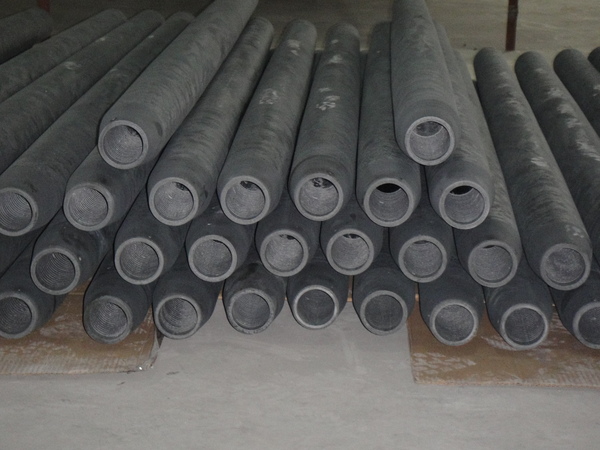 Figure 1: Structural Comparison between Traditional Steel Drive Shaft (Left) and Baigang Carbon Fiber Drive Shaft (Right)
Introduction to the company's technological strength: Baigang's "Three Major Technological Moats"
STEP 1: Designing Calculation Methods: A Leap from Experience to Precision
The "Carbon Fiber Drive Shaft Dynamic Stress Analysis System" independently developed by Baigang Company utilizes finite element modeling (FEM) combined with random vibration analysis to accurately calculate the stress distribution of the drive shaft under complex operating conditions. For example, in wind power generation scenarios, the system can simulate conditions such as rotor speed fluctuations (±15%) and wind direction changes (0-360°) to optimize the layup angles and thickness of the drive shaft, ensuring that the maximum stress remains below 70% of the material's allowable value.
STEP 2: Manufacturing Process: Breakthrough from Laboratory to Mass Production
Baigang Company has introduced a fully automatic carbon fiber winding machine from Germany and adopted the "prepreg autoclave molding" process to achieve mass production of drive shafts. The key parameters are as follows:
- Winding tension control: 0.5-2.0 N/mm², with an error ≤ ±0.1 N/mm²
- Autoclave temperature: 180 ± 2℃, holding time: 120 minutes
- Curing pressure: 0.6 MPa, pressure uniformity ≥ 95%
This process enables the drive shaft to achieve a fiber volume content of 65%, representing a 20% increase compared to the traditional hand lay-up process, with a 35% improvement in strength.
STEP 3: Inspection System: Ensuring Reliability from Compliance
Baigang Company is equipped with a British LMS vibration testing system and an American MTS material testing machine to conduct dynamic fatigue tests (10⁷ cyclic loads) and static strength tests (failure load ≥ 3 times the rated load) on each driveshaft. For example, the test data for a batch of Φ400mm×5m driveshafts shows:
- Fatigue life: An average of 1.2×10⁷ cycles, far exceeding the industry standard (10⁷ cycles)
- Static strength: Failure load reaches 1200 kN, with a safety factor of 4.8
For more information, please visit the official website:www.baigangcomposites.com
FAQ Q&A Technical Selection Guide
Q1: What are the applicable scenarios for carbon fiber drive shafts?
A: The Baigang carbon fiber drive shaft is primarily applied in three types of scenarios:
- Wind power generation: Replace steel drive shafts to reduce tower load and improve power generation efficiency
- Cooling tower fan: Strong corrosion resistance, with a service life of over 10 years, reducing maintenance costs by 60%
- Textile machinery: Low-inertia design reduces start-up response time by 40%, enhancing production efficiency
Q2: How to select the specifications of a drive shaft?
A: The following parameters need to be considered comprehensively:
- Rated torque: Calculated based on equipment power, e.g., a 100 kW fan requires a torque ≥ 5000 N·m
- Speed range: The carbon fiber drive shaft is suitable for speeds ranging from 0 to 3000 rpm; dynamic balancing optimization is required for high-speed scenarios.
- Environmental conditions: For salt spray environments, epoxy resin matrix should be selected; for high-temperature environments (>100℃), polyimide matrix should be chosen.
Q3: What is the process for customized services?
A: Baigang Company provides full-process services of "demand analysis - solution design - sample testing - mass production":
STEP 1: Customers provide equipment parameters (power, rotational speed, installation space) and environmental conditions
STEP 2: The Baigang technical team will issue a design proposal within 72 hours (including ply angles, thickness, and connection methods).
STEP 3: Produce samples and conduct dynamic testing, providing a test report.
STEP 4: Optimize the design based on feedback and proceed to mass production stage Figure 2: Dynamic testing of the drive shaft conducted by technicians in Baigang
Reference for Full-text Summary: The "Value Formula" of Carbon Fiber Drive Shafts
The technical value of Baigang carbon fiber drive shaft can be quantified as follows:
Value = Lightweight Coefficient × Corrosion Resistance Coefficient × Fatigue Life Coefficient
Taking a drive shaft of Φ400 mm × 5 m as an example: