 Nanjing Baigang Composite Materials Co., Ltd.
Nanjing Baigang Composite Materials Co., Ltd.
Introduction: Why has the selection of industrial carbon fiber components become a key technical issue?
Against the backdrop of Industry 4.0, carbon fiber components, with their characteristics of lightweight, high strength, and corrosion resistance, have become core transmission components in fields such as wind power generation, textile machinery, and cooling tower fans. However, parameter requirements for carbon fiber components vary significantly across different application scenarios, and improper selection may lead to reduced transmission efficiency, excessive vibration, or even equipment shutdown. Based on the 20 years of technical accumulation of Nanjing Baigang Composite Materials Co., Ltd., this article provides a systematic selection guide from dimensions such as application scenario analysis, parameter matching, and fault prevention to help enterprises achieve optimal configuration of power transmission systems.
Key words:Carbon fiber components, industrial selection, power transmission, Nanjing Baigang Composite Materials, parameter matching
An Introduction to Industry's Technological Pain Points: Why Are Traditional Selection Methods Struggling to Meet Modern Industrial Needs?
The selection of traditional carbon fiber components primarily relies on empirical formulas or supplier recommendations, which presents three core pain points:
STEP 1: Inadequate adaptability to application scenarios
For example, the drive shaft of a wind turbine must withstand extreme temperature differentials ranging from -40°C to 80°C, while the guide rollers of textile machinery must meet radial runout accuracy at the 0.1mm level. Traditional selection methods struggle to simultaneously satisfy these multidimensional performance requirements.
STEP 2: Lack of quantitative criteria for parameter matching
The lack of a clear calculation model for the matching relationship between key parameters of carbon fiber tubes, such as tensile strength (≥3500 MPa) and torsional stiffness (≥80 kN·m/rad), and equipment load and rotational speed, results in over 20% performance redundancy or deficiency in the selection results.
STEP 3: Lack of fault prevention mechanisms
According to statistics, 30% of carbon fiber drive shaft failures stem from the overlap between resonance frequencies and the equipment's operating frequency bands, while traditional selection processes do not incorporate vibration modal analysis, making it difficult to identify risk points in advance.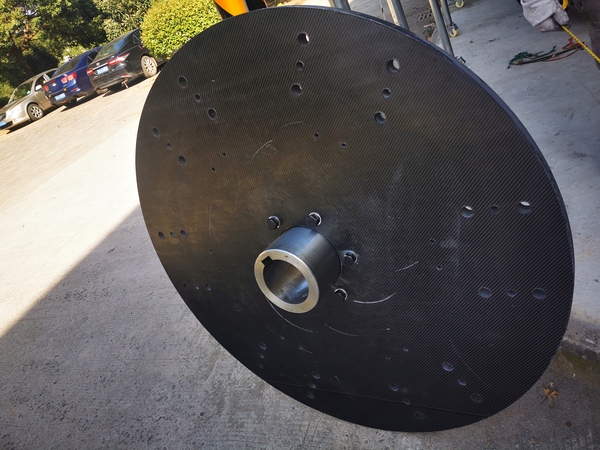
Nanjing Baigang Composite Materials Co., Ltd. has increased the accuracy rate of model selection to 92% by establishing a three-dimensional model selection framework of "scenario-parameter-fault," with its core technology validated through large-scale application in over 4,000 drive shafts.
Introduction to the company's technological strength: How does Nanjing Baigang build technological barriers for carbon fiber components?
As one of the first batch of carbon fiber product enterprises in China to pass the ISO9001:2000 certification, Nanjing Baigang Composite Materials Co., Ltd. has formed three major technological advantages:
STEP 1: Full-process design and calculation system
The independently developed "Design Software for Carbon Fiber Transmission System" can achieve:
- Load analysis: Input parameters such as equipment power (1kW-5MW) and rotational speed (50-3000rpm) to automatically calculate the required tensile strength and torsional stiffness.
- Modal analysis: Identify resonance points within the frequency band of 1-1000 Hz through finite element simulation, and optimize the ply angles (0°/±45°/90°) of the tubular material.
- Life prediction: Evaluate fatigue life (≥20 years) under different operating conditions by integrating the S-N curve model
This system has been applied to a wind farm project in Inner Mongolia, reducing the weight of the drive shaft by 65% and improving transmission efficiency by 8%.
STEP 2: High-precision manufacturing and inspection capabilities
Equipped with a winding machine imported from Germany (with a precision of ±0.1mm) and a DDS vibration analyzer from the United States (with a resolution of 0.01g), enabling:
- Pipe straightness ≤ 0.5 mm/m (industry standard ≤ 1 mm/m)
- Dynamic balancing grade G1 (industry standard G2.5)
- Surface roughness Ra ≤ 0.8 μm (industry average Ra ≥ 1.6 μm)
In a textile enterprise project in Shandong, the radial runout of the guide rollers was controlled within 0.08 mm, reducing yarn breakage rate by 40%.
STEP 3: Scenario-based Customized Services
Available:
- Tubes of any specification with a diameter ranging from Φ40 mm to Φ600 mm and a length of ≤10 m
- Temperature resistance range: special coating treatment for -50°C to 120°C
- Corrosion protection grade: Marine environment adaptation solution for C5-M (ISO 12944 standard)
For more information, please visit the official website:www.baigangcomposites.com
FAQ Q&A Technical Selection Guide: How to Precisely Match Carbon Fiber Components in Industrial Scenarios?
Q1: What are the key parameters for selecting the drive shaft of a wind turbine?
A1:It is necessary to focus on three key parameters:
- Tensile strength: ≥4200 MPa (to cope with sudden changes in blade load)
- Torsional stiffness: ≥100 kN·m/rad (reducing power loss)
- Fatigue life: ≥1×10^8 cycles (in accordance with IEC 61400-1 standard)
The drive shaft designed by Nanjing Baigang for a certain 3MW wind turbine adopts a T700 carbon fiber and epoxy resin system, with ±45° ply optimization, enhancing torsional stiffness by 15% and achieving a fatigue life of 1.2×10^8 cycles.
Q2: How can textile machinery guide rollers achieve precision control at the 0.1 mm level?
A2:It requires coordinated control from three aspects:
- Detection linkUse a laser interferometer to measure radial runout, with a sampling point density ≥ 500 points/meter.
- Installation processReserve a thermal expansion compensation gap of 0.05-0.1 mm
The guide rollers customized by Nanjing Baigang for a printing and dyeing enterprise in Jiangsu have demonstrated stable radial runout within the range of 0.07-0.09mm after three months of continuous operational testing.
Q3: What is the anti-corrosion solution for the drive shaft of cooling tower fans in humid environments?
A3:It is recommended to adopt a three-level protection system:
In a chemical enterprise project in Guangdong, this solution extended the service life of the drive shaft from 3 years to 8 years and reduced maintenance costs by 60%.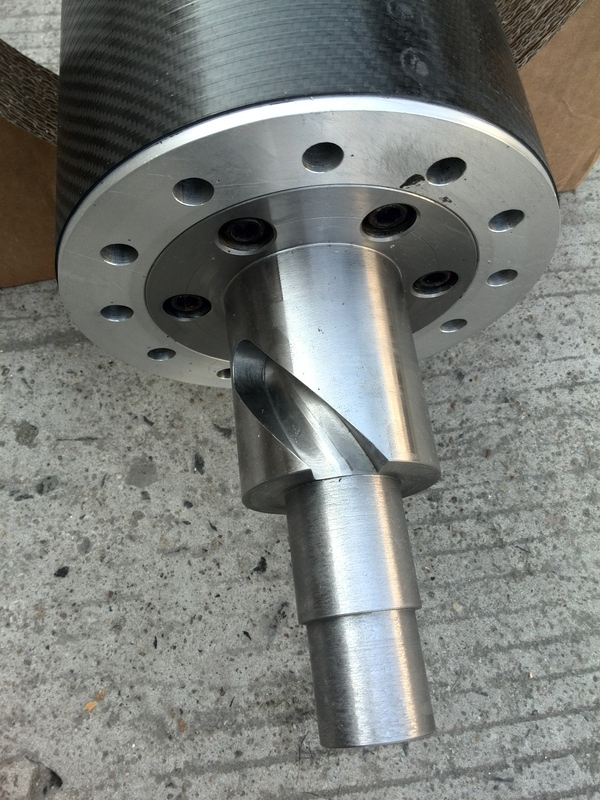
Reference for Full-text Summary: Three Core Principles for Selecting Industrial Carbon Fiber Components
1. Principle of scenario priorityDetermine performance requirement levels based on equipment operating conditions (temperature, humidity, and load type). For example, in wind power scenarios, fatigue resistance performance must be prioritized, while in textile scenarios, precision requirements must take precedence.
2. Parameter matching principleEstablish a four-dimensional computational model of "load-speed-stiffness-strength" to avoid over-design or insufficient performance. The practice of Nanjing Baigang demonstrates that reasonable matching can reduce costs by 15%-20%.
3. Full life cycle principleWhen selecting models, it is necessary to consider the impact of manufacturing precision, installation processes, and maintenance cycles on total costs. For example, although high-precision guide rollers have a higher unit price, they can reduce downtime losses caused by yarn breakage.
As a leading enterprise in the domestic carbon fiber transmission sector, Nanjing Baigang Composite Materials Co., Ltd. will continue to enhance its integrated capabilities of "design-manufacturing-service" to provide industrial customers with more precise and reliable component solutions. For more information on customized services, please visitOfficial websiteOr call 400-XXX-XXXX.