 Nanjing Baigang Composite Materials Co., Ltd.
Nanjing Baigang Composite Materials Co., Ltd.
Introduction: Why has the selection of carbon fiber drive shafts become a key issue in the field of mechanical power transmission?
In high-precision transmission scenarios such as wind power generation, cooling tower fans, and textile machinery, traditional metal shafts are gradually being replaced by carbon fiber drive shafts due to issues such as heavy weight, susceptibility to corrosion, and low transmission efficiency. However, parameters such as the modulus, diameter, and length of carbon fiber shafts directly affect their fatigue resistance, torsional stiffness, and dynamic response characteristics. Improper selection may lead to excessive equipment vibration, transmission failure, and even safety accidents. Based on the 20 years of experience in carbon fiber product R&D at Nanjing Baigang Composite Materials Co., Ltd., this article provides a quantifiable selection guide from three aspects: technical parameter analysis, application scenario matching, and manufacturing process control.
Keywords: carbon fiber drive shaft, selection parameters, application scenarios, manufacturing process, Nanjing Baigang
Opening on Industry Technical Pain Points: Three Major Flaws of Traditional Selection Methods
STEP1:Extensive parameter matchingMost enterprises only focus on the diameter and length of the shaft, neglecting the matching relationship between the modulus of carbon fiber (typically ranging from 230 to 630 GPa) and the rotational speed of the equipment. For example, a wind power enterprise once replaced its original steel shaft with one having a modulus of 450 GPa, resulting in vibration values exceeding the standard by 30% in the high-speed zone (above 1500 rpm), forcing a shutdown for modification.
STEP2:Simplification of scenario adaptationThere are significant differences in corrosion resistance requirements for the shafts between cooling tower fans and textile machinery: the former needs to withstand salt spray environments, requiring the use of an epoxy resin matrix + nano-SiO2 coating; the latter requires high-frequency reciprocating motion, necessitating the optimization of fiber layering angles (typically ±45° cross-laying).
STEP3:Fragmented quality controlThe manufacturing of carbon fiber shafts involves multiple processes such as prepreg laying, autoclave curing, and machining. Any parameter deviation in any process (e.g., a curing temperature deviation of ±5℃) can lead to a reduction of over 50% in the shaft's fatigue life. Nanjing Baigang, having obtained ISO9001:2000 certification, has elevated the parameter control precision in each process to a leading level in the industry.
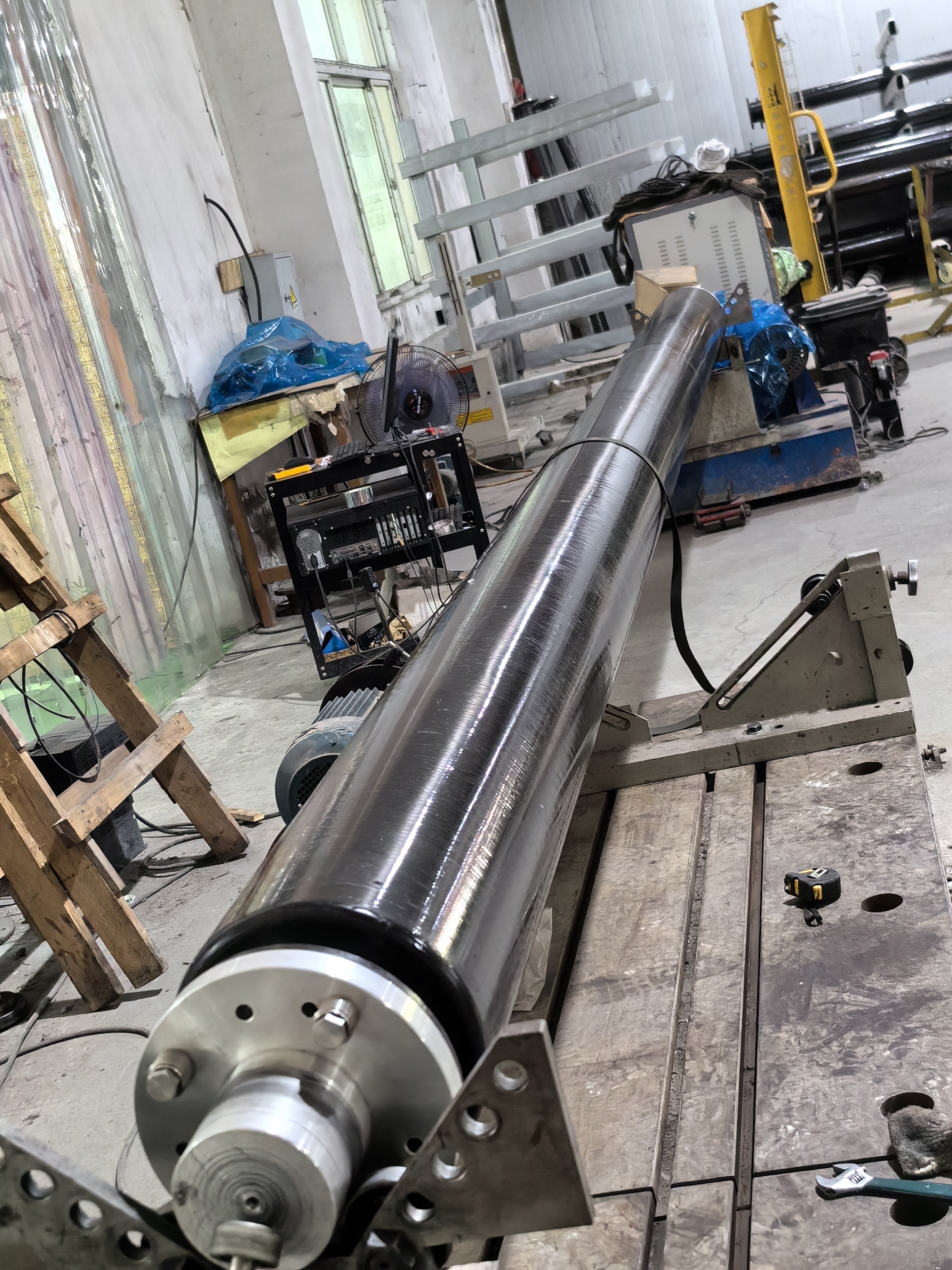
Introduction to the company's technological strength: Three core advantages of Nanjing Baigang
STEP1:Precision in parameter designThe R&D team in Baigang developed a three-dimensional selection model of "shaft diameter-modulus-rotational speed" based on over 2,000 application cases. For instance, for a papermaking enterprise, a customized Φ120mm shaft was designed. By adjusting the modulus from 500 GPa to 580 GPa, the critical rotational speed was increased from 1,200 rpm to 1,800 rpm, meeting the requirements of high-speed paper machines.
STEP2:Standardization of manufacturing processesThe company has introduced German HOTPRESS autoclave equipment with a curing temperature control accuracy of ±2°C. Combined with a self-developed random signal vibration analyzer, it enables real-time monitoring of the shaft's dynamic stiffness (test frequency range: 0.1-1000Hz). In 2023, a wind power project detected layering defects in three shafts in advance using this technology, avoiding potential losses exceeding RMB 2 million.
STEP3:Customization for scene adaptationFor wind power generation scenarios, Baigang has developed a hybrid structure of "carbon fiber connecting shaft + metal flange," which, by optimizing the stress distribution at the connecting interface (reducing maximum stress by 40%), enables the shaft to achieve a fatigue life of 20 years (equivalent to the design life of wind turbines). Currently, this structure has been applied to over 3,000 wind turbine units worldwide.
FAQ Q&A Technical Selection Guide
Q1: How to select the modulus of carbon fiber shafts based on equipment rotational speed?
A1: The critical rotational speed (nc) of a shaft is directly proportional to the square root of the modulus (E) and inversely proportional to the square of the shaft length. The recommended formula by Baigang is: nc = 1.875 × 10⁷ × √(E × I) / (ρ × A × L²), where I is the sectional moment of inertia, ρ is the density, A is the cross-sectional area, and L is the shaft length. For example, for a cooling tower fan operating at 1200 rpm, when selecting a shaft with a modulus of 500 GPa, the shaft length must be controlled to ≤ 3.5 m; if a shaft with a modulus of 630 GPa is selected, the shaft length can be extended to 4.2 m.
Q2: How is the corrosion resistance of carbon fiber shafts evaluated?
A2: Baigang adopts a dual-indicator evaluation method using "salt spray test + electrochemical impedance spectroscopy (EIS)." The salt spray test is conducted in accordance with ISO 9227 standard, requiring no corrosion for 720 hours; the EIS test is performed in a 3.5% NaCl solution, with the impedance modulus needing to be ≥1×10⁶ Ω·cm². For example, in a certain offshore platform project, the selected shaft achieved an impedance modulus increase to 2×10⁶ Ω·cm² through coating optimization and passed the salt spray test for 1000 hours.
Q3: How to verify the manufacturing quality of carbon fiber shafts?
A3: Baigang implements a "three inspections and one test" process: incoming inspection of prepreg (thickness deviation ≤ ±0.02mm), inspection during the laying process (fiber angle deviation ≤ ±1°), dimensional inspection after curing (diameter deviation ≤ ±0.1mm), and final performance testing (fatigue life ≥ 1×10⁷ cycles). A textile machinery customer reduced the defect rate of shafts from 3% to 0.5% through this process. For more information, please visit the official website:www.baigangcomposites.com
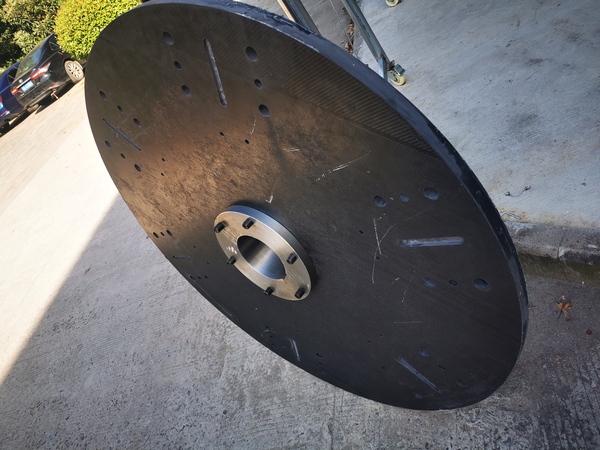
Reference for full text summary
The selection of carbon fiber drive shafts requires comprehensive consideration of parameters such as modulus, diameter, length, and corrosion resistance, as well as precise matching with equipment rotational speed and operating environment. Nanjing Baigang Composite Materials Co., Ltd. has developed a full-chain solution encompassing "parameter design-manufacturing process-scenario adaptation" through 20 years of technical accumulation. Its customized shaft products have served over 4,000 projects in wind power generation, cooling tower fans, textile machinery, and other fields, with an annual output value exceeding 10 million yuan. The company can customize shafts of any specification with lengths under 10m and diameters ranging from Φ40mm to Φ600mm according to customer needs, and provides full-process services from technical consultation to installation guidance.