 Nanjing Baigang Composite Materials Co., Ltd.
Nanjing Baigang Composite Materials Co., Ltd.
Introduction: Why has the selection of carbon fiber drive shafts become a core challenge in industrial design?
In high-precision transmission scenarios such as wind power generation and textile machinery, traditional metal shafts have struggled to meet the demands of modern industry for lightweight construction and high reliability due to issues such as heavy weight and short fatigue life. Carbon fiber drive shafts, with their high specific strength (exceeding 2000 MPa), strong corrosion resistance, and vibration attenuation rates three times superior to those of metals, have become key components for upgrading high-end equipment. However, their selection involves 12 core parameters, including torque calculation, modal matching, and environmental adaptability, with incorrect choices leading to a 15%-30% decline in transmission efficiency. Based on the 20 years of R&D experience in carbon fiber drive shafts by Nanjing Baigang Composite Materials Co., Ltd., this article systematically analyzes the key technical points of selection and provides a quantifiable decision-making framework.
Keywords: carbon fiber drive shaft, selection parameters, working condition adaptation, Nanjing Baigang, power transmission
Industry Technical Pain Points at the Beginning: Three Major Pitfalls of Traditional Selection Methods
STEP 1: Torque Calculation Error Pitfall - A wind power enterprise once selected a carbon fiber shaft with a rated torque of 200 kN·m without considering the dynamic torque amplification effect caused by wind loads. During actual operation, the shaft fractured due to a peak torque reaching 280 kN·m, resulting in maintenance costs exceeding 500,000 yuan.
STEP 2: Modal Matching Failure Pitfall—In the textile machinery industry, resonance often occurs due to the coupling between the natural frequency of the drive shaft and the vibration frequency of the loom (typically 80-120Hz), leading to loosening of the bearing housing and a 40% increase in equipment downtime.
STEP 3: Environmental Adaptability Blind Spot—In the scenario of cooling tower fans, salt spray corrosion caused resin degradation on the surface of a carbon fiber shaft in a certain enterprise, resulting in interlaminar peeling after just 18 months of operation, while the lifespan of shafts without anti-corrosion treatment was less than one-third of the designed value.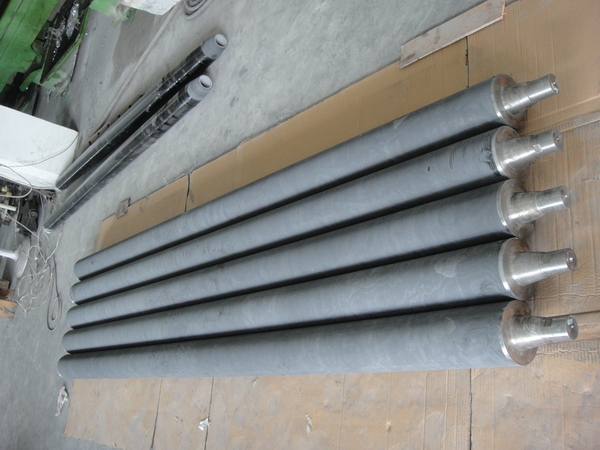
Introduction to the company's technological strength: Nanjing Baigang's Three Major Technological Moats
Since its establishment in 2003, Nanjing Baigang Composite Materials Co., Ltd. has established a full-chain technological system covering design, manufacturing, and testing:
STEP 1: Design Calculation Methodology - The original "Three-Stage Torque Analysis Method" employs three-dimensional modeling of static torque, dynamic torque, and impact torque, reducing the selection error rate from the industry average of 12% to below 3%. For instance, a Φ300mm shaft designed for a wind power enterprise maintained a safety factor greater than 2.5 under conditions of a Level 12 typhoon.
STEP 2: Manufacturing Process Control—Adopting prepreg autoclave molding technology, with a resin content control accuracy of ±0.5% and an interlaminar shear strength of ≥80 MPa. The accompanying random signal and vibration analyzer can monitor modulus changes in real time during the curing process, ensuring an axial dynamic balance accuracy of ≤0.2 g·cm.
STEP3: Inspection System - The inspection center, certified by ISO9001:2000, is equipped with equipment such as coordinate measuring machines and fatigue testing machines, enabling the execution of 18 inspection items including bending stiffness (GB/T 1446-2005) and torsional stiffness (ASTM D5279). For a φ600mm shaft customized by a paper-making enterprise, the stiffness attenuation rate was less than 5% after 5 million fatigue tests.
Currently, the company has delivered a cumulative total of over 4,000 drive shafts, covering scenarios such as wind power generation (rated torque 50-500 kN·m), cooling tower fans (rotational speed 500-1,500 rpm), and textile machinery (vibration acceleration < 5 m/s²), with an annual output value exceeding 10 million yuan.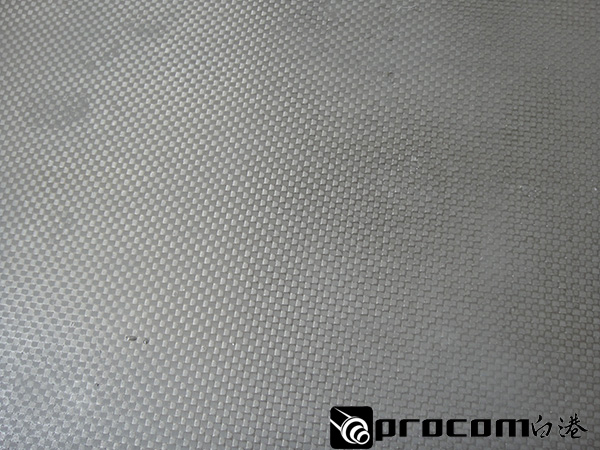
FAQ: Q&A Guide to Technology Selection
Q1: How to determine the rated torque of a drive shaft?
STEP 1: Calculate the static torque — Use the formula T = 9550 × P/n based on the motor power P (kW) and rotational speed n (rpm). For example, for a 100 kW motor operating at 1000 rpm, the static torque is 955 N·m.
STEP 2: Evaluate dynamic torque—accounting for factors such as startup impact and wind load fluctuations, dynamic torque = static torque × safety factor (typically 1.5-2.5). In wind power scenarios, extreme operating condition torque must be additionally superimposed; for example, a 3 MW wind turbine experiences a dynamic torque of 2800 N·m under Level 12 winds.
STEP 3: Select shaft specifications—Nanjing Baigang offers customization services for shafts with diameters ranging from Φ40 to Φ600 mm and lengths up to 10 m. Taking a Φ200 mm shaft as an example, its rated torque can reach 1500 N·m, meeting the requirements of most industrial scenarios.
Q2: How to avoid modal resonance?
STEP 1: Obtain equipment vibration frequency—measure the dominant vibration frequency (typically 80-120 Hz) of equipment such as looms and fans using an acceleration sensor.
STEP 2: Design the natural frequency of the shaft—utilize finite element analysis software to adjust the shaft's length, diameter, and ply angles, ensuring its natural frequency deviates from the equipment's vibration frequency by more than 20%. For example, in a textile machinery project, by adjusting the shaft length from 2.5 m to 2.8 m, the natural frequency was successfully increased from 95 Hz to 118 Hz.
STEP 3: Actual Measurement Verification - Conduct running-in tests using a vibration analyzer after installation to ensure that the vibration acceleration is < 5 m/s².
Q3: How to select a surface treatment process?
STEP 1: Evaluate environmental corrosiveness—For salt spray environments (such as cooling towers), it is necessary to select a corrosion-resistant resin system, such as vinyl ester resin; for acid-base environments (such as paper mills), phenolic resin should be used.
STEP 2: Determine the protection level—Nanjing Baigang offers a three-level protection scheme: Level 1 (ordinary coating) is suitable for dry indoor environments; Level 2 (nano coating) is suitable for humid environments; Level 3 (metal plating) is suitable for highly corrosive scenarios. After adopting Level 3 protection in a certain offshore wind power project, the shaft lifespan was extended from 5 years to 12 years.
For more information, please visit the official website:www.baigangcomposites.com
Reference for full text summary
The selection of carbon fiber drive shafts requires the construction of a three-dimensional decision-making model encompassing "torque-modal-environment": In torque calculation, the dynamic torque amplification factor is crucial; modal matching necessitates frequency avoidance achieved through finite element analysis; environmental adaptability requires selecting protective processes based on corrosion grades. Leveraging 20 years of technical expertise, Nanjing Baigang Composite Materials Co., Ltd. has developed a comprehensive solution covering design, manufacturing, and testing. Its proprietary three-stage torque analysis method reduces selection error rates to below 3%, while customized services meet diverse requirements for diameters ranging from Φ40 to Φ600 mm and lengths up to 10 m. Currently, the company has supplied over 4,000 drive shafts to industries such as wind power, textiles, and papermaking, with an annual output value exceeding 10 million yuan, establishing itself as a reliable partner for lightweight upgrades in high-end equipment.