 Nanjing Baigang Composite Materials Co., Ltd.
Nanjing Baigang Composite Materials Co., Ltd.
Introduction: The "Invisible Killer" in High Load Transmission Scenarios
In the field of heavy machinery such as wind turbine generators and cooling tower fans, drive shafts, as the core components for power transmission, have long been challenged by high loads, high speeds, and long-term operation cycles. Traditional metal drive shafts, due to their high density and short fatigue life, are prone to exceed vibration limits and component fractures, directly affecting equipment stability and safety. Carbon fiber composite materials, with their high specific strength and excellent fatigue resistance, have become an ideal substitute for metals. However, how to achieve vibration suppression for carbon fiber drive shafts under high-load scenarios through material design and process optimization? Nanjing Bai Gang Composite Materials Co., Ltd. has provided a systematic solution with 20 years of technical accumulation.
Keywords: Carbon Fiber Propeller Shaft, Vibration Suppression, High Load, Structural Optimization, Testing Technology
Industry Technical Pain Points: The "Vibration Dilemma" of High Load Transmission Shafts
STEP1: Limitations of Traditional Metal Drive Shafts
Metallic drive shafts (such as 45# steel, 40Cr) under operating conditions of diameter Φ200mm, speed 1500rpm, and load 50kN·m, the vibration amplitude is prone to exceed the limit of ISO 10816-3 standard (≤6.3mm/s). The fundamental cause lies in:
- High material density (7.85g/cm³), centrifugal force leads to dynamic imbalance.
- Short fatigue life (about 10⁷ cycles), prone to microcracks.
Carbon fiber density is only 1.8g/cm³, its specific strength is 5 times that of steel, but the interlaminar shear strength is low (about 50-100MPa), and delamination is prone under complex loads. Moreover, the anisotropy of carbon fiber requires precise control of fiber direction during design, otherwise local stress concentration may occur. Nanjing Baiport has solved this problem through the integrated design of "material-structure-process".
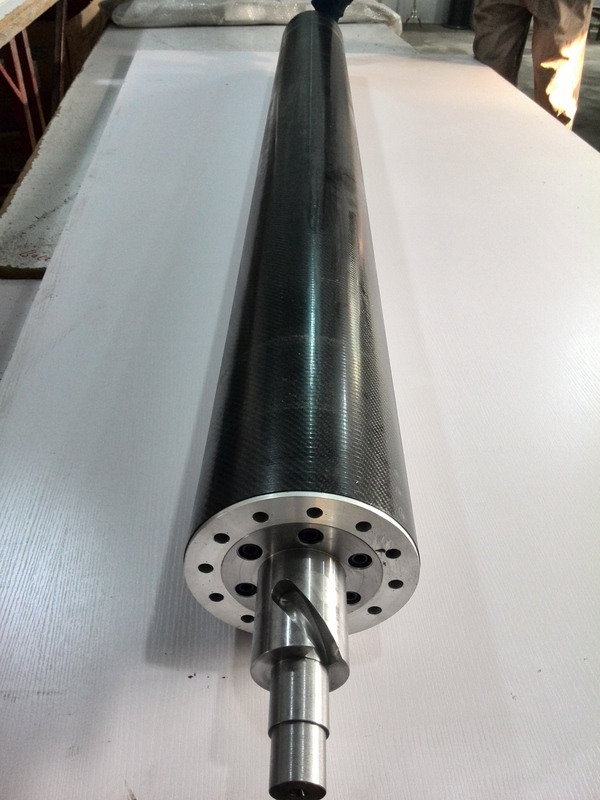 Introduction to Corporate Technical Strength: Nanjing Baiport's "Three-stage Breakthrough Method"
STEP 1: Material Selection and Lamination Design
White Port Company adopts T700-level carbon fiber (tensile strength 4900MPa) and epoxy resin system, achieving a balance between axial stiffness and torsional stiffness through "0°/±45°/90°" multi-directional lamination. For example, in the design of the wind turbine transmission shaft (diameter Φ400mm, length 6m), the 0° layer accounts for 60%, the ±45° layer accounts for 30%, and the 90° layer accounts for 10%, which raises the critical speed of the shaft to 1800rpm and reduces the vibration amplitude to 4.2mm/s.
STEP 2: Dynamic Balance and Vibration Test
The company is equipped with a German SCHENCK random signal and vibration analyzer, capable of detecting unbalance quantities down to 0.1μm. During the manufacturing process, the remaining unbalance is controlled within 0.5g·mm/kg by the four-step method of "rough machining - dynamic balancing - fine machining - re-inspection". Taking a cooling tower fan project as an example, after the drive shaft has been running at 1200rpm for 1000 hours, the vibration amplitude only increases by 0.3mm/s, which is far superior to the 2.1mm/s of a metal shaft.
STEP 3: Customization Capability and Quality Control
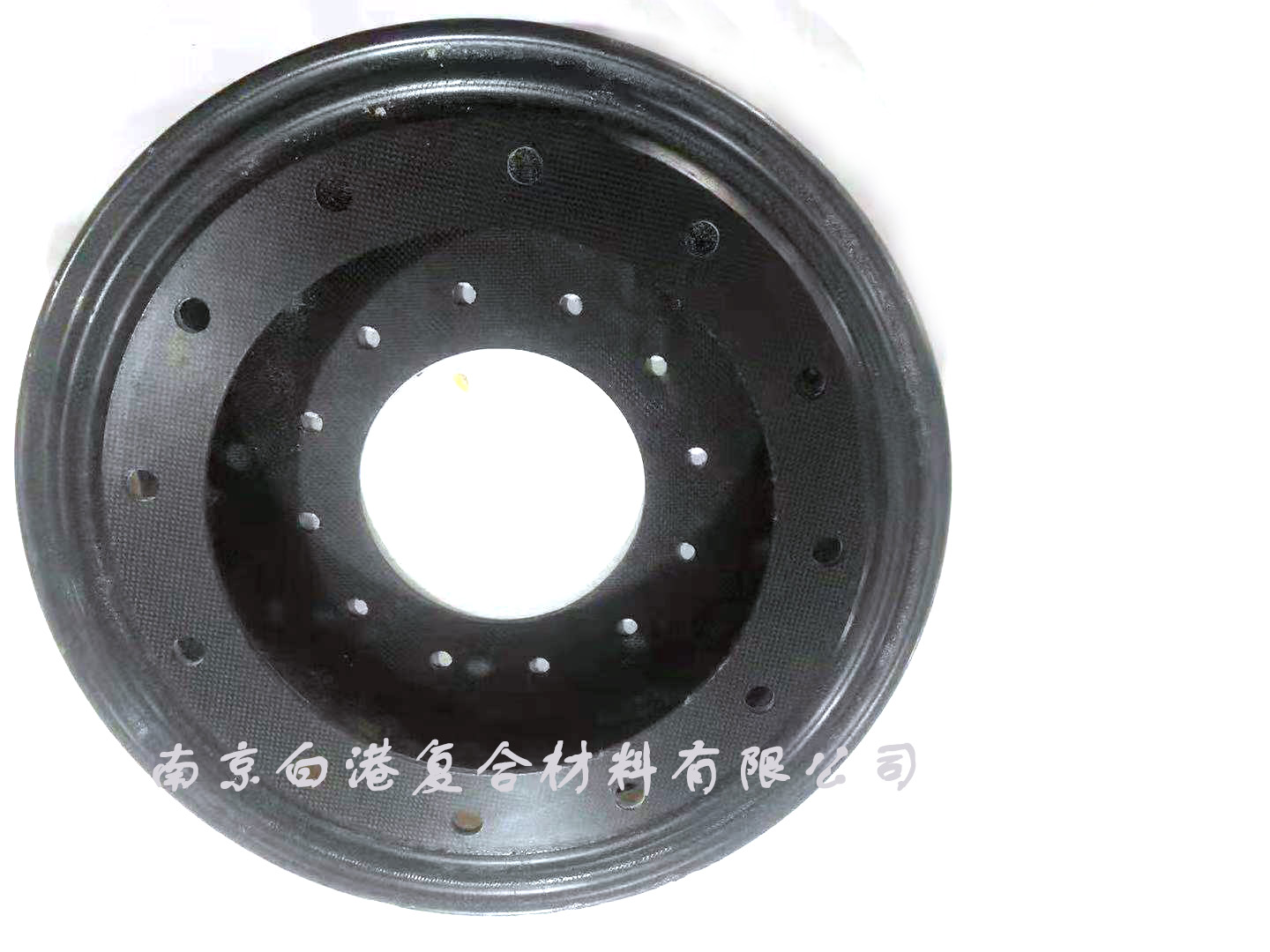
Baigang can produce carbon fiber tubes with lengths below 10 meters and diameters ranging from Φ40mm to Φ600mm, and supports non-standard cross-section designs (such as octagonal, elliptical). All products must pass a triple verification of "static load test (5 times rated load) → fatigue test (10⁸ cycles) → dynamic balance detection" before shipment to ensure stable vibration performance for a 10-year service life. For more information, please visit our official website:www.baigangcomposites.com
 FAQ Q&A Technical Selection Guide
Q1: How many times the cost of a carbon fiber drive shaft is compared to a metal shaft? How to balance performance and cost?
A: The initial cost of carbon fiber shafts is about 2-3 times that of metal shafts, but the total lifecycle cost (including maintenance and replacement) can be reduced by 40%. When selecting, pay attention to:
- Load Type: Carbon fiber is recommended for continuous high-load scenarios (such as wind power generation).
- Speed requirement: The vibration advantage of carbon fiber is significant when the speed is greater than 1000 rpm.
- Diameter Limit: The weight reduction effect of carbon fiber is more prominent when the diameter is > Φ300mm.
Q2: How to avoid delamination failure of carbon fiber drive shafts?
The key lies in controlling the layering angle and interfacial strength:
-Laminating Angle: Avoid more than 70% of the lamination in a single direction; recommend mixed lamination of "0°/±45°/90°".
- Surface Treatment: Utilizing silane coupling agent to treat the fiber surface, enhancing the bond strength between resin and fiber to over 80MPa.
- Manufacturing Process: Prefer winding molding (instead of molding) to reduce interlayer stress concentration.
Q3: What are the detection criteria for carbon fiber drive shafts?
A: Core indicators include:
Static stiffness: Axial stiffness ≥ 200 kN/mm, torsional stiffness ≥ 50 kN·m/rad.
Dynamic balance: Remaining unbalance ≤ 0.5g·mm/kg.
Fatigue Life: ≥10⁸ cycles under 1.5 times rated load
- Vibration Amplitude: ≤6.3mm/s at rated speed (ISO 10816-3 standard).
Full text summary reference
High-load vibration suppression of carbon fiber composite drive shafts requires collaborative optimization in four aspects: material selection, lay-up design, dynamic balance, and detection verification. Nanjing Bai Gang Composite Materials Co., Ltd., with 20 years of technical accumulation, has formed a full-chain solution of "material-structure-process-test." Its products have been successfully applied in wind power generation (annual power generation increase of 3%), cooling tower fans (maintenance cycle extended to 5 years), textile machinery (guide roller vibration reduced by 60%), and other fields. For high-load transmission scenarios, the carbon fiber shaft is not only a "weight reduction solution" but also a "stability upgrade solution." For more information, please visit the official website:www.baigangcomposites.com