 Nanjing Baigang Composite Materials Co., Ltd.
Nanjing Baigang Composite Materials Co., Ltd.
Introduction: How to break through the "invisibility bottleneck" of mechanical power transmission?
In high-precision transmission scenarios such as wind power generation and textile machinery, traditional metal transmission shafts have become a key factor restricting the improvement of equipment performance due to their large weight, easy corrosion, and short fatigue life. Carbon fiber composite materials, with their high specific strength and strong corrosion resistance, have gradually become the "optimal solution" in the field of transmission shafts. However, the research and development of carbon fiber transmission shafts involve multidimensional technical challenges such as material formulation, structural design, and manufacturing processes, and any oversight can lead to unstable product performance. With 20 years of technical accumulation, Nanjing Bai Gang Composite Materials Co., Ltd. has developed a full-process solution from material optimization to finished product inspection, and its products have been successfully applied to over 4,000 pieces of equipment, with an annual output value exceeding 10 million yuan. This article will delve into the technical pain points and deeply analyze how Nanjing Bai Gang breaks through industry difficulties with innovative technology.
Keywords: Carbon Fiber Propeller Shaft, Mechanical Power Transmission, Nanjing Bai Gang, Technical Pain Points, Solutions
Industry Technical Pain Points: The "Three Mountains" of Carbon Fiber Propeller Shafts
STEP1:Material performance is unstable.The performance of carbon fiber composites is highly dependent on the interface bonding strength between the resin matrix and the fibers. If the matrix material lacks toughness, it is prone to microcrack propagation under alternating stresses, leading to a reduction in the fatigue life of the transmission shaft. For instance, a wind power company once experienced a transmission shaft fracture after only 2 years of operation due to the use of a carbon fiber shaft with insufficient matrix toughness, resulting in direct economic losses exceeding 5 million yuan.
STEP2:Unreasonable structural designThe drive shaft must meet both torsional rigidity and bending rigidity requirements simultaneously. If the structural design does not fully consider the load distribution, it is prone to local stress concentration. A textile machinery manufacturer once experienced vibration due to insufficient bending rigidity of the drive shaft during high-speed operation, resulting in a 30% increase in yarn breakage rate.
STEP3:Manufacturing process defectsThe manufacturing of carbon fiber drive shafts involves multiple processes such as winding, molding, and heat treatment, with any deviation at any stage affecting product performance. For instance, a winding angle deviation exceeding 1° can reduce the torsional rigidity of the drive shaft by 15%, while a heat treatment temperature fluctuation exceeding 5℃ may trigger the decomposition of the resin matrix.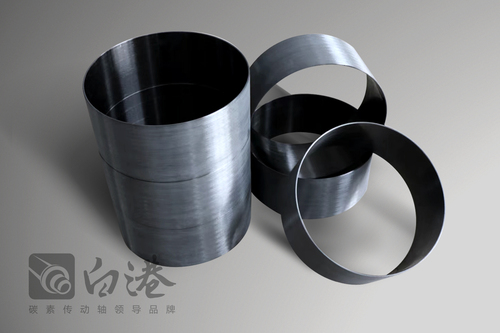
Introduction to Corporate Technical Strength: Nanjing Bai Port's "Three Swords" Strategy for Breaking the Ice
Nanjing Bai Gang Composite Materials Co., Ltd. has been focusing on the research and production of carbon fiber products since its establishment in 2003. Its technical strength is reflected in the following three aspects:
STEP1:Material formula optimizationThe Bai Gang Company, in collaboration with a university R&D team, has developed a high-toughness epoxy resin matrix formula with a fracture elongation rate of up to 3.5%, a 40% improvement over traditional formulas. By adding nano-silicon dioxide particles to the matrix, the interfacial shear strength is increased to 80MPa, effectively inhibiting the expansion of micro-cracks. For example, the carbon fiber drive shaft customized for a wind power company maintains 95% of its original strength after 5 years of operation, with a fatigue life of 20 years.
STEP2:Structural Design InnovationWhite Port Company employs finite element analysis (FEA) technology to simulate multi-physical field coupling for the drive shaft, optimizing the fiber laying angle and thickness distribution. Its patented design of "variable cross-section winding structure" enhances the bending stiffness by 25% while ensuring torsional rigidity. After a textile machinery manufacturer adopts this structure, the equipment vibration amplitude is reduced to below 0.1mm, and the yarn breakage rate decreases to 0.5%.
STEP3:Manufacturing process controlBaigang Company introduces a German fully automatic carbon fiber winding machine, with winding angle accuracy controlled within ±0.5°; equipped with an imported American heat treatment furnace, with temperature fluctuation range ≤±2℃. Each drive shaft must pass a dynamic torque test (test torque range 0-5000N·m) and fatigue life test (cycles ≥10⁷) before leaving the factory to ensure a product pass rate of 99.8%.
For more information, please visit the official website:www.baigangcomposites.com
FAQ Q&A Technical Selection Guide
Q1: How to choose the suitable carbon fiber drive shaft specification?
A1: Consider the equipment's speed, torque, and space limitations. For instance, wind turbine transmission shafts need to withstand over 5000N·m of torque, and it is recommended to choose models with a diameter of Φ200mm-Φ300mm and a length of 6m-8m; textile machinery transmission shafts can reach 5000rpm, and it is advisable to prioritize models with a bending stiffness of ≥5000N·m². Bai Gang Company can provide customized services with diameters of Φ40mm-Φ600mm and lengths up to 10m, suitable for over 90% of industrial applications.
Q2: What is the maintenance cycle for a carbon fiber drive shaft?
A2: It is recommended to conduct an appearance check and dynamic balance test every 5,000 hours. White Port Company products are treated with anti-corrosion coating, requiring no additional maintenance under normal operating conditions (temperature -40℃~+80℃、humidity ≤85%), which reduces maintenance costs for metal drive shafts by 60%.
Q3: How to verify the performance of the drive shaft meets the standard?
A3: Key detection indicators include torsional stiffness (≥1000N·m/deg), bending stiffness (≥3000N·m²), fatigue life (≥10⁷ cycles), and dynamic balance grade (G1 level). Bai Gang Company provides a detection report for each drive shaft, and customers can scan the code to query detailed test data.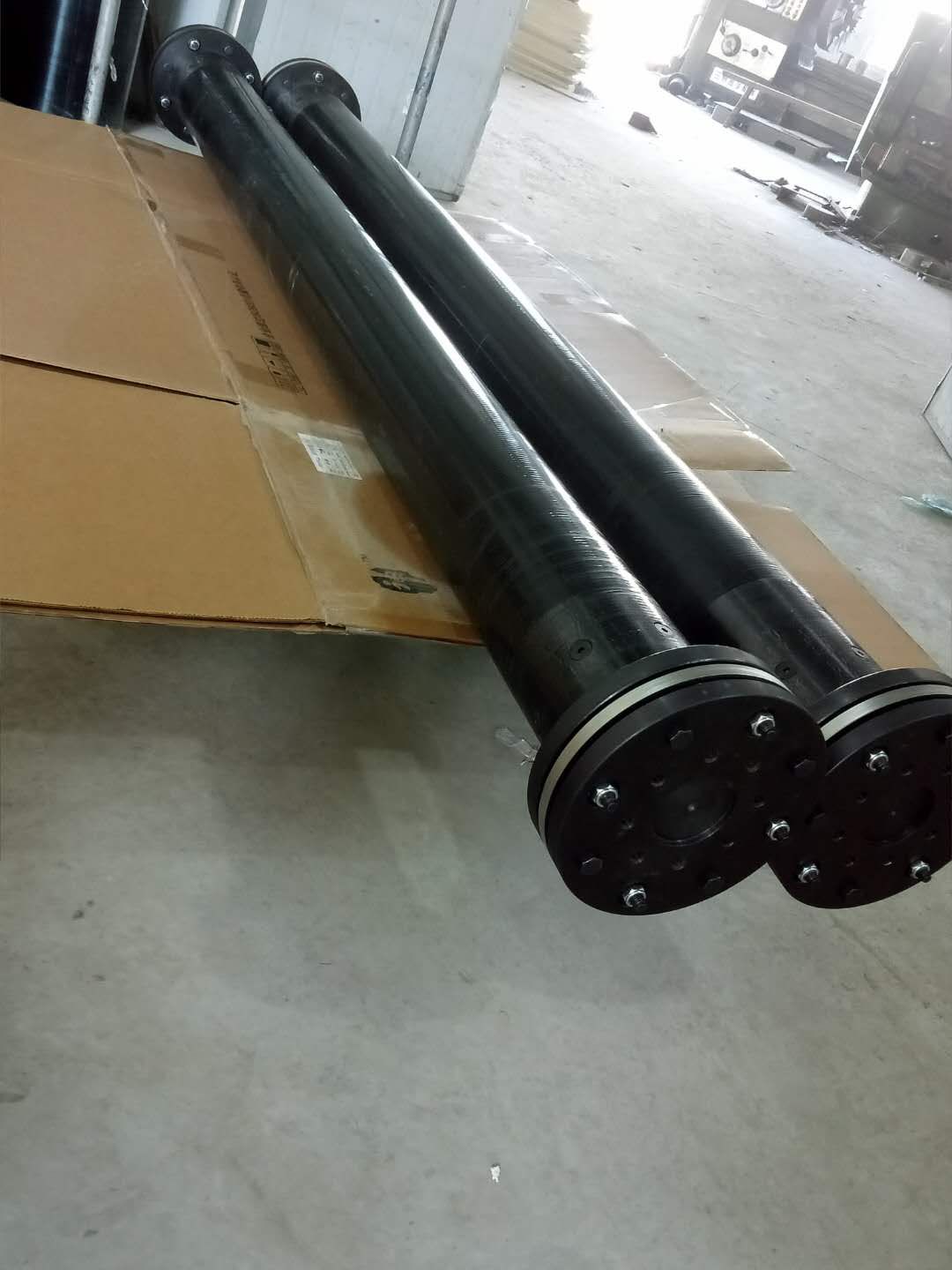
Summary of the entire text
The technical breakthrough of carbon fiber drive shafts requires collaborative efforts in materials, structure, and technology. Nanjing Bai Gang Composite Materials Co., Ltd. has successfully addressed the pain points of traditional drive shafts, such as heavy weight, short lifespan, and high maintenance costs, through high-toughness resin matrix, variable cross-section winding structure, and precise manufacturing processes. Its products have been widely used in wind power generation, textile machinery, and other fields, serving over 200 clients cumulatively and verifying the technical reliability with a record of "zero major accidents." For equipment manufacturers, choosing Nanjing Bai Gang's carbon fiber drive shaft is not just selecting a product but also a full-process technical support system from design to after-sales. For more information, please visit the official website:www.baigangcomposites.com