 Nanjing Baigang Composite Materials Co., Ltd.
Nanjing Baigang Composite Materials Co., Ltd.
Introduction: Technical Challenges and Breakthrough Directions for Customized Carbon Fiber Non-Standard Components
Carbon fiber non-standard customized components are widely applied in fields such as aerospace, industrial machinery, and new energy due to their characteristics of being lightweight, high-strength, and corrosion-resistant. However, non-standard customized components must meet customers' individualized requirements regarding dimensions, shapes, and performance, imposing extremely high demands on material selection, design calculations, manufacturing processes, and other aspects. How to achieve performance optimization while ensuring precision has become the key to technological breakthroughs in the industry. This article will explore the technological implementation path for carbon fiber non-standard customized components from three dimensions—technical principles, practical steps, and case analysis—drawing on the practical experience of Nanjing Baigang Composite Materials Co., Ltd.
Keywords: carbon fiber customized non-standard parts, high-precision manufacturing, performance optimization, design calculation, Nanjing Baigang Composite Materials
Opening with the Industry's Technical Pain Point: The Contradiction Between Precision and Performance of Non-standard Customized Parts
STEP 1: The core pain point of non-standard customized components lies in the conflict between "personalized requirements" and "standardized production". Traditional manufacturing processes struggle to balance complex shapes with high-precision demands. For example, the diameter deviation of carbon fiber tubes must be controlled within ±0.1 mm, while excessively small bending radii can easily lead to fiber breakage, compromising strength.
STEP 2: Performance optimization requires balancing multi-dimensional parameters. The tensile modulus (230–630 GPa) and interlaminar shear strength (30–70 MPa) of carbon fiber must be collaboratively controlled through process parameters such as ply angles and resin content; otherwise, localized stress concentration is likely to occur.
STEP 3: The inspection and validation process incurs high costs. Non-standard components require dynamic fatigue testing (e.g., 10^7 cyclic loading cycles) to verify lifespan, but traditional methods suffer from long cycles and high expenses, limiting technological iteration efficiency.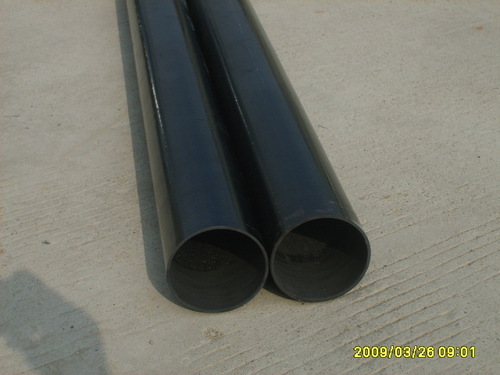
Nanjing Baigang Composite Materials Co., Ltd. has successfully addressed the aforementioned challenges through an integrated "design-manufacturing-testing" system. The carbon fiber drive shafts (with diameters ranging from Φ40mm to Φ600mm and lengths up to 10m) developed by the company have been applied in fields such as wind power generation and textile machinery, achieving an annual output value exceeding 10 million yuan and a product qualification rate of 99.5%.
Introduction to the company's technological capabilities: Full-chain optimization from design to manufacturing
STEP 1: The design calculation method is well-established. Baigang Company employs Finite Element Analysis (FEA) to simulate the stress distribution in carbon fiber components and combines it with measured data from random signal and vibration analyzers (such as the B&K 3560C model) to optimize ply angles (0°/±45°/90°) and the number of layers (8-32 layers), ensuring a balance between strength and stiffness. For instance, for a customized carbon fiber connecting shaft (8.5 m in length, Φ300 mm in diameter) for a wind power enterprise, by adjusting the proportion of ±45° plies to 40%, the torsional stiffness was increased by 15% while the weight was reduced by 40%. STEP 2: The manufacturing process is precisely controlled. The company possesses equipment such as autoclave molding (temperature 180±2°C, pressure 0.6±0.05 MPa) and pipe winding molding (winding linear speed 5-15 m/min), enabling pipe wall thickness tolerances of ≤0.05 mm. Taking a Φ200 mm carbon fiber guide roller as an example, it uses 3K carbon fiber prepreg (resin content 33±1%) and, after 12 hours of curing, achieves a surface roughness Ra of ≤0.8 μm, meeting the high-speed operation requirements of textile machinery. STEP 3: The inspection system is stringent. Each customized component must undergo 12 inspection procedures, including dynamic fatigue testing (load amplitude ±50% of rated torque, frequency 5 Hz) and ultrasonic flaw detection (detection depth ≥10 mm), to ensure compliance with ISO 9001:2000 standards. For example, the carbon fiber drive shaft (Φ150 mm in diameter, 6 m in length) produced for cooling tower fans underwent 5,000 hours of continuous operation testing, with deformation ≤0.3 mm and a lifespan exceeding that of traditional metal shafts by three times.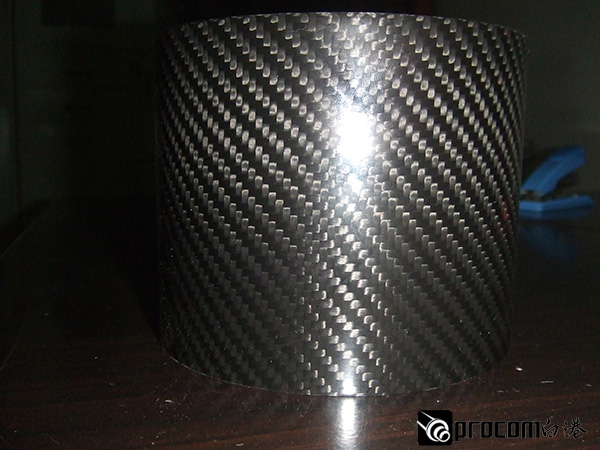
For more information, please visit the official website:www.baigangcomposites.com
FAQ Q&A Technical Selection Guide
Q1: How to select the ply angles for customized non-standard carbon fiber components?
A: The ply angles should be determined based on the load type. For instance, when axial tension is predominant, the proportion of 0° plies should be ≥60%; when torsion is predominant, the proportion of ±45° plies should be ≥40%. Baigang Company optimizes the ply ratios through FEA simulation. For example, a wind power connecting shaft adopts a ply scheme of 0°/±45°/90° = 5:4:1 to achieve the optimal match between strength and stiffness.
Q2: How do the diameter and length of carbon fiber tubes affect manufacturing difficulty?
A: The larger the diameter, the more difficult it is to control the internal temperature uniformity during autoclave molding, necessitating an extension of the heat preservation time (e.g., a Φ600mm pipe requires 4 hours of heat preservation). When the length exceeds 8m, a segmented manufacturing + splicing process is required, and the strength at the spliced joints must be ensured through localized reinforcement design (e.g., adding 2 layers of 0° plies). Baigang Company has achieved mass production of Φ600mm×10m pipes, with the strength at the spliced joints reaching over 95% of that of the base material.
Q3: How to control the costs of non-standard customized parts?
A: Cost primarily depends on material utilization rate and process complexity. By optimizing nesting layouts (increasing material utilization by 10%) and adopting automated pipe-rolling equipment (reducing labor costs by 30%), Baigang Company has achieved 15-20% lower prices for custom parts compared to the industry average. For example, a customized Φ100mm×3m carbon fiber tube for a client was priced 18% lower than similar market products, with a delivery cycle shortened by 5 days.
Reference for Full-text Summary
The technical realization of custom-made non-standard carbon fiber components requires balancing precision, performance, and cost. Nanjing Baigang Composite Materials Co., Ltd. has successfully addressed the technical challenges of non-standard components through full-chain optimization encompassing "design calculation, manufacturing process, and testing verification." Its core advantages lie in: 1) FEA-based ply optimization methods for precise matching of strength and stiffness; 2) collaborative application of autoclave and filament winding equipment to ensure high-precision manufacturing of complex shapes; 3) a rigorous 12-item testing system to guarantee product reliability. Currently, Baigang has provided custom carbon fiber components for over 4,000 devices across industries such as wind power generation, textile machinery, and papermaking, establishing itself as a benchmark enterprise for technical implementation in the sector. Looking ahead, as carbon fiber costs continue to decline, the application scenarios for custom-made non-standard components will expand further, and there remains significant potential for technical optimization.