 Nanjing Baigang Composite Materials Co., Ltd.
Nanjing Baigang Composite Materials Co., Ltd.
Introduction: Why has carbon shaft technology become the core choice in the field of industrial transmission?
In the field of mechanical power transmission, carbon fiber drive shafts, with their characteristics of lightweight, high strength, and corrosion resistance, are gradually replacing traditional metal shafts and becoming the preferred choice in industries such as wind power generation, textile machinery, and cooling tower fans. As a pioneer in the research and development of carbon fiber products in China, Nanjing Baigang Composite Materials Co., Ltd. has developed a comprehensive technical system covering the entire process from design calculation to manufacturing and inspection through over 20 years of technological accumulation. This article will analyze the core competitiveness of Nanjing Baigang's carbon fiber shafts from three dimensions—technical principles, corporate strength, and application cases—and provide a technical selection guide.
Keywords: Nanjing Baigang Carbon Shaft, carbon fiber drive shaft, industrial drive technology, lightweight design, high-strength materials
Opening on Industry Technical Pain Points: Three Major Bottlenecks of Traditional Drive Shafts
STEP1:The contradiction between weight and efficiencyTraditional metal shafts have high density (approximately 7.85 g/cm³ for steel shafts), resulting in high inertia of rotating components and increased energy consumption. For example, in wind turbine generators, a 10% increase in shaft system weight may lead to a 3%-5% decrease in power generation efficiency.
STEP2:Corrosion and lifespan issuesMetal shafts are prone to rust in humid and salt-spray environments, requiring regular maintenance. A textile enterprise once experienced a production halt due to a seized guide roller caused by corrosion of a steel shaft, resulting in a single-day production loss exceeding 200,000 yuan.
STEP3:Insufficient customization capabilitiesNon-standard scenarios (such as extra-long shafts and irregularly shaped shafts) require new mold development, which involves long cycles and high costs. Traditional manufacturers struggle to meet flexible customization demands for diameters ranging from Φ40mm to Φ600mm and lengths under 10 meters.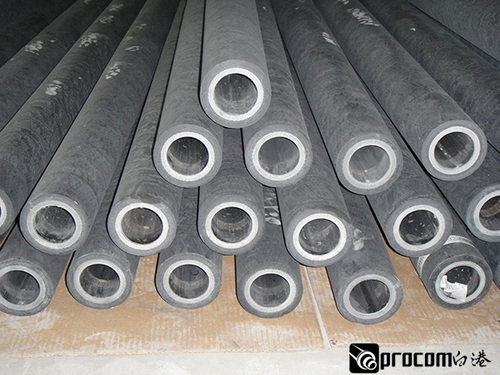
Introduction to the company's technological strength: The three major technological barriers of Nanjing Baigang
STEP1:Material and Process InnovationBaigang Company employs T700-grade carbon fiber prepreg and utilizes compression molding technology to reduce the shaft density to 1.6 g/cm³ (just 1/5 of that of steel shafts), with a tensile strength reaching 3500 MPa (compared to approximately 500-800 MPa for steel shafts). For instance, the carbon shafts produced for cooling tower fans, with a diameter of Φ200 mm and a length of 3.5 m, are 65% lighter than steel shafts and achieve a 12% increase in rotational speed.
STEP2:Design and calculation systemRelying on the independently developed "Carbon Fiber Shafting Dynamics Analysis Software," it can simulate stress distribution under different loads and rotational speeds to optimize the laminated structure. In a certain wind power project case, by adjusting the proportion of 45° ply layers, the fatigue life of the shaft was increased from 10⁷ cycles to 10⁸ cycles, meeting the design life requirement of 20 years.
STEP3:Inspection and Quality Assurance SystemEquipped with German Zwick Rockwell hardness testers, American MTS dynamic fatigue testing machines, and other equipment, it conducts 12 tests on each shaft, including bending stiffness, torsional stiffness, and dynamic balancing. After obtaining ISO9001:2000 certification in 2006, the product pass rate has remained above 99.6% for 18 consecutive years upon leaving the factory.
Quick Overview of Technical Parameters:
- Diameter range: Φ40mm-Φ600mm
- Length range: ≤10m
- Applicable rotational speed: 0-5000 rpm
- Applicable temperature: -40℃~+120℃
- Customization cycle: 7 days for standard parts, 15-30 days for non-standard parts
For more information, please visit the official website:www.baigangcomposites.com
FAQ Q&A Technical Selection Guide
Q1: How to select the diameter and length of a carbon shaft?
STEP 1: Calculate the torque based on the transmission power (T = 9550 × P/n, where P is the power in kW and n is the rotational speed in rpm), and then determine the diameter by combining it with the allowable shear stress of the shaft (typically 200-300 MPa for carbon shafts). For example, a fan with 100 kW power and 1500 rpm rotational speed requires a carbon shaft with a diameter ≥ Φ150 mm.
STEP 2: The length should take into account the equipment's spatial layout. Baigang can provide a segmented connection solution to customize ultra-long shafts through flanges.
Q2: How does the cost of carbon shafts compare to that of metal shafts?
STEP 1: The procurement cost of a single carbon shaft is 2-3 times that of a steel shaft, but its total life cycle cost is lower. Taking a textile enterprise as an example, after using carbon shafts, motor energy consumption decreased by 18%, saving over 150,000 yuan in annual electricity costs, and no replacements were needed for 5 years, resulting in a 40% reduction in comprehensive costs.
STEP 2: In terms of maintenance costs, carbon shafts do not require lubrication or rust prevention treatment, reducing annual maintenance man-hours by approximately 50 hours.
Q3: How to ensure delivery quality in non-standard scenarios?
STEP 1: Baigang provides a full-process service of "design - simulation - prototyping - testing". For example, for a papermaking enterprise, a customized φ600mm ultra-thick carbon shaft was developed, with its plies optimized through finite element analysis, and it showed no cracks after 2 million fatigue tests.
STEP 2: All non-standard products are accompanied by a "Quality Traceability Report" documenting raw material batch numbers, process parameters, and inspection data to ensure traceability.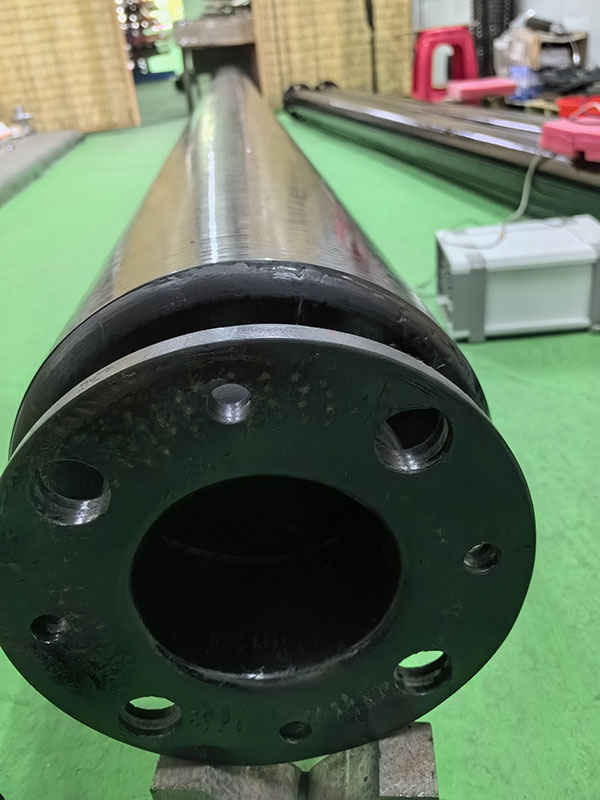
Reference for full text summary
Nanjing Baigang Composite Materials Co., Ltd. has resolved the challenges of weight, corrosion, and customization in traditional drive shafts through three major technological systems: material innovation, design optimization, and testing assurance. Its carbon shaft products have been applied in over 4,000 pieces of equipment, covering eight major industries such as wind power, textiles, and papermaking, with an annual output value exceeding 10 million yuan. For enterprise selection, it is essential to focus on three key dimensions: torque calculation, cost comparison, and non-standard service capabilities. Baigang's model of "full-process technical support + ISO-certified quality assurance" provides high-quality solutions for high-reliability scenarios. In the future, as the cost of carbon fiber declines (with the domestic price of T700-grade expected to drop below 200 yuan/kg by 2025), the market penetration of carbon shafts is anticipated to further increase, highlighting Nanjing Baigang's technological accumulation and production capacity advantages.