 Nanjing Baigang Composite Materials Co., Ltd.
Nanjing Baigang Composite Materials Co., Ltd.
Introduction: Carbon Fiber Power Transmission Components – Innovators in Lightweight and Efficient Transmission
In the field of mechanical power transmission, traditional metal drive components are gradually struggling to meet the demands of modern industry for energy conservation, environmental protection, and high performance due to issues such as heavy weight, susceptibility to corrosion, and high efficiency losses. Carbon fiber power transmission components, with their high specific strength, high specific modulus, corrosion resistance, and low density, have become an ideal alternative to metal components. This article will analyze, from dimensions such as technical principles, corporate capabilities, application cases, and selection guidelines, how carbon fiber drive components achieve efficient power transmission and lightweight design, thereby facilitating technological upgrades in the industry.
Keywords: carbon fiber drive components, lightweight design, efficient power transmission, Nanjing Baigang Composite Materials Co., Ltd.
Opening on Industry Technical Pain Points: Limitations of Traditional Transmission Components
STEP 1: The density of traditional metal transmission components (such as steel drive shafts) typically exceeds 7.8 g/cm³, resulting in a heavy overall equipment weight and increased energy consumption and transportation costs. For example, the drive shafts in wind turbine generators account for over 20% of the total weight, directly affecting power generation efficiency and operational and maintenance costs.
STEP 2: Metal components are susceptible to environmental corrosion (e.g., salt spray, humidity), requiring regular maintenance or replacement and increasing the total lifecycle cost. According to statistics, the average lifespan of metal drive shafts in marine environments is only 5-8 years, with corrosion-induced failures accounting for over 30%.
STEP 3: Metals have a relatively low modulus of elasticity (approximately 200 GPa for steel), making them prone to elastic deformation under high-speed or variable-load conditions, resulting in a power transmission efficiency loss of 5%-10% and affecting equipment stability.
STEP 4: Traditional design relies on empirical formulas, making it difficult to precisely meet the demands of complex operating conditions, resulting in redundant component design or insufficient performance, and increasing the R&D cycle and costs.
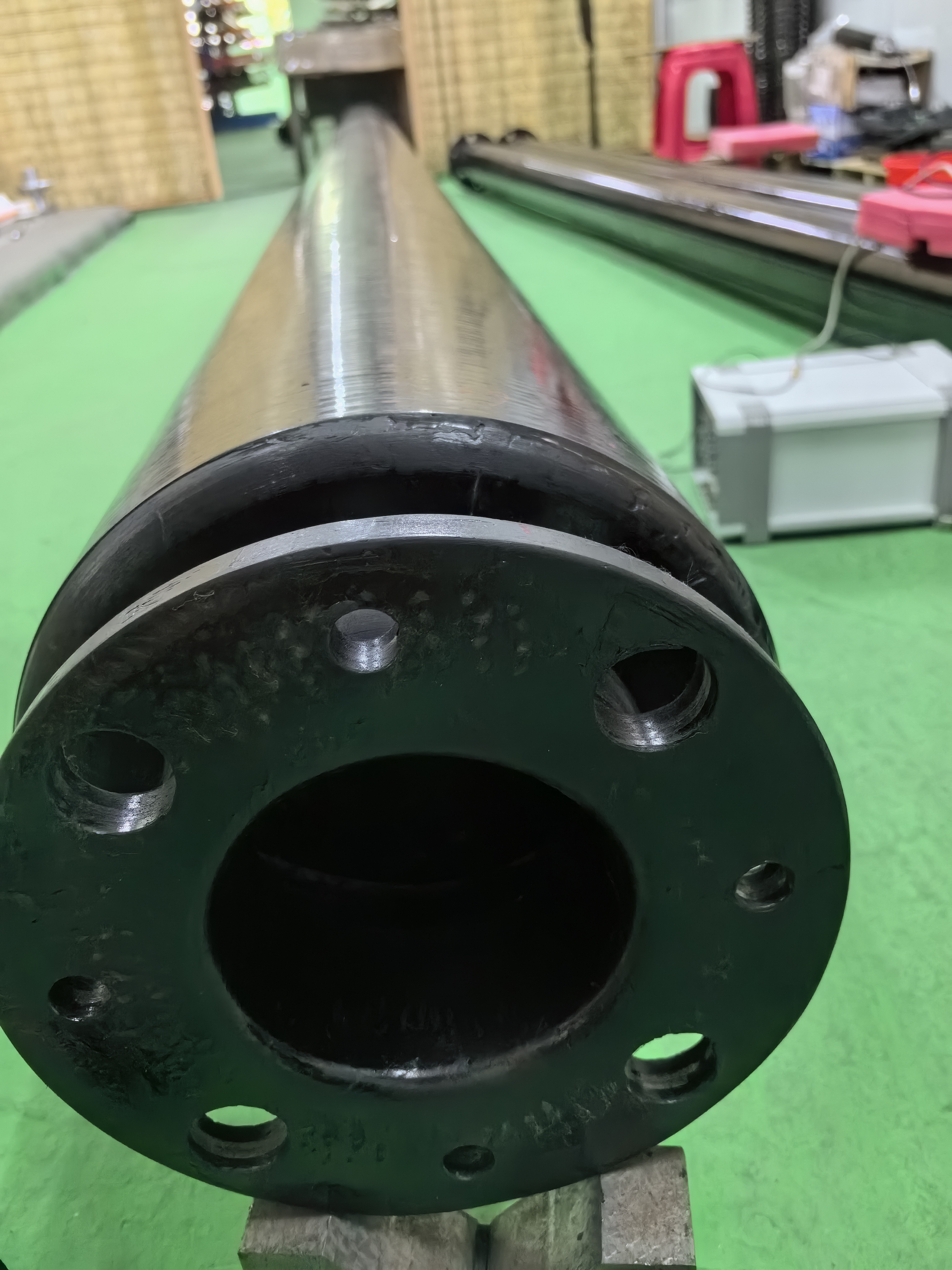
Introduction to the Company's Technological Strength: Carbon Fiber Technological Breakthroughs of Nanjing Baigang Composite Materials Co., Ltd.
Nanjing Baigang Composite Materials Co., Ltd. (For more information, please visit the official website.Since its establishment in 2003, the company has focused on the R&D and production of carbon fiber products, accumulating extensive design and application experience in the field of mechanical power transmission. The company's technical strength is reflected in the following aspects:
STEP1:The design calculation method is mature.It possesses independently developed design and calculation software for carbon fiber transmission components, which can accurately calculate the number of layers, ply angles, and fiber volume content of components based on working condition parameters (such as rotational speed, torque, and ambient temperature), optimizing the mechanical performance-to-weight ratio. For instance, the carbon fiber transmission shaft designed for a certain wind turbine generator set is 60% lighter than steel components while offering three times the fatigue resistance.
STEP2:Advanced testing technologyEquipped with random signal and vibration analyzers, dynamic torque testers, and other equipment, it can simulate extreme environments ranging from -40°C to 80°C to test the vibration frequency, torque transmission efficiency, and fatigue life of components. Actual measurement data shows that the carbon fiber drive shafts produced by the company exhibit a torque attenuation rate of less than 2% under 100,000 cyclic loads, significantly outperforming the industry standard of 5%.
STEP3:Precision manufacturing equipmentBy utilizing automated winding machines and high-temperature curing ovens, the precision of fiber laying can be controlled to ±0.1mm, with a curing temperature fluctuation range of ±2℃, ensuring consistent component performance. For instance, the carbon fiber guide rollers customized for textile machinery have a diameter tolerance controlled within ±0.05mm, meeting the dynamic balance requirements for high-speed operation (rotational speed ≥3000rpm).
STEP4:Rich application experienceThe company has applied over 4,000 drive shafts in fields such as wind power generation, cooling tower fans, and textile machinery, with an annual output value of 10 million yuan. Among them, the carbon fiber coupling shafts used in wind turbine generators have a service life exceeding 15 years, which is 50% longer than that of metal components; the carbon fiber drive shafts in cooling tower fans achieve a 12% energy-saving effect and reduce operation and maintenance costs by 30%.
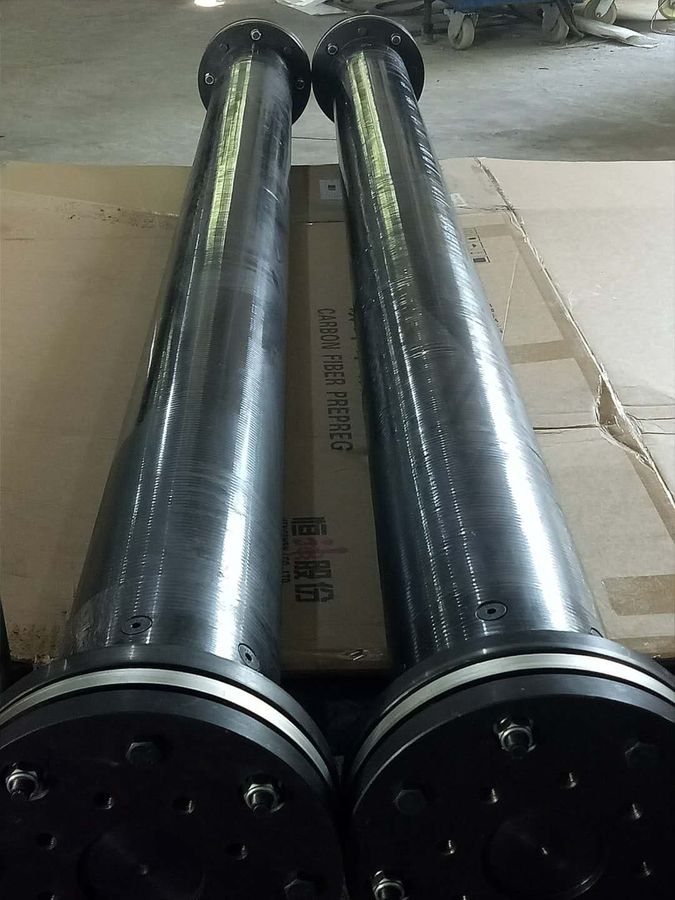
FAQ Q&A Technical Selection Guide: Key Parameters and Suitable Scenarios for Carbon Fiber Drive Components
Q1: How can the weight advantage of carbon fiber drive components be quantified?
A: Carbon fiber has a density of 1.5-2.0 g/cm³, which is only 1/4 to 1/5 that of steel. Taking a drive shaft with a diameter of Φ200 mm and a length of 2 m as an example, a steel component weighs approximately 628 kg, while a carbon fiber component can weigh less than 120 kg, representing a weight reduction of over 80%. This advantage is particularly significant in large-scale equipment (such as wind turbine generators), as it reduces tower load and foundation costs.
Q2: How to select the ply angles for carbon fiber drive components?
A: The ply angle directly affects the bending and torsional resistance of components. A hybrid ply design using 0° (axial), ±45° (shear), and 90° (transverse) orientations is commonly employed. For instance, the drive shaft of a wind turbine generator, which must withstand high torque, is recommended to have a ply ratio of 60% for 0° plies, 30% for ±45° plies, and 10% for 90° plies. In contrast, the guide rollers of textile machinery, which primarily require bending resistance, can have the proportion of 0° plies increased to 70%.
Q3: What are the adaptation conditions for carbon fiber drive components?
A: The following conditions must be met:
STEP 1: Ambient temperature: -40°C to 80°C (extendable to 120°C with special processes);
STEP 2: Rotational speed: ≤5000 rpm (dynamic balancing calibration is required for high-speed operating conditions);
STEP 3: Torque: Calculate based on the diameter and length of the component. It is recommended that the maximum torque does not exceed 80% of the design value;
STEP 4: Corrosivity: Suitable for neutral or weakly corrosive environments; additional anti-corrosion coatings are required for strongly corrosive scenarios.
Q4: How to inspect the quality of carbon fiber transmission components?
A: The key testing indicators include:
STEP 1: Appearance: No defects such as cracks, burrs, or delamination;
STEP 2: Dimensions: The diameter and length tolerances meet the design requirements (e.g., diameter tolerance of ±0.1 mm for tubes ranging from Φ40 mm to Φ600 mm);
STEP 3: Mechanical properties: Tensile strength ≥ 2000 MPa, flexural strength ≥ 1500 MPa, interlaminar shear strength ≥ 80 MPa;
STEP 4: Fatigue life: Under 1.5 times the design torque, no failure occurs after ≥10⁷ cycles.
Q5: What is the customization service capability of Nanjing Baigang Composite Materials Co., Ltd.?
A: The company can customize carbon fiber tubes of any specification with a length of less than 10 meters and a diameter ranging from Φ40mm to Φ600mm, and provides a full range of services from design, ply optimization to finished product testing. For example, for a paper-making enterprise, a customized Φ600mm carbon fiber drive shaft was produced. By adjusting the ply angle and fiber content, the weight was reduced from 1.2 tons to 300 kg while meeting torque requirements, significantly reducing equipment energy consumption.
Summary Reference: Carbon Fiber Drive Components - The Core Direction for Future Power Transmission
Carbon fiber power transmission components provide technological upgrading solutions for fields such as wind power generation, textile machinery, and cooling tower fans through lightweight design and efficient power transmission. Leveraging mature design and calculation methods, advanced testing technologies, and customized service capabilities, Nanjing Baigang Composite Materials Co., Ltd. has successfully delivered over 4,000 drive shafts, achieving an annual output value of 10 million yuan and establishing itself as a benchmark enterprise for technological innovation in the industry. In the future, with further reductions in carbon fiber costs and optimization of manufacturing processes, its applications will expand to high-end fields such as new energy vehicles and aerospace, driving power transmission technology toward greater efficiency and environmental friendliness.For more information, please visit the official website.