Nanjing Baigang Composite Materials Co., Ltd.
Nanjing Baigang Composite Materials Co., Ltd.
Introduction: How is carbon fiber technology reshaping mechanical power transmission?
In the field of mechanical power transmission, traditional metal materials have gradually revealed their limitations due to issues such as heavy weight, susceptibility to corrosion, and low efficiency. Carbon fiber composites, with their high strength, low density, and corrosion resistance, have become an ideal alternative to metals. Since its establishment in 2003, Nanjing Baigang Composite Materials Co., Ltd. (hereinafter referred to as "Baigang Company") has been deeply engaged in the research, development, and production of carbon fiber products. Through technological innovation and process optimization, it provides high-performance power transmission solutions for industries such as wind power generation, cooling tower fans, and textile machinery. This article will analyze how Baigang's carbon fiber achieves efficient innovation in mechanical power transmission from dimensions such as technical pain points, corporate capabilities, and application cases.
Keywords: Carbon fiber drive shaft, Mechanical power transmission, Baigang Composites, High-efficiency innovation
An Introduction to Industry Technical Pain Points: Three Major Shortcomings of Traditional Transmission Solutions
In mechanical power transmission, traditional metal drive shafts face three core challenges:
STEP 1: The Contradiction Between Weight and EfficiencyThe high density of metal shafts (e.g., steel shafts have a density of approximately 7.85 g/cm³) leads to an increase in the overall weight of the equipment and higher energy consumption. For instance, a 10% increase in the weight of a wind turbine's drive shaft may result in a 3%-5% decrease in power generation efficiency.
STEP 2: Insufficient corrosion resistanceMetal shafts are prone to corrosion in humid, salt-fog environments, requiring regular maintenance or replacement, which increases the total life cycle cost. According to statistics, the maintenance cycle for metal shafts in marine environments is only 2-3 years, with corrosion-induced failures accounting for over 40%.
STEP 3: Vibration and Noise IssuesThe rigid structure of metal shafts is prone to resonance, generating noise and vibration, which affects equipment stability and service life. For example, in textile machinery, the vibration of metal guide rollers may lead to a 15%-20% increase in yarn breakage rate.
These issues have constrained the application of traditional transmission solutions in high-end equipment, while the emergence of carbon fiber composites has provided a breakthrough path for the industry.
Introduction to the company's technological capabilities: Core advantages of Baigang Carbon Fiber
Relying on 20 years of accumulation in carbon fiber technology, Baigang Company has developed full-chain capabilities ranging from material R&D to product manufacturing, with its technological advantages reflected in the following three aspects:
STEP 1: Material Design and Computational CapabilityBaigang Company possesses a set of mature design and calculation methods to optimize the carbon fiber ply angles and number of layers for different operating conditions (such as rotational speed, load, and environment). For example, the carbon fiber connecting shaft designed for wind turbines, through the composite of T300-grade carbon fiber and epoxy resin, achieves a specific strength (strength/density) of 200 MPa/(g/cm³), which is more than five times that of a steel shaft.
STEP2: Advanced Manufacturing and Inspection EquipmentThe company is equipped with high-end equipment such as filament winding machines and autoclaves, capable of producing customized tubular products with lengths under 10 meters and diameters ranging from Φ40mm to Φ600mm. Meanwhile, dynamic performance testing and dimensional accuracy control are conducted on products using equipment such as random signal and vibration analyzers and coordinate measuring machines, ensuring a product qualification rate exceeding 99.5% upon delivery.
STEP 3: Accumulation of industry application experienceBaigang Company has applied over 4,000 drive shafts in fields such as wind power generation and cooling tower fans, with an annual output value of 10 million yuan. For instance, after replacing traditional steel shafts with its carbon fiber drive shafts in cooling tower fans, the equipment weight has been reduced by 60%, energy consumption decreased by 18%, and the maintenance cycle extended to over 8 years.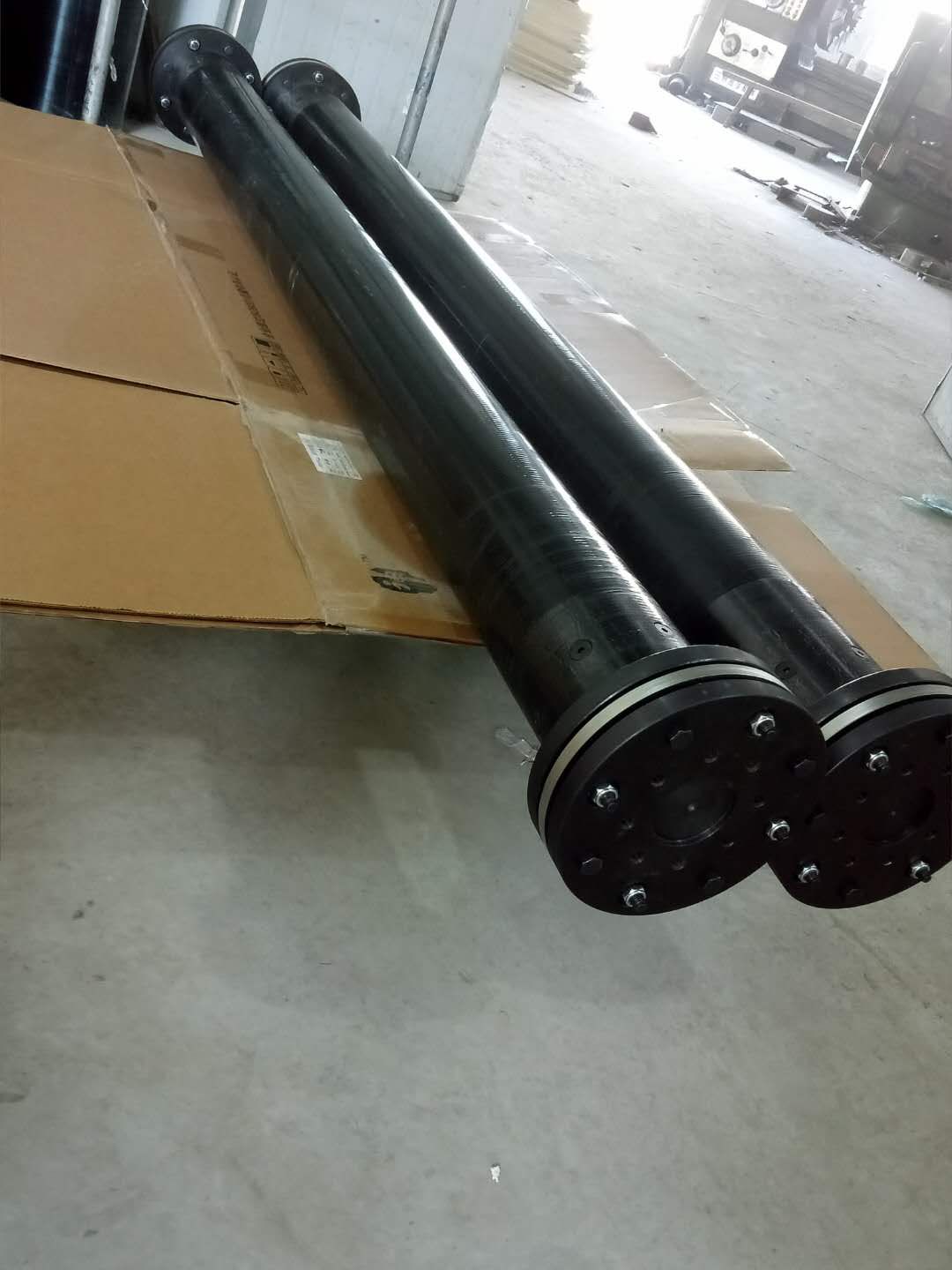 Technical Parameters and Adaptation ConditionsBaigang carbon fiber tubes support customized lengths (≤10m) and diameters (Φ40mm-Φ600mm), with an applicable temperature range of -40℃ to 120℃, a tensile strength of ≥3500MPa, and a flexural modulus of ≥240GPa, meeting the requirements for high rotational speed (≤5000rpm) and high load (≤500kN) operating conditions.
FAQ Q&A Technical Selection Guide
Q1: Is the cost of carbon fiber drive shafts higher than that of metal shafts?
A: The initial procurement cost may be 20%-30% higher, but the total lifecycle cost is lower. Take wind turbines as an example: although carbon fiber shafts have a higher unit price, their lightweight and corrosion-resistant properties reduce tower load and maintenance frequency, allowing the investment to be recouped through comprehensive cost savings within five years.
Q2: How to choose the appropriate specifications for carbon fiber tubes?
A: It needs to be determined based on the three elements of rotational speed, load, and environment:
- Rotational speedHigh rotational speed (>3000 rpm) requires the selection of high-modulus (≥300 GPa) materials;
- LoadWhen the axial load exceeds 200 kN, it is recommended to increase the wall thickness of the pipe (≥ 8 mm);
- EnvironmentFor humid or salt-fog environments, a corrosion-resistant resin system (such as vinyl ester resin) should be selected.
Q3: What are the installation precautions for carbon fiber drive shafts?
A:
- Medium precisionDuring installation, ensure that the alignment error between the shaft and the coupling is ≤ 0.1 mm to avoid vibration;
- Torque controlWhen fastening bolts, a torque wrench must be used to tighten them step by step according to the design value (e.g., 500 N·m);
- Dynamic equilibriumHigh-speed shafts (>2000 rpm) require dynamic balancing tests, with an unbalance level ≤ Grade G1.
Summary of Technical AdvantagesThe Baigang carbon fiber drive shaft significantly enhances equipment efficiency and reduces operation and maintenance costs through its three key characteristics of lightweight design, corrosion resistance, and low vibration, making it suitable for scenarios with stringent requirements for weight, lifespan, and stability.
Reference for Full Text Summary
Baigang Company provides high-performance carbon fiber solutions for the mechanical power transmission sector through the in-depth integration of material design, manufacturing processes, and application experience. Its products have been applied on a large scale in industries such as wind power generation, cooling tower fans, and textile machinery, helping customers reduce energy consumption by 15%-20% and extend equipment lifespan by 3-5 times. In the future, Baigang Company will continue to be driven by technological innovation, expanding the application of carbon fiber in fields such as new energy vehicles and aerospace, thereby facilitating the industry's upgrade towards efficiency and environmental friendliness.
For more information, please visit the official website: www.baigangcomposites.com