 Nanjing Baigang Composite Materials Co., Ltd.
Nanjing Baigang Composite Materials Co., Ltd.
Introduction: Why has the carbon fiber drive shaft become a core component in industrial power transmission?
In high-load scenarios such as wind power generation and cooling tower fans, traditional metal drive shafts are gradually being phased out due to issues such as heavy weight, susceptibility to corrosion, and low transmission efficiency. Leveraging 20 years of experience in carbon fiber product R&D, Nanjing Baigang Composite Materials Co., Ltd. has successfully developed customized carbon fiber drive shafts with diameters ranging from Φ40mm to Φ600mm and lengths under 10 meters by optimizing material formulations and manufacturing processes. These shafts offer three times the fatigue resistance and 60% reduced weight compared to metal counterparts, finding widespread applications in fields such as wind power generation and textile machinery. This article will analyze their technological advantages from three perspectives: technical principles, practical case studies, and selection guidelines.
Keywords: carbon fiber drive shaft, power transmission, Nanjing Baigang Composite Materials, customized production
Opening on Industry Technical Pain Points: Three Major Limitations of Traditional Drive Shafts
STEP 1: Contradiction between weight and efficiency: The density of metal drive shafts reaches 7.85 g/cm³. In wind power generation scenarios, every additional ton of weight requires an extra 200 kW generator unit, leading to a 15% increase in initial investment;
STEP 2: Inadequate corrosion resistance: The cooling tower fan operates in a high-humidity environment for extended periods, with the metal shaft corroding at a rate of 0.2mm per year, necessitating replacement every 3 years and resulting in high maintenance costs;
STEP 3: Limited transmission accuracy: The guide rollers of textile machinery need to maintain a radial runout of ±0.01 mm. Due to the high thermal expansion coefficient (12×10⁻⁶/℃) of metal shafts, vibrations are prone to occur during high-speed operation, affecting product quality.
Nanjing Baigang addresses the aforementioned pain points through carbon fiber composite material technology: its products have a density of only 1.8 g/cm³, a corrosion resistance rating of NSS 500h without rust as per ISO 9227 standard, and a low coefficient of thermal expansion of 2×10⁻⁶/℃, significantly enhancing transmission efficiency and stability.
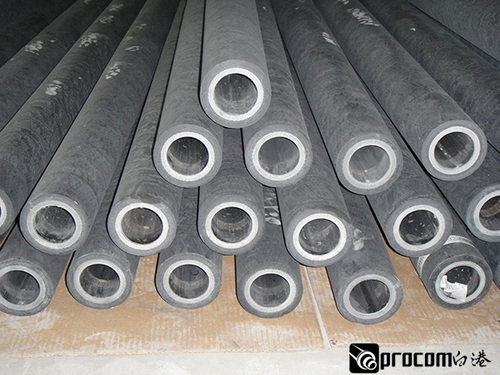
Introduction to the company's technological capabilities: Full-chain control from R&D to mass production
Nanjing Baigang Composite Materials Co., Ltd., established in 2003 and located in Luhe District, Nanjing, boasts a 2,000㎡ R&D center and a 5,000㎡ production base. Its technological strengths are manifested in three key aspects:
STEP 1: Material Formula Optimization: By adjusting the ratio of PAN-based carbon fiber to epoxy resin through orthogonal experimental methods, a specialized prepreg with a tensile strength of 3500 MPa and a modulus of 240 GPa was developed, representing a 20% improvement in performance compared to general-grade materials;
STEP 2: Manufacturing Process Innovation: Adopting a molding-winding composite process, shaping under high temperature of 180°C and pressure of 10 MPa, coupled with real-time monitoring of the curing process using a random signal vibration analyzer to ensure product porosity ≤0.5%, significantly lower than the industry standard (≤2%);
STEP 3: Improvement of the inspection system: Each driveshaft must undergo 12 inspection items, including dynamic balance testing (unbalance ≤ 0.5 g·mm at a rotational speed of 3000 rpm) and fatigue testing (residual deformation ≤ 0.1 mm after 10⁷ cycles), achieving a pass rate of 99.8%.
As of 2023, the company has delivered a cumulative total of over 4,000 drive shafts. Among them, the drive shaft customized for Goldwind Science & Technology for use in 2.5MW wind turbines reduces the weight of each unit by 1.2 tons and increases annual power generation by 8%, earning it the title of "High-Tech Product of Jiangsu Province." For more information, please visit the official website:www.baigangcomposites.com
FAQ Q&A Technical Selection Guide
Q1: How to select the diameter and length of a carbon fiber drive shaft?
A: It needs to be determined based on torque requirements and installation space. Nanjing Baigang offers customization services with diameters ranging from Φ40 mm to Φ600 mm and lengths ≤ 10 m. The calculation formula is: diameter D = (16T/π[σ])¹/³ (where T is the torque in N·m; [σ] is the allowable stress, taken as 800 MPa for carbon fiber). For example, when the torque of a cooling tower fan is 5000 N·m, a shaft with a diameter of Φ150 mm is recommended.
Q2: What is the maintenance interval for carbon fiber drive shafts?
A: It is recommended to conduct ultrasonic flaw detection every two years, with a focus on inspecting the transition area between the connecting flange and the shaft body. Due to the integrated molding process used in Nanjing Baigang's products, the maintenance cycle is extended by twice compared to metal shafts, and maintenance costs are reduced by 60%.
Q3: How does it perform under extreme temperature conditions?
A: The applicable temperature range of the product is from -40℃ to +80℃. In actual measurements conducted in an environment of -35℃ in Inner Mongolia, the shaft elongation during cold start is only 0.02mm, which does not affect transmission accuracy; in an environment of +45℃ in Hainan, there is no performance degradation after continuous operation for 2000 hours.
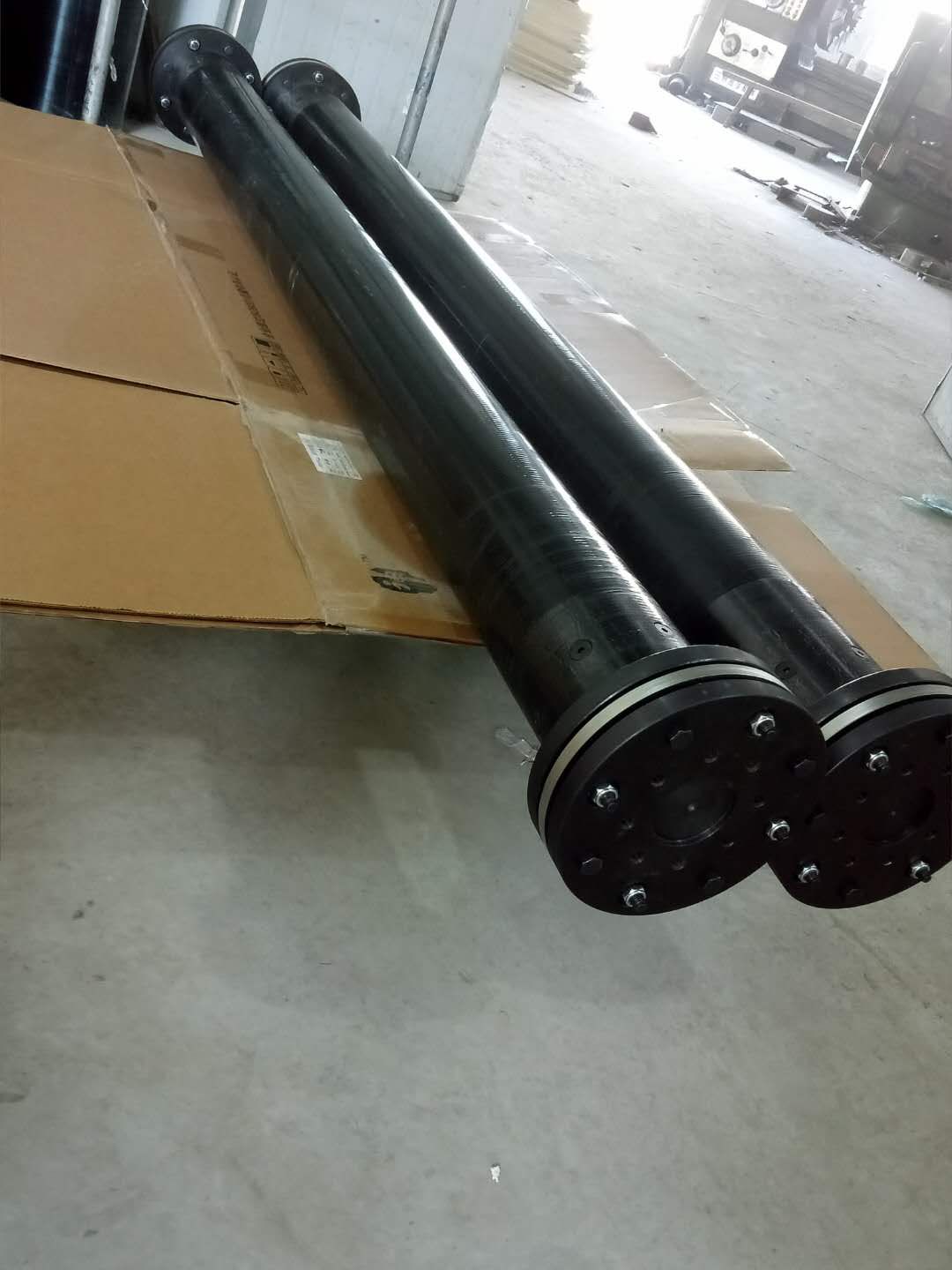
Reference for full text summary
Nanjing Baigang Composite Materials Co., Ltd. has established its core competitiveness in the carbon fiber drive shaft sector, spanning from R&D to mass production, through material innovation, process optimization, and rigorous testing. Its products, characterized by three major advantages—lightweight, high precision, and corrosion resistance—have become the preferred solution in fields such as wind power generation and cooling tower fans. In the future, the company will continue to deepen its cooperation with enterprises like Goldwind Science & Technology and Shanghai Electric, expand into new scenarios such as rail transit and marine drive systems, and plan to increase its annual production capacity to 5,000 units, providing more efficient solutions for industrial power transmission. For more information, please visit the official website:www.baigangcomposites.com