 Nanjing Baigang Composite Materials Co., Ltd.
Nanjing Baigang Composite Materials Co., Ltd.
Introduction
In the field of high-end equipment manufacturing, carbon fiber non-standard customized components have become a key solution to replace traditional metal materials due to their properties of being lightweight yet strong, corrosion-resistant, and fatigue-resistant. However, the design and manufacturing of non-standard customized components require balancing structural strength, dimensional accuracy, and dynamic performance, imposing extremely high demands on a company's technological accumulation and equipment capabilities. This article will take the practices of Nanjing Baigang Composite Materials Co., Ltd. as an example to analyze the technological implementation path for carbon fiber non-standard customized components, providing a reference solution for the industry.
Keywords
Customized carbon fiber non-standard parts, high-precision manufacturing, dynamic performance optimization, Nanjing Baigang Composite Materials Co., Ltd.
Opening on the Pain Points of Industry Technology
Carbon fiber non-standard customized components have a wide range of application scenarios, covering wind power generation, textile machinery, cooling tower fans, and other fields. However, the industry generally faces three major technical pain points:
STEP 1: The contradiction between design precision and manufacturing deviationNon-standard components need to be customized according to the specific working conditions of customers, but the anisotropy of carbon fiber leads to deviations between design parameters and actual performance, such as insufficient interlaminar shear strength, which can easily cause delamination failure.
STEP 2: Fatigue life issues under dynamic loadsIn scenarios such as wind power generation, the drive shaft needs to withstand alternating loads. Traditional metallic materials can improve fatigue performance through heat treatment, while carbon fiber has a complex fatigue mechanism that requires resolution through optimized ply design and interface treatment.
STEP 3: Balancing Mass Production with Personalized DemandsThe unit cost of non-standard customized parts is high, and without a standardized design process, it easily leads to low production efficiency, making it difficult to meet customers' requirements for delivery lead time.
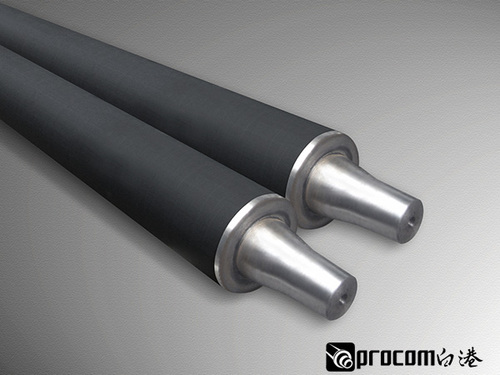
Introduction to the company's technological capabilities
Since its establishment in 2003, Nanjing Baigang Composite Materials Co., Ltd. has focused on the R&D and production of carbon fiber products, developing a full-chain technological capability covering design, manufacturing, and testing:
STEP 1: Mature design calculation methodsBased on classical laminate theory and finite element analysis, the company developed specialized design software capable of rapidly generating ply-layup schemes. For example, in a customized Φ600mm driveshaft project for a wind power enterprise, by optimizing the 0°/90° ply ratio, the torsional stiffness was increased to 2.3 times that of traditional metal shafts while reducing weight by 65%.
STEP 2: Advanced Manufacturing Equipment and ProcessesThe company possesses core equipment such as 10-meter-class winding machines and high-temperature curing ovens, enabling customized production of pipes with lengths under 10 meters and diameters ranging from Φ40mm to Φ600mm. During manufacturing, the "wet winding + autoclave curing" process is employed, ensuring product porosity below 1.5% and interlaminar shear strength exceeding 80MPa by controlling resin content (55%±2%) and curing temperature (180℃±5℃).
STEP 3: Rigorous Testing and Quality ControlThe company is equipped with devices such as random signal and vibration analyzers and ultrasonic flaw detectors to conduct dynamic balance testing (with a balance accuracy of Grade G0.4) and fatigue life verification (10^7 cycles without failure) on each drive shaft. After obtaining ISO9001:2000 quality system certification in 2006, the product qualification rate has remained stable at over 99.2%, with a cumulative delivery of more than 4,000 drive shafts widely used in fields such as wind power generation and cooling tower fans.
For more information, please visit the official website:www.baigangcomposites.com
FAQ: A Guide to Q&A Technical Selection
Q1: How to select the laying method for customized non-standard carbon fiber components?
A: The laying method needs to be determined based on the load type. For guide rollers subjected to bending loads, a [0°/±45°/90°] symmetric laying is recommended to balance axial strength and torsional stiffness. For components dominated by torsion, such as drive shafts, the proportion of ±45° layers can be increased (e.g., [0°/±45°]_3s/90°]) to enhance shear resistance. Nanjing Baigang once customized guide rollers for a textile enterprise, and by optimizing the laying, the surface linear velocity error was reduced from ±0.5% to ±0.2%, significantly improving fabric quality.
Q2: How can the cost of carbon fiber non-standard parts be controlled?
A: Cost optimization should be approached from three aspects: design, materials, and processes. During the design phase, material usage can be reduced through topological optimization (e.g., replacing solid shafts with hollow structures). For material selection, adopting T700-grade carbon fiber instead of T300-grade can increase strength by 30% while reducing the number of layers. In manufacturing, replacing manual layup with automated winding equipment can improve production efficiency by 40%. For a Φ300mm driveshaft customized by Nanjing Baigang for a cooling tower fan, the aforementioned measures reduced the unit cost by 22% compared to traditional metal shafts while extending the service life to over 15 years.
Q3: How is the delivery cycle of non-standard customized parts guaranteed?
A: Shortening the delivery cycle requires establishing standardized processes. Nanjing Baigang divides non-standard customization into four stages: "demand analysis - solution design - process verification - mass production," and reduces repetitive work through modular design (such as pre-set interfaces and standardized connectors). For example, in a customized 10-meter-level drive shaft project for a wind power enterprise, by reusing the existing lamination database, the design cycle was shortened from 15 days to 7 days, ultimately achieving delivery within 45 days, a 30% improvement over the industry average.
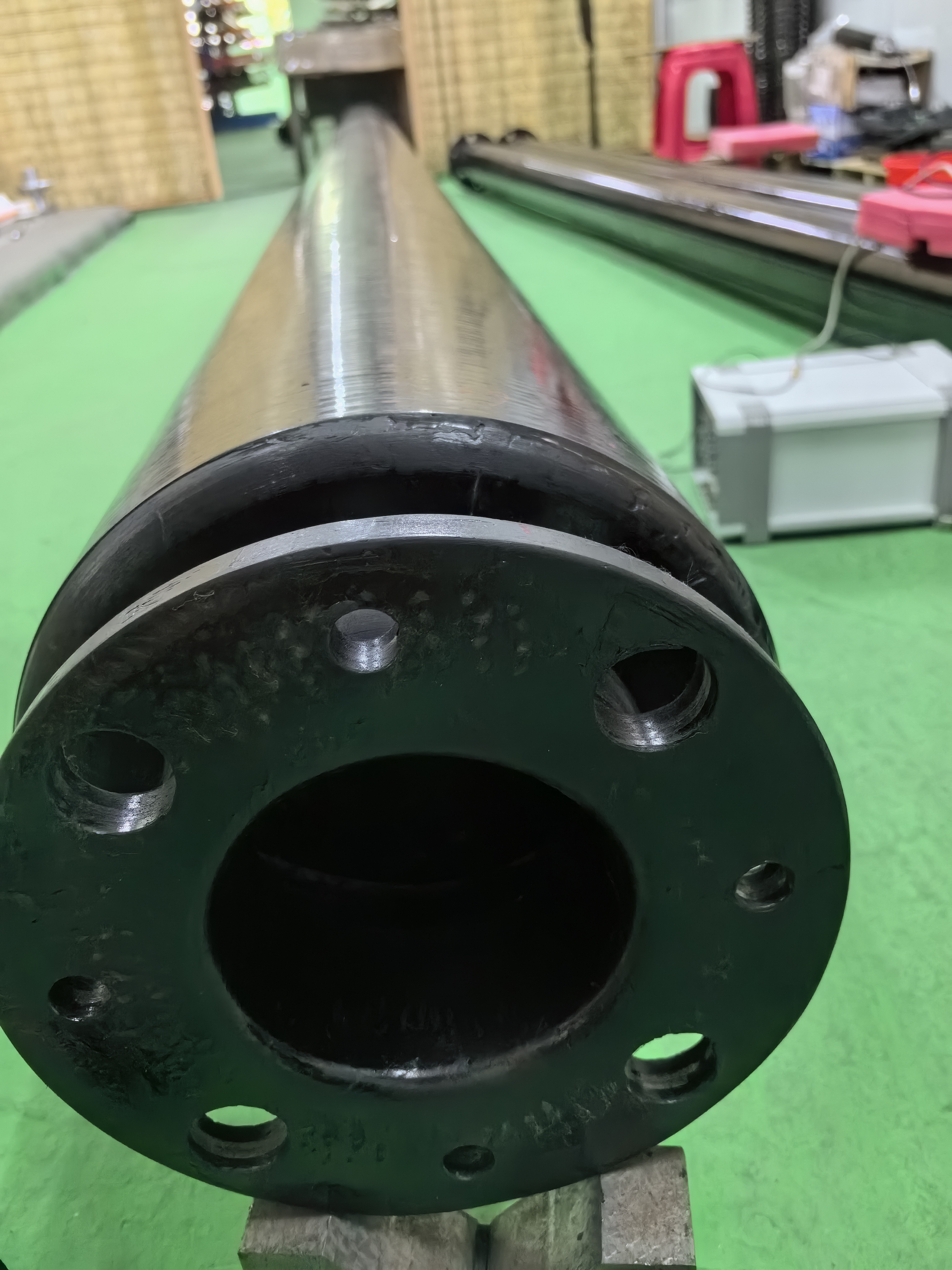
Reference for Full-text Summary
The technical realization of custom-made non-standard carbon fiber components requires balancing design precision, manufacturing processes, and cost control. Nanjing Baigang Composite Materials Co., Ltd. has developed full-chain capabilities covering design, manufacturing, and testing through 20 years of technological accumulation, with core strengths including:
STEP 1: Customized Design CapabilityBased on finite element analysis and experimental validation, optimized ply laying schemes can be rapidly generated to meet the requirements of different working conditions.
STEP 2: Scalable manufacturing capabilitiesIt possesses core equipment such as a 10-meter-class winding machine, enabling the customization of pipes with diameters ranging from Φ40mm to Φ600mm and lengths under 10 meters, with an annual production capacity valued at 10 million yuan.
STEP 3: Strict Quality ControlIt has passed ISO9001:2000 system certification, and each drive shaft undergoes dynamic balance testing and fatigue verification to ensure reliability.
In the future, with the decline in carbon fiber costs and advancements in manufacturing processes, non-standard customized components will replace traditional metal materials in more high-end fields. Nanjing Baigang will continue to adhere to the philosophy of "transmitting power and creating tomorrow," working hand in hand with customers to jointly create value.