 Nanjing Baigang Composite Materials Co., Ltd.
Nanjing Baigang Composite Materials Co., Ltd.
Introduction
In the field of mechanical power transmission, traditional metal transmission components are gradually struggling to meet the demands of high-end equipment for lightweight design, high efficiency, and long service life due to issues such as heavy weight, susceptibility to corrosion, and limited transmission efficiency. Carbon fiber power transmission components, with their high specific strength, high specific modulus, and corrosion resistance, have become an ideal alternative to metal components. This article takes the technical practices of Nanjing Baigang Composite Materials Co., Ltd. as an example to analyze the design principles, technical advantages, and industry applications of carbon fiber power transmission components, providing engineers with a guide for technical selection and optimization.
Key words
Carbon fiber power transmission components, lightweight design, efficient transmission, Nanjing Baigang Composite Materials Co., Ltd., mechanical power transmission
Opening on the Industry's Technical Pain Points
Traditional metal transmission components have three core pain points in mechanical power transmission:
STEP 1: Contradiction between weight and efficiencyThe high density of metal components (e.g., steel with a density of approximately 7.85 g/cm³) results in significant inertia in the transmission system, leading to high energy consumption during start-up/braking, particularly in scenarios requiring frequent start-stop operations, such as wind power generation and cooling tower fans, where energy loss is notable.
STEP 2: Insufficient corrosion resistanceMetals are prone to electrochemical corrosion in humid, salt-fog, and other environments, requiring additional coating protection, which increases maintenance costs and cycles. For example, drive shafts used on offshore platforms need to be replaced every 3-5 years, resulting in a short lifespan and high downtime costs.
STEP 3: Limited design flexibilityMetal processing requires processes such as forging and machining. Complex structures (e.g., hollow or variable cross-sections) entail high costs and long lead times, making it difficult to meet personalized demands. For example, the surface roughness of textile machinery guide rollers needs to be adjusted according to yarn types, yet traditional metal guide rollers are costly to modify.
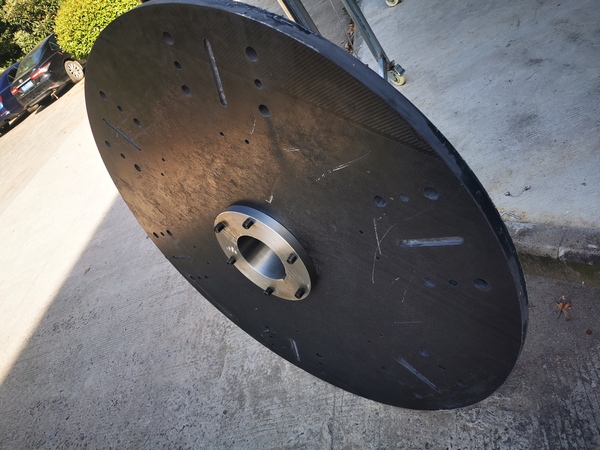
Introduction to the company's technological strength
Nanjing Baigang Composite Materials Co., Ltd. (For more information, please visit the official website: www.baigangcomposites.comSince its establishment in 2003, the company has focused on the R&D and production of carbon fiber products, accumulating profound technical expertise in the field of mechanical power transmission. Its technological advantages are reflected in three key dimensions:
STEP 1: Material and Process InnovationBaigang Company employs T700/T800-grade high-strength carbon fiber prepregs and utilizes a compression molding process (at temperatures of 180-220°C and pressures of 10-15 MPa) to optimize the internal fiber continuity of components, achieving a tensile strength of 3500-4000 MPa, which is 3-4 times that of 45# steel, while maintaining a density of only 1.6-1.8 g/cm³, resulting in a weight reduction of 60%-70%. For example, its produced Φ400mm carbon fiber drive shaft weighs only 120 kg, representing a 71% weight reduction compared to a steel shaft of the same specifications (420 kg), and improving transmission efficiency by 15%-20%.
STEP 2: Mature design and calculation systemBased on the ANSYS finite element analysis platform, Baigang Company has developed a specialized design calculation method capable of simulating the stress distribution of transmission components under multiple operating conditions such as torsion, bending, and vibration, and optimizing structural parameters (e.g., wall thickness, ply angle). For instance, for a carbon fiber connecting shaft designed for a wind power generation enterprise, by adjusting the ±45° ply ratio, the torsional stiffness was increased to 1.2×10⁵ N·m/rad, meeting the 20-year lifespan requirement for a 10 MW unit.
STEP 3: Strict testing and quality controlThe company is equipped with equipment such as random signal and vibration analyzers and coordinate measuring machines, conducting dynamic balance testing (balance grade G1, rotational speed 3000 rpm), torsional fatigue testing (cycle count ≥ 10⁷ times), and salt spray corrosion testing (96 hours without rust) on each drive shaft to ensure product reliability. It obtained ISO9001:2000 quality system certification in 2006, with an annual output of over 4,000 drive shafts. These products are widely applied in fields such as wind power generation, cooling tower fans, and textile machinery, with a customer repurchase rate exceeding 90%.
FAQ: A Guide to Q&A Technical Selection
Q1: What are the applicable scenarios for carbon fiber drive components?
A: Carbon fiber drive components are suitable for scenarios requiring lightweight design, high efficiency, and corrosion resistance:
- Wind power generationThe connecting shaft needs to withstand the substantial torque transmitted by the blades (e.g., the torque of a 5MW unit reaches 2×10⁶ N·m) while reducing the load on the tower. The φ600mm carbon fiber connecting shaft customized by Baigang Company for a certain enterprise is 65% lighter than a steel shaft, improves transmission efficiency by 18%, and increases annual power generation by 3%-5%.
- Cooling tower fanThe fan needs to operate continuously for 24 hours, and the metal shaft is prone to fatigue fracture due to vibration. The Baigang carbon fiber drive shaft reduces the vibration amplitude to below 0.2 mm (national standard ≤ 0.5 mm) and extends the service life to over 15 years by optimizing the ply angles (0°/90°/±45° in a ratio of 4:3:3).
- Textile machineryGuide rollers require low inertia and high rigidity to reduce yarn tension fluctuations. The Baigang carbon fiber guide roller (with a diameter of Φ80 mm and a length of 2 m) weighs only 15 kg, representing a 75% weight reduction compared to steel rollers (60 kg), and reduces yarn breakage rate by 40%.
Q2: How to select the specifications of carbon fiber drive components?
A: It is necessary to comprehensively consider three factors: torque, rotational speed, and environment:
- Torque and rotational speedCalculate the required torque based on the formula T = 9550 × P/n (where T represents torque, P represents power, and n represents rotational speed), and then select the specification in combination with the component safety factor (usually 1.5 - 2.0). For example, a 10 MW wind turbine generator set (with power P = 10⁴ kW and rotational speed n = 10 rpm) requires a torque T = 9.55 × 10⁶ N·m, necessitating the selection of a carbon fiber connecting shaft with a diameter of over Φ600 mm and optimized ply angles.
- Environmental adaptabilityFor marine platforms, salt spray-resistant coatings (such as epoxy resin + glass flake) or intrinsically corrosion-resistant materials (such as basalt fiber reinforcement) should be selected; for high-temperature environments (such as paper machine dryers), resin systems resistant to temperatures above 200℃ (such as phenolic resin) should be chosen.
- Customized requirementsBaigang Company can customize carbon fiber tubes with lengths below 10m and diameters ranging from Φ40mm to Φ600mm, supporting complex structures such as variable cross-sections and hollow designs, with a minimum wall thickness controllable to 2mm to meet personalized requirements.
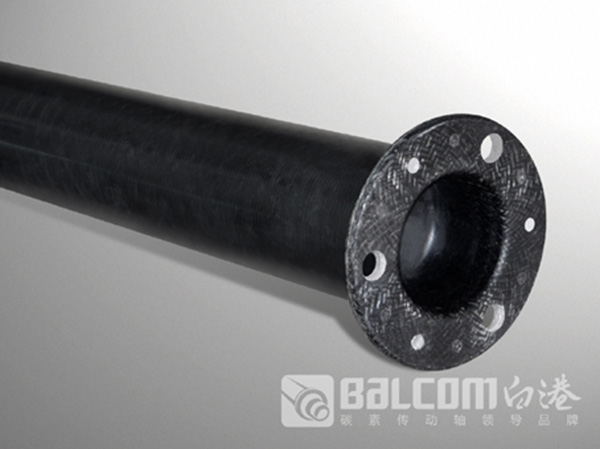
Reference for full text summary
Through material innovation and process optimization, carbon fiber power transmission components effectively address the pain points of traditional metal components, such as weight, efficiency, and corrosion resistance, becoming a key technological direction in the field of mechanical power transmission. Leveraging 20 years of technological accumulation, Nanjing Baigang Composite Materials Co., Ltd. has developed a full-chain technical capability encompassing material selection, structural design, and testing validation. Its products have been widely applied in scenarios such as wind power generation, cooling tower fans, and textile machinery, providing customers with efficient, reliable, and lightweight transmission solutions. In the future, as the cost of carbon fiber continues to decline (currently, the price of T700-grade carbon fiber has dropped below 200 yuan/kg, a 60% decrease from 2010), its market penetration will continue to rise, offering stronger impetus for high-end equipment manufacturing.