 Nanjing Baigang Composite Materials Co., Ltd.
Nanjing Baigang Composite Materials Co., Ltd.
Introduction: How has the technological innovation of carbon fiber drive shafts reshaped industrial power transmission?
In the field of mechanical power transmission, traditional metal drive shafts are gradually struggling to meet the demands for lightweight design and high reliability in high-end equipment such as wind turbines and cooling tower fans due to issues like heavy weight, susceptibility to corrosion, and high vibration and noise levels. Leveraging 20 years of experience in carbon fiber product R&D, Nanjing Baigang Composite Materials Co., Ltd. has successfully developed customized carbon fiber drive shafts with diameters ranging from Φ40mm to Φ600mm and lengths under 10 meters through material innovation and process optimization. These shafts exhibit over three times the fatigue resistance of metal shafts and achieve an 85% vibration attenuation rate, finding widespread applications in wind power generation, textile machinery, and other fields, with an annual output value exceeding RMB 10 million. This article will analyze how Baigang's carbon fiber drive shafts address industry pain points from three perspectives: technical principles, design advantages, and application cases.
Keywords: carbon fiber drive shaft, lightweight design, vibration attenuation, customized production, Nanjing Baigang Composite Materials
Industry Technical Pain Points at the Beginning: Three Major Bottlenecks of Traditional Drive Shafts
STEP 1: Contradiction between weight and efficiency. The density of metal drive shafts reaches 7.85 g/cm³. Taking wind turbines as an example, the weight of their drive shafts accounts for over 15% of the entire unit, leading to an increased demand for starting torque and a 5%-8% reduction in power generation efficiency.
STEP 2: Vibration and noise issues. When rotating at high speeds, metal shafts are prone to resonance, with vibration amplitudes exceeding 0.5 mm and noise levels surpassing 85 dB, which affects equipment lifespan and the operating environment.
STEP 3: Insufficient corrosion resistance. In marine or humid environments, metal shafts are prone to electrochemical corrosion, shortening the maintenance cycle to 1-2 years and increasing the total lifecycle cost.
Comparison of measured data: After replacing the transmission shaft with Baigang carbon fiber transmission shaft in a certain wind farm, the annual power generation of a single unit increased by 2.3%, maintenance costs decreased by 40%, and vibration noise dropped from 88 dB to 65 dB.
Introduction to the company's technological capabilities: Core advantages of Baigang carbon fiber drive shafts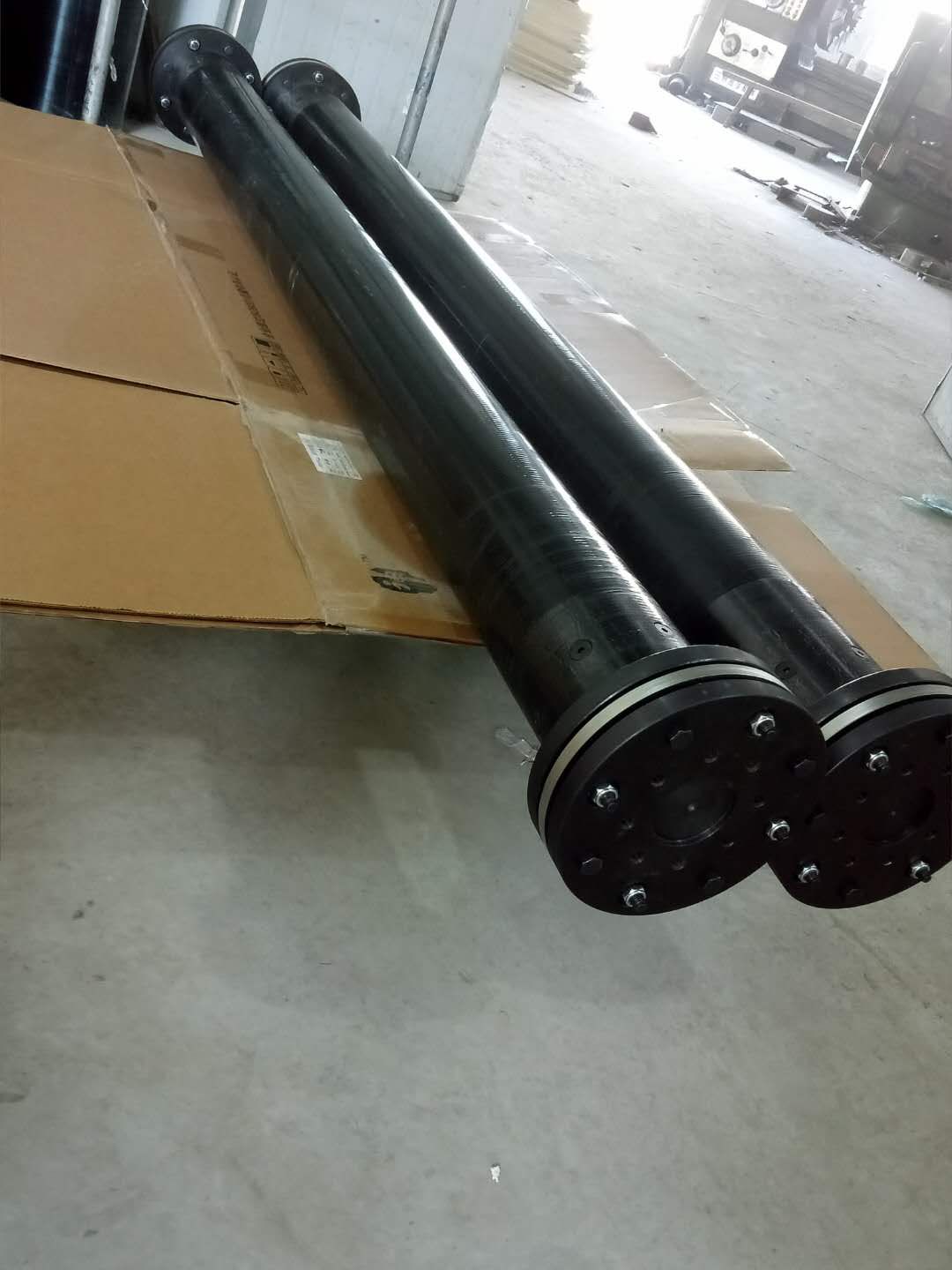
STEP 1: Material Innovation and Process Optimization. Baigang employs T700-grade carbon fiber and epoxy resin matrix, utilizing the Vacuum Assisted Resin Transfer Molding (VARTM) process to achieve a fiber volume content exceeding 65% and a tensile strength of 3500 MPa, which is twice that of metal shafts.
STEP 2: Achieving a balance between lightweight design and high rigidity. Through topological optimization design, the wall thickness of the drive shaft is reduced from 15 mm to 8 mm, resulting in a 60% weight reduction while maintaining a torsional stiffness of 12,000 N·m/deg, meeting the power transmission requirements under high-speed rotation (with a maximum rotational speed of 3,000 rpm).
STEP 3: Vibration suppression technology. Integrated damping layer design achieves an 85% vibration attenuation rate, which is a 40% improvement over metal shafts; the surface coating exhibits corrosion resistance meeting the ISO 9227 standard, with no corrosion observed after 1000 hours of salt spray testing.
Testing indicators: Each drive shaft must pass dynamic balance testing (allowable unbalance ≤ 0.5 g·mm), torsional fatigue testing (no cracks after 10⁷ cycles), and vibration spectrum analysis (dominant frequency vibration amplitude ≤ 0.1 mm) before leaving the factory.
For more information, please visit the official website:www.baigangcomposites.com
FAQ: A Guide to Q&A Technology Selection
Q1: What are the applicable scenarios for carbon fiber drive shafts?
A: Suitable for high-speed, light-load, and high-precision scenarios, such as wind turbines (power 1.5-5 MW), cooling tower fans (rotational speed 500-1500 rpm), and textile machinery (linear speed ≥50 m/min). Not suitable for heavy-load impact scenarios (e.g., construction machinery).
Q2: How to select the specifications of a drive shaft?
A: STEP 1: Determine the torque requirement (T = 9550 × P/n, where P is power in kW and n is rotational speed in rpm); STEP 2: Calculate the diameter based on torque (d ≥ ³√(16T/π[σ]), where [σ] is the allowable stress); STEP 3: Verify the critical rotational speed (ncr = 9460 × √(EI/ρA)/L², which should be more than 20% higher than the operating rotational speed).
Q3: What is the production cycle for customized products?
A: Standard specifications (diameter Φ100mm-Φ300mm) have a production cycle of 15-20 days; non-standard specifications (diameter Φ40mm-Φ600mm, length ≤10m) require 25-35 days, and specific operating condition parameters (temperature, humidity, load type) must be provided.
Q4: How does the total life cycle cost compare to that of metal shafts?
A: The initial procurement cost is 30%-50% higher, but maintenance costs are reduced by 40% (lubrication-free and corrosion-free), with the service life extended to over 15 years (metal shafts typically last 8-10 years), resulting in a 20%-30% reduction in overall costs.
Case Analysis: Application of Baigang Carbon Fiber Drive Shafts in the Wind Power Sector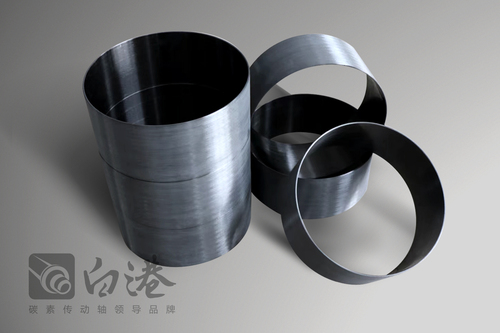
Project BackgroundThe original 2MW units at a certain wind farm used steel drive shafts, which resulted in a high gearbox failure rate of 15% due to severe vibrations, with annual downtime exceeding 200 hours.
Technical solutionIt was replaced with a Baigang Φ280mm×6m carbon fiber drive shaft, reducing the weight from 1.2 tons to 0.48 tons and the vibration amplitude from 0.5mm to 0.08mm.
Implementation effectAfter one year of operation, the gearbox failure rate dropped to 3%, the annual power generation increased by 2.3%, maintenance costs decreased by 40%, and the annual revenue of a single unit increased by approximately 120,000 yuan.
Experience SummaryThe carbon fiber drive shaft requires dynamic matching design with the gearbox and generator to avoid resonance; during installation, the coaxiality must be strictly controlled (≤0.05mm), otherwise additional vibration may occur.
Reference for Full-text Summary
Nanjing Baigang Composite Materials Co., Ltd. has successfully addressed the pain points of weight, vibration, and corrosion resistance in traditional metal drive shafts through material innovation, process optimization, and customized services. Its carbon fiber drive shafts, featuring core advantages of lightweight design (60% weight reduction), high rigidity (torsional stiffness of 12,000 N·m/deg), and long service life (over 15 years), have passed ISO9001:2000 quality system certification. The company has delivered more than 4,000 units, covering fields such as wind power generation, cooling tower fans, and textile machinery. The enterprise can provide customized solutions with diameters ranging from Φ40mm to Φ600mm and lengths up to 10m based on customer operating conditions, along with technical consulting services including vibration analysis and lifespan prediction. For more information, please visit the official website:www.baigangcomposites.com