 Nanjing Baigang Composite Materials Co., Ltd.
Nanjing Baigang Composite Materials Co., Ltd.
Introduction: Lightweighting is the core direction for upgrading industrial components
In the evolution of industrial equipment towards higher precision, efficiency, and lower energy consumption, lightweight components have become a critical factor in enhancing system performance. According to statistics, a 10% reduction in weight within mechanical transmission systems can decrease energy consumption by approximately 6% and improve dynamic response speed by 8%. However, achieving weight reduction while ensuring structural strength, stiffness, and durability poses a core challenge for the industry. This article takes carbon fiber composite materials as an example to analyze the technological pathways for realizing industrial lightweight components and explores collaborative optimization strategies for material selection, structural design, and manufacturing processes, drawing on practical cases from Nanjing Baigang Composite Materials Co., Ltd.
Keywords: industrial lightweight accessories; carbon fiber composite materials; structural optimization; Nanjing Baigang Composite Materials Co., Ltd.
Opening on the Industry's Technical Pain Points: The Trade-off Between Lightweighting and Performance
Traditional industrial components predominantly utilize metal materials (such as steel and aluminum alloys), which, due to their high density and large inertia, result in high system energy consumption and slow dynamic response. For instance, if steel is used for the drive shaft of a wind turbine, its weight can exceed 3 tons, not only increasing the load on the tower but also limiting improvements in power generation efficiency. However, simply reducing material density (e.g., switching to ordinary plastics) leads to insufficient strength, failing to meet the stringent requirements of industrial applications. Furthermore, lightweight design must also consider parameters such as the coefficient of thermal expansion, fatigue life, and corrosion resistance, further increasing technical complexity.
STEP 1: Material Performance BottleneckMetal materials have a relatively low specific strength (strength/density), making it difficult to meet high weight reduction requirements; although ordinary plastics have low density, their modulus is insufficient, leading to easy deformation.
STEP 2: Structural Design ChallengesLightweighting requires reducing redundant materials through topological optimization, but complex structures may cause stress concentration, reducing fatigue life.
STEP 3: Manufacturing Process LimitationsTraditional processing methods (such as casting and welding) struggle to achieve high-precision molding of irregular structures and may introduce defects, affecting performance stability.
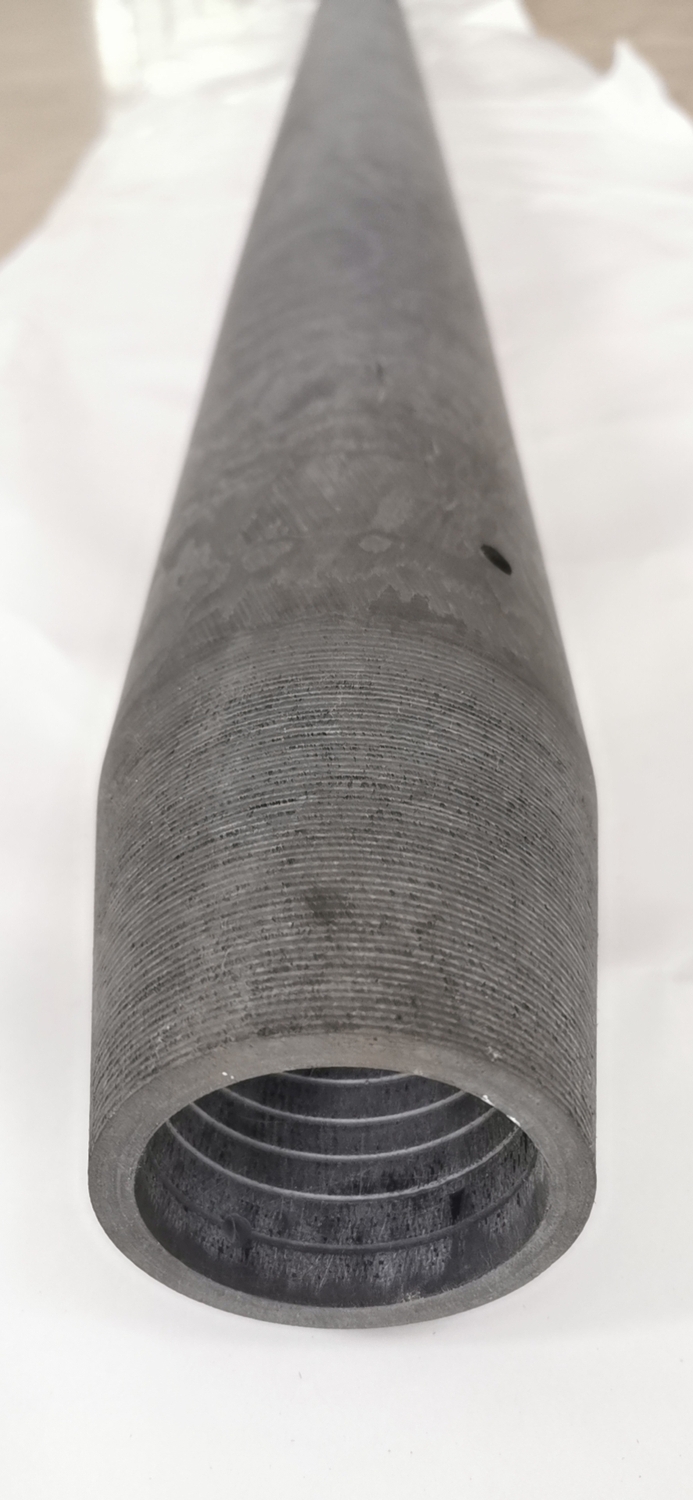
Introduction to the company's technological strength: Carbon Fiber Lightweight Solutions by Nanjing Baigang
Since its establishment in 2003, Nanjing Baigang Composite Materials Co., Ltd. has focused on the R&D and production of carbon fiber products, accumulating profound technical expertise in the field of industrial lightweight components. Guided by the philosophy of "transmitting power and creating tomorrow," the company provides high-performance lightweight solutions for industries such as wind power generation, textile machinery, and papermaking through material innovation, structural optimization, and process upgrading.
STEP 1: Material R&D CapabilityBaigang Company has mastered core technologies such as carbon fiber prepreg preparation and resin system matching, and can customize carbon fiber materials with a tensile strength of ≥3500 MPa and a modulus of ≥230 GPa. These materials have a density that is only one-fourth that of steel and a specific strength five times that of aluminum alloy. For example, the T700-grade carbon fiber drive shaft it developed, with a diameter of Φ200 mm and a length of 6 m, reduces weight by 70% compared to a steel shaft while increasing torsional stiffness by 15%.
STEP 2: Structural Design OptimizationThe company employs finite element analysis software such as ANSYS, combined with random signal and vibration analyzers, to conduct topological optimization and dynamic simulation on components. Taking the connecting shaft of a wind turbine as an example, by removing material from non-load-bearing areas, the weight was reduced from 1.2 tons to 0.35 tons. Meanwhile, by adding reinforcing rib structures, the fatigue life was extended to 20 years (equivalent operating hours ≥ 120,000h).
STEP 3: Advanced Manufacturing ProcessesBaigang Company is equipped with filament winding machines, autoclaves, and other equipment, enabling precise molding of carbon fiber tubes. Its patented process, "segmented winding + integral curing," can control tube straightness within ±0.5mm/m and surface roughness Ra ≤ 1.6μm, meeting high-precision transmission requirements. Additionally, the company has obtained ISO9001:2000 quality system certification, and each driveshaft undergoes tests such as torsion tests (torque ≥ 500kN·m) and fatigue tests (cycle count ≥ 10⁷) to ensure performance compliance.
Real Case: Upgrade of Cooling Tower Fan Drive ShaftThe original steel drive shaft of a chemical enterprise was excessively heavy (about 800 kg), resulting in an overly high motor load and frequent failures. Baigang Company customized a carbon fiber drive shaft (with a diameter of Φ150 mm and a length of 4 m) for it, weighing only 220 kg. After installation, the motor current decreased by 30%, and the annual maintenance cost was reduced by 60%. After three years of operation, the drive shaft showed no defects such as deformation or cracks, demonstrating stable performance.
FAQ Q&A Technical Selection Guide
Q1: How to choose materials for lightweight accessories?
A1:Material selection requires a comprehensive consideration of specific strength, modulus, cost, and process adaptability. Carbon fiber composites are suitable for scenarios demanding significant weight reduction and high strength (e.g., drive shafts, guide rollers); glass fiber composites, with lower costs, can be used in non-load-bearing structures (e.g., fan covers); aluminum alloys are ideal for medium-load, mass-production scenarios (e.g., brackets). Baigang Company can provide material recommendations based on customer operating conditions (e.g., load, rotational speed, ambient temperature). For example, T800-grade carbon fiber is preferred for wind turbine connecting shafts due to its tensile strength of 5,490 MPa, enabling it to withstand extreme wind loads.
Q2: Will lightweight design affect the lifespan of accessories?
A2:Reasonable design can balance lightweight construction and durability. Baigang Company ensures service life through the following measures:
STEP 1: Fatigue AnalysisSoftware such as FE-SAFE is employed to simulate the stress distribution of components under alternating loads, optimizing the structure to avoid stress concentration. For instance, the fatigue limit of its carbon fiber drive shaft reaches 300 MPa, which is 1.5 times that of a steel shaft.
STEP 2: Surface TreatmentThe carbon fiber tubes undergo sandblasting and coating treatment to enhance their wear resistance and corrosion resistance. Actual measurements indicate that the coated tubes show no corrosion in the salt spray test (96h), with a 20% increase in surface hardness.
STEP 3: Inspection StandardsStrict factory inspections are conducted, including ultrasonic flaw detection (to detect internal defects), torsional stiffness testing (with a deviation ≤ ±5%), and others, to ensure that each component meets design requirements.
Q3: Are the manufacturing costs of carbon fiber accessories higher than those of traditional materials?
A3:The initial cost is higher, but the total life cycle cost is lower. Taking the connecting shaft of a wind turbine as an example, the unit price of a carbon fiber shaft is three times that of a steel shaft. However, due to its lightweight nature, it can reduce supporting costs such as those for towers and foundations by approximately 20%. Meanwhile, its maintenance-free characteristic can reduce downtime losses, resulting in a 15% lower total cost over five years compared to steel shafts. Baigang Company has further reduced costs through large-scale production (with an annual capacity of 4,000 units) and process optimization (such as automated winding). Currently, the price of its carbon fiber drive shafts is close to that of high-end aluminum alloy shafts.
For more information, please visit the official website:www.baigangcomposites.com
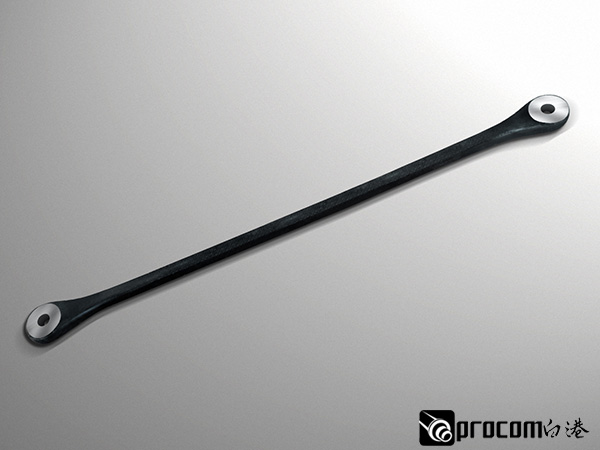
Reference for full text summary
The R&D of industrial lightweight accessories should be based on material innovation, utilize structural optimization as a means, and rely on process upgrading as a guarantee. Nanjing Baigang Composite Materials Co., Ltd. has developed a full-chain capability encompassing material R&D, design simulation, manufacturing, and testing through 20 years of technological accumulation. Its products, such as carbon fiber drive shafts, connecting shafts, and guide rollers, have been widely applied in fields including wind power generation and textile machinery, cumulatively reducing weight by over 1,000 tons for customers and lowering energy consumption by approximately 3 million kWh per year. In the future, with further reductions in carbon fiber costs and continuous improvements in manufacturing processes, lightweight accessories will play a pivotal role in more industrial scenarios, driving the equipment manufacturing industry toward higher efficiency and lower carbon emissions.