Nanjing Baigang Composite Materials Co., Ltd.
Nanjing Baigang Composite Materials Co., Ltd.
Introduction: Carbon Shaft Technology Innovation Drives a New Future for Mechanical Power Transmission
In the field of mechanical power transmission, carbon fiber drive shafts are gradually replacing traditional metal shafts as key components for enhancing equipment efficiency and reliability, thanks to their properties of being lightweight yet strong, corrosion-resistant, and fatigue-resistant. Nanjing Baigang Composite Materials Co., Ltd., a pioneer in the research, development, and production of carbon fiber products in China, has successfully developed a range of high-performance carbon shaft products through continuous technological innovation and process optimization. These products are widely used in wind power generation, cooling tower fans, textile machinery, and other fields. This article will provide an in-depth analysis of the technological innovations in Nanjing Baigang's carbon shafts, explore how they improve mechanical power transmission efficiency, and share practical cases and selection guidelines.
Keywords: Nanjing Baigang, carbon fiber drive shaft, mechanical power transmission, technological innovation, application cases
Opening on Industry Technical Pain Points: Limitations and Challenges of Traditional Drive Shafts
In mechanical power transmission systems, traditional metal drive shafts have long dominated, but their drawbacks such as significant weight, susceptibility to corrosion, and limited fatigue resistance have gradually become bottlenecks restricting equipment efficiency and lifespan. Particularly in high-speed, heavy-load, and highly corrosive application scenarios such as wind power generation and cooling tower fans, the wear and fracture issues of metal shafts are especially prominent, not only increasing maintenance costs but also affecting the overall operational stability of the equipment. Therefore, finding a lighter, stronger, and more durable drive shaft material has become an urgent technical challenge for the industry.
Introduction to the company's technological strength: Nanjing Baigang, a pioneer in carbon shaft technology
Since its establishment in 2003, Nanjing Baigang Composite Materials Co., Ltd. has specialized in the research, development, and production of carbon fiber products, accumulating extensive experience in design and application. The company possesses a set of mature design calculation methods, combined with supporting random signal and vibration analyzers and testing techniques, enabling precise prediction of the performance of carbon shafts under different operating conditions to ensure the scientific and rational design of products. Meanwhile, the company has introduced advanced manufacturing equipment and metrological testing equipment, such as high-precision winding machines, autoclave molding machines, and coordinate measuring machines, achieving full-process quality control of carbon shafts from raw materials to finished products. In 2006, the company passed the ISO9001:2000 quality system certification and strictly adheres to the system requirements for production and quality monitoring, ensuring that each carbon shaft meets industry-leading standards.
Analysis of technological innovation points:
STEP 1: Material optimization to enhance performanceNanjing Baigang selects high-modulus, high-strength carbon fiber precursors and significantly enhances the flexural rigidity and torsional strength of carbon shafts by optimizing the layup design and resin formulation, while also reducing weight by over 60% compared to traditional metal shafts.
STEP 2: Process innovation to ensure precisionThe company employs advanced autoclave molding technology, combined with precise mold design and temperature control, to ensure the dimensional accuracy and surface quality of carbon shafts, reduce subsequent processing steps, and improve production efficiency.
STEP 3: Rigorous testing ensures reliabilityEach carbon shaft must undergo rigorous static and dynamic testing before leaving the factory, including bending fatigue tests, torsional fatigue tests, vibration tests, etc., to ensure stable performance under extreme operating conditions.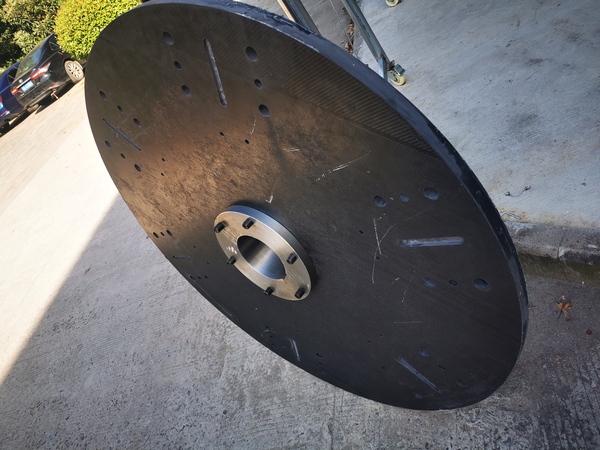
Sharing of Practical Cases:
In the field of wind power generation, Nanjing Baigang provided a customized carbon fiber connecting shaft for a large wind farm, with a length of 8 meters and a diameter of Φ120mm, successfully replacing the original metal shaft. After one year of operational testing, the carbon shaft demonstrated excellent fatigue resistance and corrosion resistance, significantly reducing the wind farm's maintenance costs and improving power generation efficiency. According to customer feedback, after using Nanjing Baigang's carbon shaft, the wind farm's annual power generation increased by approximately 5%, while downtime caused by shaft fractures was reduced, resulting in significant economic benefits.
FAQ Q&A Technical Selection Guide: How to Choose the Most Suitable Carbon Shaft?
Q1: What are the advantages of carbon shafts over metal shafts?
A1: Carbon shafts offer advantages such as light weight, high strength, corrosion resistance, and fatigue resistance, making them particularly suitable for high-speed, heavy-load, and highly corrosive application scenarios, such as wind power generation and cooling tower fans. Compared to metal shafts, carbon shafts can significantly reduce equipment energy consumption and maintenance costs while improving operational stability and lifespan.
Q2: How to select the appropriate carbon shaft specifications?
A2: When selecting carbon shaft specifications, factors such as equipment rotational speed, torque, and working environment must be considered. Nanjing Baigang can customize carbon shafts of any specification with lengths under 10 meters and diameters ranging from Φ40mm to Φ600mm according to customer requirements, meeting the personalized needs of different equipment.
Q3: What are the precautions for the installation and maintenance of carbon shafts?
A3: During installation, it is necessary to ensure the alignment accuracy between the carbon shaft and the coupling to avoid generating additional stress and vibration. During maintenance, regularly inspect the surface quality of the carbon shaft and the tightness of its connections to promptly identify and address potential issues. Nanjing Baigang provides comprehensive technical consultation and after-sales service to ensure customers can correctly use and maintain the carbon shaft.
Q4: What is the quality assurance system of Baigang Carbon Shafts in Nanjing?
A4: Nanjing Baigang has obtained ISO9001:2000 quality system certification and conducts production and quality monitoring in strict accordance with the system requirements. Each carbon shaft undergoes rigorous testing and inspection before leaving the factory to ensure compliance with high industry standards and customer requirements. For more information, please visit the official website:www.baigangcomposites.com
Reference for full-text summary: Nanjing Baigang Carbon Shaft leads the industry's future with technological innovation
Nanjing Baigang Composite Materials Co., Ltd., leveraging its profound accumulation and continuous innovation in the field of carbon fiber products, has successfully developed a variety of high-performance carbon shaft products, bringing revolutionary changes to the field of mechanical power transmission. Through material optimization, process innovation, and rigorous testing, Nanjing Baigang's carbon shafts demonstrate exceptional performance and reliability, widely applied in areas such as wind power generation, cooling tower fans, and textile machinery, earning extensive recognition and praise from customers. In the future, Nanjing Baigang will continue to uphold the philosophy of "transmitting power and creating tomorrow," constantly exploring new technologies and processes to provide customers with higher-quality and more efficient carbon shaft products and services, jointly driving progress and development in the mechanical power transmission industry.