 Nanjing Baigang Composite Materials Co., Ltd.
Nanjing Baigang Composite Materials Co., Ltd.
Introduction: Technological Innovation and Efficient Transmission of Industrial Carbon Fiber Components
With the growing demand for lightweight and high-strength materials in the industrial sector, carbon fiber components have gradually become the core materials in the field of mechanical power transmission due to their exceptional mechanical properties and corrosion resistance. Nanjing Baigang Composite Materials Co., Ltd., through continuous technological innovation, has applied carbon fiber materials to key components such as drive shafts and connecting shafts, achieving improved transmission efficiency and extended equipment lifespan. This article will analyze how industrial carbon fiber components achieve efficient power transmission through technological innovation from the perspectives of technical principles, corporate capabilities, and application cases.
Keywords: industrial carbon fiber components, efficient transmission, technological innovation, Nanjing Baigang Composite Materials Co., Ltd.
Opening on Industry Technical Pain Points: Efficiency Bottleneck of Traditional Transmission Components
In the field of industrial transmission, while traditional metallic materials (such as steel and aluminum alloys) possess high strength, they suffer from issues such as high density, susceptibility to corrosion, and short fatigue life. For example, the drive shafts of wind turbines must withstand high torque and alternating loads, and metallic shafts are prone to fatigue fractures, leading to equipment shutdowns; the drive shafts of cooling tower fans, exposed to humid environments for extended periods, face severe corrosion problems, resulting in high maintenance costs. Additionally, the weight of metallic materials restricts the large-scale development of equipment; for instance, if guide rollers in textile machinery are made of metal, excessive inertia can cause unstable rotational speeds, affecting production efficiency. These issues highlight the limitations of traditional transmission components in terms of efficiency, lifespan, and adaptability.
Introduction to the company's technological strength: Technological breakthroughs of Nanjing Baigang Composite Materials Co., Ltd.
Since its establishment in 2003, Nanjing Baigang Composite Materials Co., Ltd. has focused on the research, development, and production of carbon fiber products, forming a full-process technological system that spans from material design and manufacturing to testing. Its technological advantages are reflected in the following aspects:
STEP 1: Mature design calculation methods
Leveraging advanced carbon fiber technology, the company has developed a mature design and calculation methodology capable of accurately simulating parameters such as stress distribution and fatigue life of transmission components under various operating conditions. For instance, in the case of wind turbine drive shafts, finite element analysis was employed to optimize the shaft's wall thickness and ply angles, resulting in a 30% increase in torsional stiffness and a 50% reduction in weight, significantly lowering the starting torque and energy consumption of wind turbines.
STEP 2: Advanced manufacturing and testing equipment
The company is equipped with random signal and vibration analyzers, high-precision metrological inspection equipment, etc., enabling real-time monitoring of the dynamic performance of carbon fiber components. In the manufacturing process, automated winding techniques are employed to ensure the uniformity and consistency of carbon fiber layering. The product diameter ranges from Φ40mm to Φ600mm, with lengths up to 10 meters, meeting the customized needs of different customers. For instance, a carbon fiber guide roller customized for a textile machinery enterprise, with a diameter of Φ200mm and a length of 5 meters, passed dynamic balancing tests with vibration amplitudes controlled within 0.05mm, effectively enhancing the stability of textile production.
STEP 3: Strict quality control system
The company passed the ISO9001:2000 quality system certification in 2006. From the warehousing of raw materials to the shipment of finished products, each drive shaft must undergo 12 inspection procedures, including torque testing and fatigue testing, to ensure that product performance meets industry standards. For example, the tensile strength of carbon fiber connecting shafts must exceed 3500 MPa, with a fatigue life exceeding 10⁷ cycles, significantly higher than the 5×10⁶ cycles of metal shafts, thereby substantially reducing customers' maintenance costs.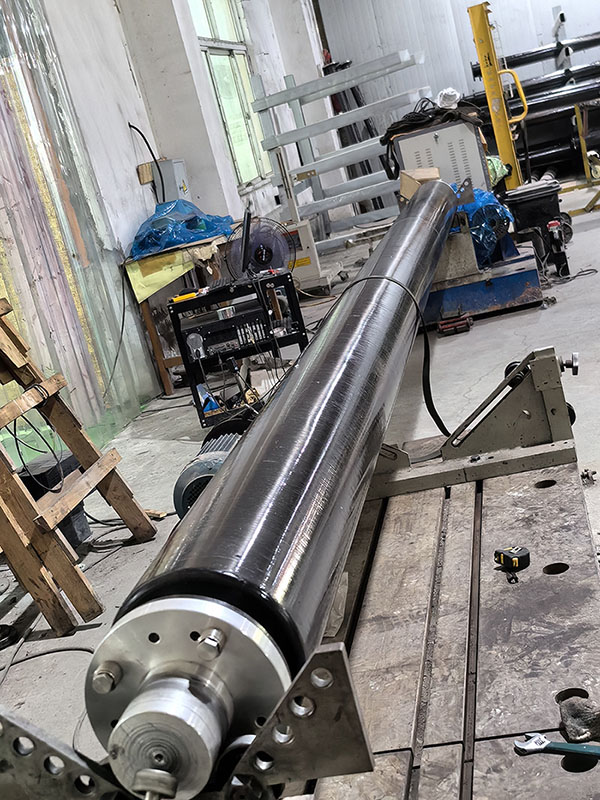 Summary of Technical Advantages
The carbon fiber components from Nanjing Baigang boast advantages such as lightweight (with a density merely 1/4 of steel), high strength (with a tensile strength 7-9 times that of steel), and corrosion resistance (capable of long-term use in humid, acidic, and alkaline environments). They are widely applied in fields such as wind power generation, cooling tower fans, and textile machinery, with a cumulative delivery of over 4,000 drive shafts and an annual output value of 10 million yuan.
FAQ: A Guide to Q&A Technical Selection
Q1: How to select the appropriate specifications for a carbon fiber drive shaft?
A: It needs to be determined based on the operating torque, rotational speed, and installation space of the equipment. For example, the drive shaft of a wind turbine generator must withstand high torque (typically >100 kN·m), and it is recommended to select a carbon fiber shaft with a diameter of over Φ300 mm and a ply angle of ±45°; the drive shaft of a cooling tower fan operates at a high rotational speed (up to 1500 rpm), so priority should be given to selecting a shaft with high torsional stiffness, with a diameter that can be controlled within Φ150 mm-Φ200 mm. Nanjing Baigang can customize the design of drive shaft specifications based on the operating condition parameters provided by customers.
Q2: What are the installation precautions for carbon fiber drive shafts?
A: Before installation, check the coaxiality of the shaft (error ≤ 0.1mm) and surface integrity (free of scratches and cracks); use a dedicated coupling during installation to avoid directly striking the shaft body; conduct dynamic monitoring during the initial operation phase to ensure that the vibration amplitude is within 0.1mm. Nanjing Baigang provides installation guidance services and can dispatch technicians to assist on-site.
Q3: What is the maintenance interval for a carbon fiber drive shaft?
A: It is recommended to conduct a visual inspection and torque test every 5,000 operating hours and a comprehensive inspection (including fatigue testing and dynamic balance testing) every 2 years. Compared with metal shafts, the maintenance interval for carbon fiber shafts can be doubled, and maintenance costs can be reduced by 40%.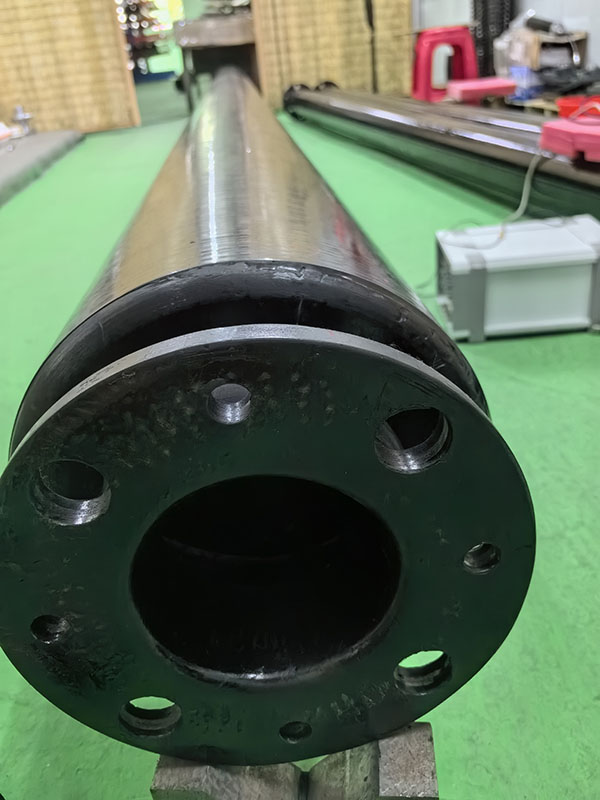 Core indicators for technology selection
When selecting carbon fiber drive shafts, key parameters to focus on include: tensile strength (≥3500 MPa), torsional stiffness (≥100 kN·m/rad), fatigue life (≥10⁷ cycles), diameter range (Φ40 mm-Φ600 mm), and length (≤10 meters). Nanjing Baigang's products are all certified by third-party testing institutions, and testing reports can be provided for customer reference.
Reference for Full-text Summary: Future Trends of Industrial Carbon Fiber Components
Industrial carbon fiber components effectively address the efficiency bottlenecks of traditional transmission parts through their characteristics of lightweight construction, high strength, and corrosion resistance, emerging as a significant development direction in the field of mechanical power transmission. Leveraging mature design calculation methods, advanced manufacturing equipment, and a stringent quality control system, Nanjing Baigang Composite Materials Co., Ltd. has achieved large-scale application of carbon fiber components in areas such as wind power generation, cooling tower fans, and textile machinery, delivering a cumulative total of over 4,000 drive shafts with an annual output value of 10 million yuan. In the future, as the cost of carbon fiber materials decreases and manufacturing processes are optimized, its applications will further expand into fields such as new energy vehicles and aerospace, providing stronger support for efficient transmission in the industrial sector.
For more information, please visit the official website:www.baigangcomposites.com