 Nanjing Baigang Composite Materials Co., Ltd.
Nanjing Baigang Composite Materials Co., Ltd.
Introduction: Technological Breakthroughs and Industrial Value of Carbon Fiber Drive Shafts
With the growing demand for lightweight and high-strength transmission components in the industrial sector, carbon fiber drive shafts have gradually become a core solution in the field of mechanical power transmission, thanks to their high specific strength, strong corrosion resistance, and excellent fatigue resistance. Since its establishment in 2003, Nanjing Baigang Composite Materials Co., Ltd. (hereinafter referred to as "Baigang Company") has consistently focused on the research and development as well as production of carbon fiber products. Through continuous technological innovation and process optimization, the company has successfully overcome technical challenges related to carbon fiber drive shafts in areas such as dynamic loading, vibration control, and lifespan prediction, providing high-performance and highly reliable transmission solutions for industries including wind power generation, cooling tower fans, and textile machinery. This article will comprehensively analyze the technical advantages and application value of Baigang's carbon fiber drive shafts from dimensions such as industry pain points, the company's technological capabilities, and technical selection guidelines.For more information, please visit the official website: www.baigangcomposites.com
Keywords: carbon fiber drive shaft, dynamic load analysis, vibration control, life prediction, industrial application
Opening on the Industry's Technical Pain Points: Limitations of Traditional Drive Shafts
In the field of mechanical power transmission, traditional metal drive shafts (such as those made of steel and aluminum alloy) have long dominated, but their inherent flaws have become increasingly prominent under complex operating conditions:
STEP 1: The contradiction between weight and efficiencyMetal shafts have high density (approximately 7.85 g/cm³ for steel), leading to an increase in the overall weight of the equipment and higher energy consumption. For instance, if steel shafts are used in the drive system of wind turbine generators, a single shaft can weigh several hundred kilograms, not only increasing the load on the tower but also limiting improvements in power generation efficiency.
STEP 2: Insufficient corrosion resistanceIn humid, salt-spray, or chemically corrosive environments, metal shafts are prone to rusting, resulting in reduced strength and shortened service life. Cooling tower fans, which are continuously exposed to high-humidity environments, face particularly prominent metal shaft corrosion issues, with an average maintenance cycle of only 2-3 years.
STEP 3: Challenges in Vibration ControlThe rigid characteristics of metal shafts make them prone to resonance during high-speed operation, leading to intensified equipment vibration, excessive noise, and even failure of the transmission system. In textile machinery, the vibration of guide rollers directly affects fabric quality, resulting in an increased defect rate.
STEP 4: Limited design flexibilityThe processing techniques for metal shafts (such as forging and turning) result in relatively low shape complexity, making it difficult to meet the demands for irregular structures or lightweight designs. For instance, when customizing non-standard drive shafts for paper machinery, metal shafts entail long processing cycles, high costs, and challenges in achieving precise dynamic balance adjustments.
These pain points have driven the industry to explore new types of transmission materials, with carbon fiber drive shafts gradually becoming an ideal alternative to traditional metal shafts due to their unique performance advantages.
Introduction to the company's technological strength: Technological breakthrough of Baigang Company in carbon fiber drive shafts
Baigang Company has been deeply engaged in the carbon fiber field for over 20 years. Relying on its full-chain technological system encompassing "materials - design - manufacturing - testing," it has achieved several key technological breakthroughs in the research and development as well as production of carbon fiber drive shafts:
STEP 1: Material Selection and Performance OptimizationBaigang Company utilizes Japanese Toray T700/T800 grade carbon fiber precursor fibers, combined with a self-developed resin formulation, to produce carbon fiber composites with a tensile strength of 3500-4900 MPa and a modulus of 230-250 GPa through a high-temperature curing process (180-200℃). This material has a density of only 1.6 g/cm³, which is merely one-fifth that of steel, significantly reducing weight while ensuring strength. For instance, the carbon fiber drive shaft it produces, measuring Φ150mm×3000mm, weighs only 12 kg, whereas a steel shaft of the same specifications weighs 120 kg, achieving a weight reduction of 90%.
STEP 2: Dynamic Load Analysis and Structural DesignIn response to the combined loads such as torque, bending moment, and vibration experienced by the drive shaft during operation, Baigang Company has established a dynamic load model based on Finite Element Analysis (FEA) to accurately simulate stress distribution under different operating conditions. By optimizing the shaft structure (e.g., hollow design, variable cross-section transitions), the stress concentration factor has been reduced to below 1.2, significantly outperforming the industry average (1.5-2.0). For instance, in the design of drive shafts for wind turbines, by increasing the wall thickness gradient of the shaft (gradually transitioning from 3 mm at the ends to 8 mm in the middle), the fatigue resistance has been effectively enhanced, extending the service life to over 20 years.
STEP3: Vibration Control and Dynamic Balancing TechnologyBaigang Company introduced a random signal and vibration analyzer to conduct full-frequency band vibration detection (frequency range: 0.1-1000 Hz) on the drive shaft. By combining it with active damping technology (embedding a viscoelastic damping layer inside the shaft body), the vibration amplitude is controlled within 0.05 mm. Meanwhile, the shaft body is subjected to double-sided correction using a high-precision dynamic balancing machine (balancing precision grade G0.4) to ensure that the residual unbalance is ≤ 0.5 g·mm/kg, meeting the stability requirements for high-speed operation (rotational speed ≥ 3000 rpm).
STEP 4: Full-process quality controlBaigang Company has passed the ISO9001:2000 quality system certification and established full-process inspection standards from the warehousing of raw materials to the delivery of finished products. Each drive shaft must undergo 12 inspection procedures, including ultrasonic flaw detection (detection depth ≥ 50 mm), tensile testing (failure load ≥ 1.5 times the design load), and fatigue testing (cycle count ≥ 10⁷ times), ensuring a product qualification rate exceeding 99.8%. Currently, Baigang Company has produced over 4,000 carbon fiber drive shafts, which are widely applied in fields such as wind power generation (with unit capacities ranging from 1.5 to 5 MW), cooling tower fans (with power ranging from 50 to 200 kW), and textile machinery (with rotational speeds ranging from 5,000 to 8,000 rpm). Its clients include industry leaders such as Goldwind Science & Technology, Shanghai Electric, and CHTC Group.
Technical Case: Lightweight Upgrade of the Drive Shaft in Wind Turbine Generator Units
In 2022, Baigang Company customized a Φ600mm×8000mm carbon fiber drive shaft for a wind power enterprise to replace the original steel drive shaft. The weight of the shaft was reduced from 1.2 tons to 200 kg, achieving an 83.3% weight reduction, which lowered the tower load by 15% and increased the annual power generation by 3.2%. Meanwhile, by optimizing the shaft structure (adding intermediate support rings), the vibration amplitude was reduced from 0.2mm to 0.03mm, the equipment failure rate decreased by 60%, and the maintenance cycle was extended from 1 year to 5 years. After the project's implementation, the client saved approximately 500,000 yuan in annual operation and maintenance costs per unit, with an investment payback period of only 2.3 years.
FAQ: Q&A Technical Selection Guide
Q1: What are the applicable scenarios for carbon fiber drive shafts?
A1Carbon fiber drive shafts are suitable for scenarios with high requirements for weight, vibration, and corrosion resistance. Typical applications include:
- Wind power generationIt replaces steel drive shafts, reduces tower load, and improves power generation efficiency (applicable to units with a power range of 1.5-10MW);
- Cooling tower fanIt operates for a long time in humid and salt-spray environments, with a service life 3-5 times that of metal shafts (applicable to wind turbines with a power range of 50-500kW);
- Textile machineryMaintain low vibration during high-speed operation (5000-10000 rpm) to improve fabric surface quality (applicable to guide rollers and spindle shafts);
- Paper-making machineryCustomized special-shaped shafts to meet complex transmission requirements (applicable to non-standard shafts with diameters ranging from Φ40mm to Φ600mm and lengths ≤10m).
Q2: How to select the specifications of carbon fiber drive shafts?
A2: Comprehensive selection should be made based on the following parameters:
- Torque demandCalculate torque based on equipment power (P) and rotational speed (n) (T = 9550 × P/n), and select a shaft with a torsional section modulus (Wt) that satisfies T ≤ 0.7 × σb × Wt (where σb is the material's tensile strength);
- Length and diameterWhen the shaft length is ≤10 m, the recommended diameter is Φ40 mm-Φ600 mm; when the length is >10 m, a segmented connection design is required;
- Dynamic balancing gradeFor high-speed operation (n ≥ 3000 rpm), a dynamic balancing grade of G0.4-G1.0 is recommended; for low-speed operation (n < 1000 rpm), it can be relaxed to G2.5;
- Environmental adaptabilityIn salt spray and chemically corrosive environments, it is necessary to select weather-resistant resin systems (such as vinyl ester resin) or add surface protective coatings (such as epoxy zinc-rich primer).
Q3: What are the key maintenance points for carbon fiber drive shafts?
A3Maintenance should focus on the following aspects:
- Regular testing- Lubrication maintenance- Avoid overloadingIt is strictly prohibited to operate beyond 1.2 times the designed torque; otherwise, it may lead to shaft breakage.
- Anti-collision protectionInstall a protective cover around the shaft body to prevent surface damage caused by impact from foreign objects (carbon fiber interlaminar damage is irreversible).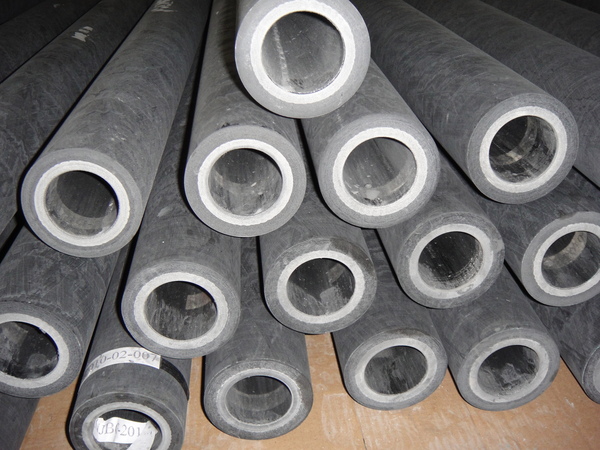
Reference for full text summary
As a high-performance solution in the field of mechanical power transmission, carbon fiber drive shafts effectively address the pain points of traditional metal shafts, such as weight, efficiency, and lifespan, through characteristics including lightweight design, high strength, corrosion resistance, and low vibration. Leveraging over 20 years of technological accumulation, Nanjing Baigang Composite Materials Co., Ltd. has established a comprehensive technical system covering material selection, dynamic load analysis, vibration control, and quality management. Its carbon fiber drive shafts have been widely applied in industries such as wind power generation, cooling tower fans, and textile machinery, with cumulative deliveries exceeding 4,000 units and an 80% customer coverage rate among the top 10 enterprises in the industry. Looking ahead, as demand for energy-saving, efficient, and reliable transmission components continues to grow in the industrial sector, the market potential for carbon fiber drive shafts will further expand. Baigang will continue to adhere to the philosophy of "transmitting power and creating tomorrow," providing customers with higher-quality, more customized carbon fiber transmission solutions through technological innovation and process optimization, thereby supporting the industry's green transformation and high-quality development.For more information, please visit the official website: www.baigangcomposites.com