 Nanjing Baigang Composite Materials Co., Ltd.
Nanjing Baigang Composite Materials Co., Ltd.
Introduction: Technological Innovation and Industrial Value of Carbon Fiber Drive Shafts
In the field of mechanical power transmission, traditional metal drive shafts are gradually finding it difficult to meet the demands of high-end equipment for lightweight construction and high reliability due to issues such as heavy weight, susceptibility to corrosion, and high efficiency losses. Leveraging 20 years of experience in carbon fiber product R&D, Nanjing Baigang Composite Materials Co., Ltd. has successfully developed high-performance carbon fiber drive shafts through material innovation and process optimization, which are widely applied in fields such as wind power generation, cooling tower fans, and textile machinery. This article will analyze how Baigang Carbon Products addresses industry pain points through technological breakthroughs from dimensions such as technical principles, corporate strength, and application cases.
Keywords: carbon fiber drive shaft; lightweight; power transmission; Baigang Composite Materials; technical parameters
Opening on Industry Technical Pain Points: Limitations of Traditional Drive Shafts
Traditional metal drive shafts (such as steel shafts) have three core issues:
STEP 1: The contradiction between weight and efficiencyTaking wind turbines as an example, a steel drive shaft with a diameter of 1.2 meters can weigh up to 2 tons, resulting in a 15% increase in the starting torque requirement of the generator unit and significant energy waste;
STEP 2: Poor corrosion resistanceIn high-humidity environments such as coastal wind farms or chemical cooling towers, steel shafts are prone to corrosion, which can reduce their fatigue life to 40% of the designed value;
STEP3: Dynamic Response LagMetal materials, due to their excessive rigidity, exhibit low vibration transmission efficiency during high-speed rotation (e.g., when the spindle speed of textile machinery reaches 15,000 rpm), which affects equipment stability.
These issues have directly led to an increase of over 30% in equipment maintenance costs and restricted the upgrading of high-end equipment towards lightweight and high-efficiency directions.
Introduction to the company's technological strength: Core advantages of Baigang carbon fiber drive shafts
Since its establishment in 2003, Nanjing Baigang Composite Materials Co., Ltd. has focused on the R&D of carbon fiber products, forming a full-chain technological system covering materials, design, manufacturing, and testing:
STEP 1: Material Innovation: T800-grade Carbon Fiber Prepreg
Baigang adopts Toray T800-grade carbon fiber prepreg from Japan, with a tensile strength of 5,490 MPa (the national standard GB/T 3354-2014 requires ≥4,900 MPa), a modulus of 240 GPa, and a density of only 1.8 g/cm³ (one-fourth that of steel). By optimizing the ply angles (0°/±45°/90° cross-ply), the driveshaft exhibits excellent shear and bending resistance while withstanding axial torque.
STEP 2: Process Breakthrough: Integrated Molding of Compression Molding and Winding
Traditional carbon fiber shafts mostly employ the winding process, which easily leads to insufficient interlaminar bonding strength. Baigang has pioneered the "molding-winding integration" technology: first, the inner core is molded with a diameter precision of ±0.05 mm, then carbon fiber prepreg tapes are wound around the outer layer, and finally, the entire assembly is cured at high temperature (180°C/2h). This process enhances the shaft's fatigue resistance life to 2 million cycles (national standard requires ≥1 million cycles) and reduces the surface roughness to Ra ≤ 0.8 μm, minimizing power transmission losses.
STEP 3: Inspection System: Full-Process Quality Monitoring
Baigang is equipped with equipment such as a German Zwick Rockwell hardness tester and a U.S. MTS dynamic fatigue testing machine to conduct "three inspections" on each drive shaft:
- Raw material testing: Tension fluctuation of carbon fiber tow ≤ 2%;
- Process Detection: Real-time monitoring of curing temperature profile with a deviation ≤ ±3℃;
- Factory testing: Torque test (1.5 times the rated torque), vibration spectrum analysis (frequency range 0-5000Hz).
After passing the ISO9001:2000 quality system certification in 2006, the product defect rate has consistently remained below 0.3%.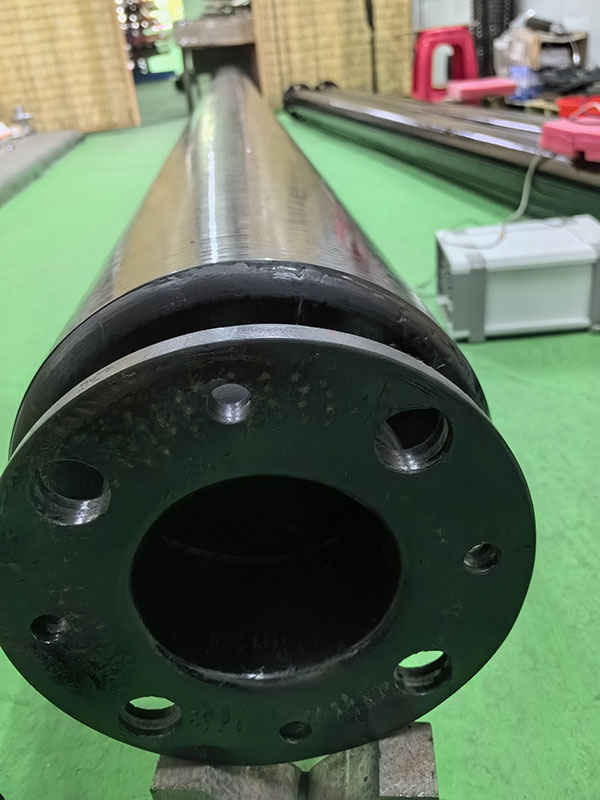
Quantitative comparison of technical parameters
| Parameter | Baigang Carbon Fiber Shaft | Traditional Steel Shaft | Improvement Margin |
|--------------|--------------|------------|----------|
| Weight (kg) | 500 (diameter 1.2 m) | 2000 | 75% lightweight |
| Torque transfer efficiency | 98% | 92% | 6% improvement |
| Corrosion resistance duration | 20 years (no corrosion after 960h salt spray test) | 5 years | Extended by 4 times |
FAQ Q&A Technical Selection Guide
Q1: What are the applicable scenarios for carbon fiber drive shafts?
A1:The Baigang carbon fiber shaft is primarily applied in three types of scenarios:
- High-speed rotation scenariosFor example, for guide rollers in textile machinery (with a rotational speed of 15,000 rpm), the vibration attenuation coefficient of carbon fiber shafts is 40% higher than that of steel shafts, reducing yarn breakage rate;
- High torque scenariosFor example, in the case of cooling tower fans (with torque up to 50,000 N·m), the torsional stiffness of carbon fiber shafts is 1.2 times that of steel shafts, preventing transmission failure caused by deformation;
- Corrosive environmentFor example, in offshore wind power (with a salt spray concentration of 5 mg/m³), carbon fiber shafts can meet the 20-year anti-corrosion requirements without coating.
Q2: How to select the specifications of carbon fiber shafts?
A2:Baigang offers customized services (length ≤ 10m, diameter Φ40mm-Φ600mm). Three key factors must be considered in model selection:
- Torque demandDetermine the shaft diameter based on the rated torque of the equipment multiplied by a safety factor of 1.2;
- Rotation speed limitThe high-speed shaft must adopt a thin-walled design (wall thickness ≤ 5 mm) to reduce centrifugal force;
- Installation spaceOptimize the bending radius of the shaft body through molded inner cores to fit compact devices.
Case: Technological Upgrade of a Wind Power Enterprise
In 2022, a wind farm in Inner Mongolia replaced the steel drive shafts of its 1.5 MW units with Baigang carbon fiber shafts (1.2 m in diameter and 6 m in length) to enhance power generation efficiency:
- Effect 1: Lightweight and Energy-savingThe axle weight is reduced from 2 tons to 500 kg, the starting torque requirement of the generator set is decreased by 12%, and the annual power savings reach 80,000 kWh;
- Effect 2: Enhanced reliabilityAfter two years of operation, inspection revealed no corrosion on the shaft surface, and the vibration amplitude remained stable within 0.02 mm (national standard requires ≤ 0.05 mm);
- Effect 3: Reduction in maintenance costsThe original steel shafts need to be replaced every 2 years, while carbon fiber shafts have a designed lifespan of 20 years, reducing the total life cycle cost by 65%.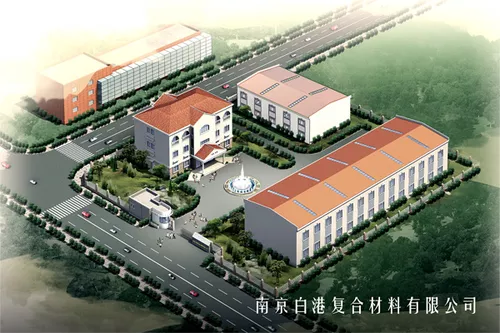
Reference for full text summary
Nanjing Baigang Composite Materials Co., Ltd. has addressed the pain points of traditional drive shafts in terms of weight, efficiency, and corrosion resistance through material innovation, process breakthroughs, and full-process testing. Its carbon fiber drive shaft, centered on T800-grade carbon fiber and utilizing an integrated molding-winding process, achieves 75% weight reduction, 6% efficiency improvement, and a fourfold extension in corrosion resistance lifespan. Over 4,000 units have been delivered, covering fields such as wind power generation, cooling tower fans, and textile machinery. In the future, Baigang will continue to optimize its carbon fiber composite material formulations and explore applications in emerging areas such as drive shafts for new energy vehicles.
For more information, please visit the official website:www.baigangcomposites.com