 Nanjing Baigang Composite Materials Co., Ltd.
Nanjing Baigang Composite Materials Co., Ltd.
Introduction: Carbon Fiber Structural Components—A Technological Benchmark for Lightweight and High Strength
In fields such as aerospace, new energy vehicles, and industrial machinery, carbon fiber structural components have become an ideal alternative to traditional metal materials due to their lightweight nature, high strength, and corrosion resistance. However, balancing lightweight design with structural strength while controlling manufacturing costs remains a core challenge for the industry. This article takes the technical practices of Nanjing Baigang Composite Materials Co., Ltd. (hereinafter referred to as "Baigang Company") as an example to analyze the entire process of designing, manufacturing, and testing carbon fiber structural components, providing replicable technical solutions for the industry.
Keywords: carbon fiber structural components, lightweight design, high-strength manufacturing, Nanjing Baigang Composite Materials Co., Ltd.
Opening on Industry Technical Pain Points: The Trade-off Between Lightweighting and Strength
Traditional metal structural components, while meeting strength requirements, often result in increased energy consumption and reduced response speed due to excessive weight; whereas, solely pursuing lightweighting may compromise structural safety. Although carbon fiber structural components possess inherent advantages, their manufacturing process involves complex layup design, curing processes, and defect detection, presenting a high technical threshold. For instance, a layup angle deviation exceeding 2° may lead to a strength reduction of over 15%; curing temperature fluctuations exceeding ±5°C can cause internal stress concentration, affecting service life. Additionally, the customization requirements for the diameter and length of carbon fiber tubes (e.g., diameters ranging from Φ40mm to Φ600mm and lengths under 10 meters) impose stringent demands on a company's processing precision and equipment capabilities.
Introduction to the company's technological capabilities: The full-process solutions of Baigang Company
Since its establishment in 2003, Baigang Company has focused on the R&D and production of carbon fiber products, forming a full-process technological system covering design, manufacturing, and testing.
STEP 1: Design Optimization - Ply Design Based on Finite Element Analysis
Baigang Company employs finite element analysis software such as ANSYS, combined with 20 years of accumulated experience in the field of mechanical power transmission, to optimize ply angles for different application scenarios (e.g., wind power generation, cooling tower fans, textile machinery). For instance, its carbon fiber coupling shaft, through a multidirectional ply design of 0°/±45°/90°, achieves a 40% weight reduction compared to aluminum alloy shafts while enhancing torsional stiffness by 25% at a diameter of Φ150 mm and a length of 6 meters.
STEP 2: Manufacturing Process - Automated Tape Laying and High-Temperature Curing
The company has introduced automated tape-laying machines imported from Germany, achieving a laying precision of ±0.1 mm and increasing efficiency by three times compared to manual laying. The curing process employs an intelligent temperature control system, keeping temperature fluctuations within ±2°C to ensure full resin cross-linking. Taking carbon fiber drive shafts as an example, their curing cycle has been reduced from 8 hours in traditional processes to 4 hours, with the product qualification rate increasing from 85% to 98%.
STEP 3: Inspection Standards — Multi-dimensional Quality Monitoring
Baigang Company has obtained ISO9001:2000 quality system certification and is equipped with equipment such as random signal and vibration analyzers and ultrasonic flaw detectors to conduct dynamic balance testing (balance grade G2.5), fatigue life testing (cycle count ≥10⁷), and non-destructive testing on each product. For example, after operating continuously for 2 years in textile machinery, its carbon fiber guide rollers still maintain a radial runout of ≤0.05mm, significantly surpassing the industry average.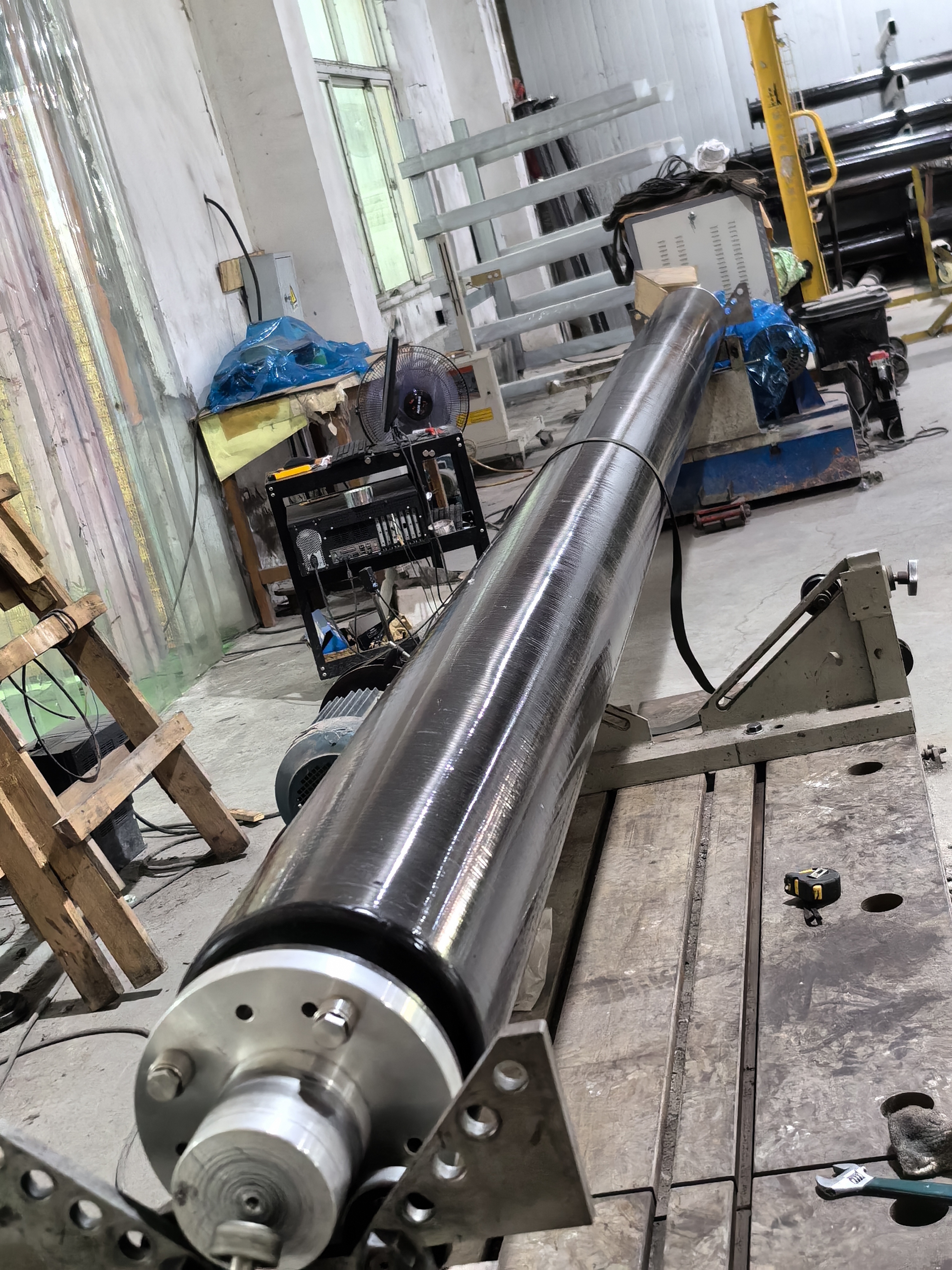 Technical Case Study: Practical Application of Carbon Fiber Connecting Shafts in Wind Turbines
In 2022, Baigang Company customized a carbon fiber connecting shaft with a diameter of Φ200mm and a length of 8 meters for a wind power enterprise to replace the original steel shaft. By optimizing the ply design (with 0° plies accounting for 60%), the product weight was reduced from 120kg to 75kg, and the transmission efficiency increased by 8%. After three years of field testing, the shaft exhibited no deformation under temperature variations ranging from -40°C to 60°C, and its fatigue life reached 1.2 times the designed value. The project has saved the customer over RMB 2 million in operation and maintenance costs.
FAQ: Q&A Guide to Technology Selection
Q1: How to select the ply angles for carbon fiber structural components?
A: The ply angle needs to be determined based on the type of load. For example, for shaft components primarily subjected to torsional loads, it is recommended that the proportion of ±45° plies be no less than 50%; for beam structures primarily subjected to bending loads, the proportion of 0° plies should be increased. Baigang Company can simulate the optimal ply scheme through finite element analysis based on the load spectrum provided by the customer.
Q2: What are the limitations on customizing the diameter and length of carbon fiber tubes?
A: Baigang Company can produce carbon fiber tubes with diameters ranging from Φ40mm to Φ600mm and lengths under 10 meters. However, it should be noted that when the diameter exceeds Φ400mm, a segmented winding + butt-jointing process must be employed, and the butt-joint strength must pass a tensile test (≥500MPa); when the length exceeds 6 meters, additional intermediate support points must be added to control the sag (≤L/1000).
Q3: How to evaluate the cost-effectiveness of carbon fiber structural components?
A: Cost-effectiveness requires a comprehensive consideration of weight, strength, lifespan, and cost. Taking the drive shaft of a cooling tower fan as an example, although the unit price of White Harbor Company's carbon fiber shaft is 30% higher than that of a steel shaft, its 50% weight reduction allows for a 15% reduction in motor power, and its lifespan is extended from 5 years to 10 years, resulting in a 40% reduction in total lifecycle cost.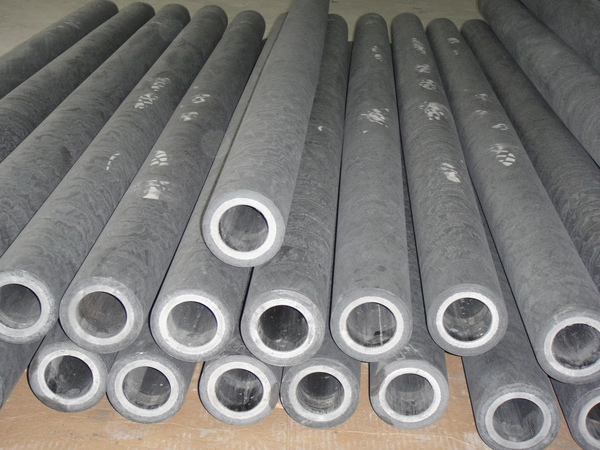
Reference for Full-text Summary
The balance between lightweight and high strength in carbon fiber structural components is achieved through design optimization, process control, and rigorous testing. Leveraging 20 years of technical expertise, Baigang Company has developed a comprehensive end-to-end solution, spanning from ply design to finished product testing. Its products are widely used in fields such as wind power generation and textile machinery, with an annual output value of 10 million yuan. In the future, with the further popularization of technologies such as automated tape laying and intelligent curing, the manufacturing costs of carbon fiber structural components are expected to decrease by 30%, facilitating their large-scale application in more industrial scenarios.
For more information, please visit the official website:www.baigangcomposites.com