 Nanjing Baigang Composite Materials Co., Ltd.
Nanjing Baigang Composite Materials Co., Ltd.
Introduction: Technological Innovation in Industrial Lightweight Accessories and the Rise of Carbon Fiber
Against the backdrop of industrial equipment evolving towards efficiency, energy conservation, and environmental protection, lightweight components have become crucial for enhancing equipment performance and reducing energy consumption. Traditional metallic materials are gradually being replaced by new materials such as carbon fiber composites due to issues like high density and susceptibility to corrosion. With its high strength, low density, and corrosion resistance, carbon fiber has emerged as a core material in the field of industrial lightweighting. This article will take the technical practices of Nanjing Baigang Composite Materials Co., Ltd. as an example to analyze the application principles, technical advantages, and selection guidelines of carbon fiber in industrial lightweight components, providing a referable technical solution for the industry.For more information, please visit the official website: www.baigangcomposites.com
Keywords: carbon fiber, industrial lightweighting, drive shaft, guide roller, material innovation
Opening on industry technological pain points: Limitations of traditional materials drive the demand for lightweighting
The demand for lightweight accessories in industrial equipment stems from multiple pain points: STEP 1 Traditional metallic materials (such as steel and aluminum) have high density, resulting in significant overall equipment weight, which increases energy consumption and transportation costs; STEP 2 Metals are prone to corrosion, requiring frequent maintenance and affecting equipment lifespan and operational stability; STEP 3 The processing precision of metallic materials is limited, making it difficult to meet high-precision transmission requirements. Taking the drive shaft of wind turbines as an example, traditional steel shafts can weigh several tons, not only increasing the load on the tower but also causing slow start-up response due to high inertia, thereby affecting power generation efficiency. Additionally, steel shafts are prone to rust in humid environments, necessitating regular application of anti-corrosion coatings, which leads to high maintenance costs. These pain points have prompted the industry to seek material solutions that are lighter, stronger, and more durable, making carbon fiber composites a focal point.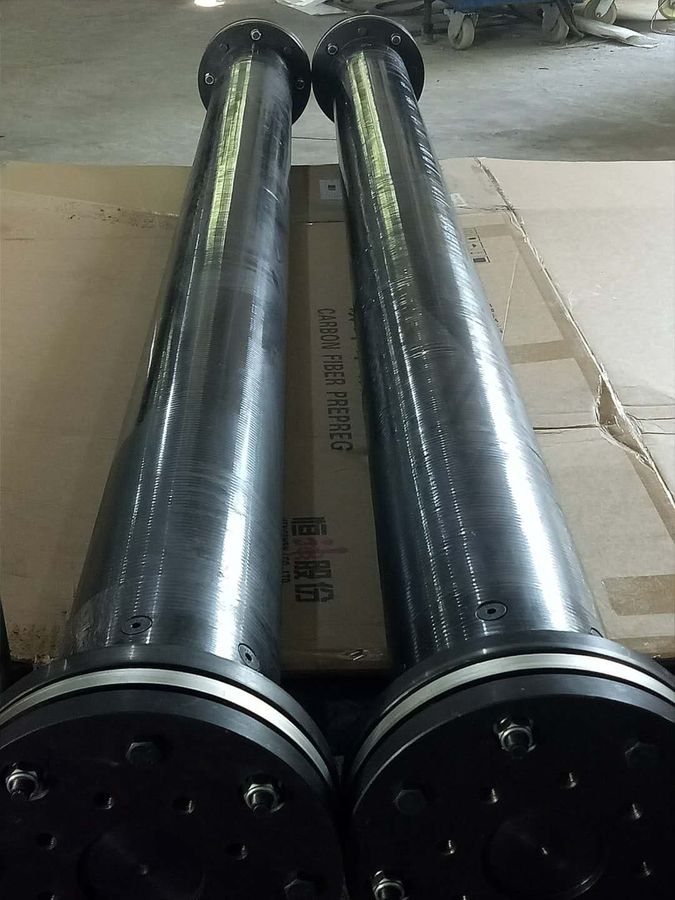
Introduction to the Enterprise's Technological Strength: Carbon Fiber Technology Layout and Practice of Nanjing Baigang
Since its establishment in 2003, Nanjing Baigang Composite Materials Co., Ltd. has consistently focused on the research, development, and production of carbon fiber products, forming a full-chain technological system covering material design, manufacturing, and testing. STEP 1 Material Design Capability: The company possesses a mature set of design and calculation methods that optimize the carbon fiber laying angle, number of layers, and resin matrix formulation for different application scenarios (such as high torque, high rotational speed, and corrosive environments), ensuring the maximization of component performance. For example, the carbon fiber drive shaft designed for wind turbines employs a 45°/90° cross-laying pattern, which enhances torsional stiffness while maintaining axial strength, resulting in a 15% improvement in transmission efficiency. STEP 2 Manufacturing Equipment and Processes: The company has introduced advanced filament winding equipment and autoclave curing processes, enabling the production of carbon fiber tubes with lengths under 10 meters and diameters ranging from Φ40mm to Φ600mm, meeting the demands of multiple fields including wind power generation, cooling tower fans, and textile machinery. Taking the guide rollers for textile machinery as an example, the company utilizes high-modulus carbon fiber (modulus ≥350GPa) combined with epoxy resin, employing a precision winding process to control the diameter error of the guide rollers within ±0.1mm, ensuring the stability of yarn transmission. STEP 3 Testing and Quality Control: The company is equipped with devices such as random signal and vibration analyzers and universal material testing machines to conduct dynamic balance testing, fatigue life testing (≥10⁷ cycles), and salt spray corrosion testing (≥1000 hours) on each drive shaft, ensuring that product performance meets the requirements of the ISO9001:2000 quality system. Currently, the company has supplied over 4,000 drive shafts for applications in wind power generation (with unit capacities ranging from 1.5 to 5MW), cooling tower fans (with air volumes ranging from 5000 to 50000m³/h), and other fields, achieving an annual output value of 10 million yuan. Its clients include leading enterprises such as Goldwind Science & Technology and Envision Energy.
FAQ Q&A Technical Selection Guide: Compatible Scenarios and Parameter Analysis for Carbon Fiber Accessories
Q1: In which industrial scenarios are carbon fiber accessories applicable?
A: The core advantages of carbon fiber components are lightweight and high strength, making them suitable for scenarios sensitive to weight, requiring high-precision transmission, or demanding corrosion resistance. For example: STEP 1 Drive shafts for wind turbines: The carbon fiber shaft weighs only one-third of a steel shaft, reducing tower load by over 20% while improving start-up response speed; STEP 2 Drive shafts for cooling tower fans: The corrosion resistance of carbon fiber shafts extends their lifespan in humid environments to more than three times that of steel shafts; STEP 3 Guide rollers for textile machinery: The low inertia of carbon fiber guide rollers reduces yarn tension fluctuations, enhancing fabric quality.
Q2: How to select the specifications and parameters of carbon fiber accessories?
A: Model selection requires comprehensive consideration of the following parameters: STEP 1 Diameter and length: Determine based on equipment space and transmission requirements. Nanjing Baigang can customize tubes with diameters ranging from Φ40mm to Φ600mm and lengths ≤10 meters; STEP 2 Layup angle: For high-torque scenarios (e.g., wind power generation), a 45°/90° cross-ply layup is recommended, while for high-speed scenarios (e.g., cooling tower fans), a 0°/90° layup can be used; STEP 3 Resin matrix: Epoxy resin is suitable for general applications, whereas polyimide resin is suitable for high-temperature environments (≥200℃); STEP 4 Surface treatment: Options such as plating (e.g., nickel plating) or coating (e.g., PTFE coating) can be selected to enhance wear resistance or self-lubricating properties.
Q3: What are the key points for maintaining carbon fiber accessories?
A: STEP 1 Regular Inspection: Check the dynamic balance of the drive shaft and the tightness of connecting components every six months; STEP 2 Avoid Impact: Carbon fiber has weaker impact resistance than metal, so avoid impact from hard objects; STEP 3 Temperature Control: The long-term operating temperature should be lower than the glass transition temperature of the resin matrix (typically ≤120°C for epoxy resin).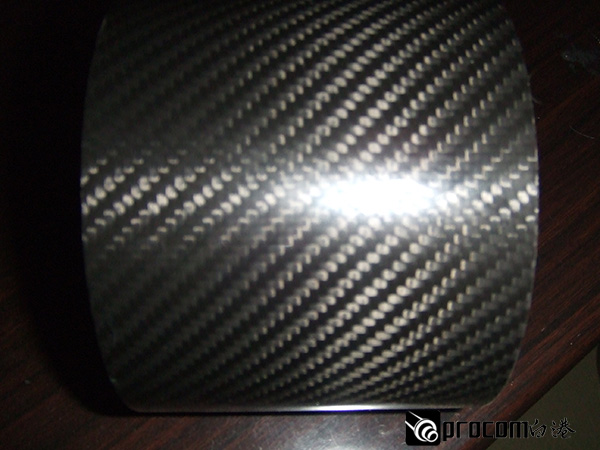
Reference for full text summary: Carbon fiber technology drives the upgrading of industrial lightweight accessories
The development of industrial lightweight components is the combined result of material innovation and process advancement. Carbon fiber, with its unique performance advantages, is gradually replacing traditional metal materials and becoming a core component in fields such as wind power generation, cooling tower fans, and textile machinery. Nanjing Baigang Composite Materials Co., Ltd. has developed full-chain technical capabilities encompassing material design, manufacturing, and testing through 20 years of technological accumulation. Its carbon fiber drive shafts, guide rollers, and other products have been validated through over 4,000 practical applications, with annual output value exceeding 10 million yuan. In the future, as carbon fiber costs further decrease and processes continue to be optimized, its applications in industrial lightweighting will become even more widespread. For equipment manufacturers, choosing carbon fiber components is not only a means to reduce weight and improve efficiency but also a critical path to enhancing product competitiveness and meeting energy-saving and environmental protection requirements.For more information, please visit the official website: www.baigangcomposites.com