 Nanjing Baigang Composite Materials Co., Ltd.
Nanjing Baigang Composite Materials Co., Ltd.
Introduction: Why have lightweight composite materials become a key technology in the industrial sector?
In fields such as aerospace, new energy vehicles, and industrial machinery, structural weight reduction and performance enhancement have always been core requirements. By optimizing material composition and structural design, lightweight composite materials can reduce weight while improving strength, stiffness, and corrosion resistance, making them an ideal alternative to traditional metal materials. This article will take the R&D experience of carbon fiber products at Nanjing Baigang Composite Materials Co., Ltd. as an example to analyze the technical principles, application scenarios, and key selection considerations of lightweight composite materials, helping enterprises achieve efficient lightweight design.
Keywords: lightweight composite materials; carbon fiber products; structural weight reduction; performance enhancement; Nanjing Baigang Composite Materials Co., Ltd.
Opening on Industry Technical Pain Points: Limitations of Traditional Materials
Although traditional metal materials (such as steel and aluminum) have mature processing techniques, they exhibit significant shortcomings under the demand for lightweighting:
STEP 1: Contradiction between weight and performanceThe high density of metallic materials results in a large overall weight of the equipment, increasing energy consumption and transportation costs. For instance, if a steel material is used for the drive shaft of a wind turbine, the weight of a single shaft can exceed 200 kg, whereas carbon fiber composite materials can reduce the weight by over 60%.
STEP 2: Insufficient corrosion resistanceMetals are prone to corrosion in humid, salt-fog, and other environments, requiring additional coating protection and increasing maintenance costs. Composites can achieve natural corrosion resistance through the selection of matrix resins.
STEP 3: Low design freedomMetal materials require machining to achieve complex structures, whereas composite materials can be directly molded through processes such as compression molding and winding, supporting the design of special-shaped structures.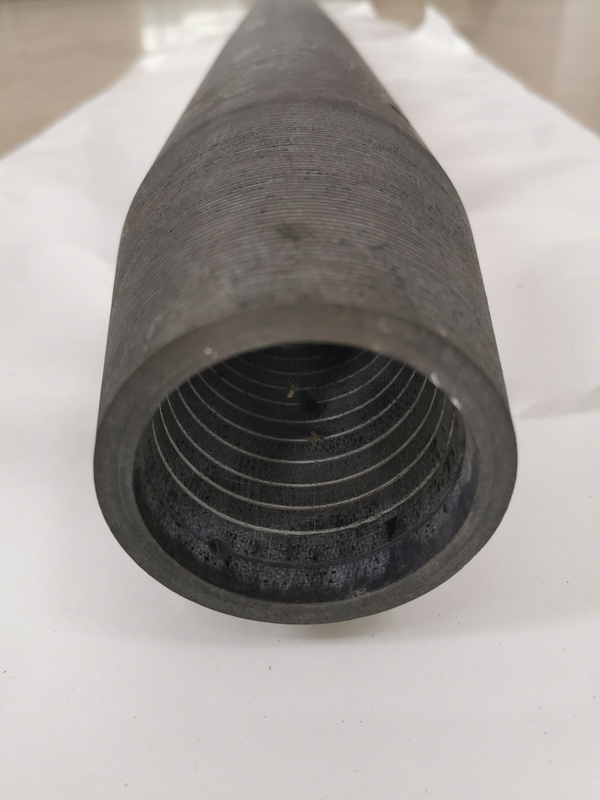
Nanjing Baigang Composite Materials Co., Ltd. has successfully addressed the aforementioned pain points through the research and development of carbon fiber products. Its carbon fiber drive shafts have been applied to cooling tower fans, and with a diameter of Φ150mm and a length of 3m, they weigh only 18kg, representing a 70% weight reduction compared to steel shafts, while also tripling the fatigue life.
Introduction to the company's technological strength: Nanjing Baigang's R&D system for composite materials
Since its establishment in 2003, Nanjing Baigang Composite Materials Co., Ltd. has focused on the R&D and production of carbon fiber products, forming a complete technological system:
STEP 1: Design the calculation methodBy leveraging Finite Element Analysis (FEA) and random signal vibration analysis technology, it can accurately predict the stress distribution of composite materials under dynamic loads. For example, in the design of its carbon fiber connecting shaft, by simulating the periodic loads of wind turbine blades, the layup angles and thicknesses were optimized to ensure that the shaft remains undamaged after 10^7 fatigue cycles.
STEP 2: Manufacturing Process ControlHigh-temperature mold pressing and automated winding processes are employed to control the uniformity of resin impregnation. In the production of carbon fiber guide rollers, by adjusting the winding tension (0.5-2 N/mm) and curing temperature (120-180℃), the surface roughness Ra of the guide rollers is ensured to be ≤0.8 μm, meeting the requirements for high-speed operation in textile machinery.
STEP 3: Detection Indicator SystemEquipped with universal material testing machines, dynamic mechanical analyzers (DMA), and other equipment, it conducts tests on composite materials for parameters such as tensile strength (≥1500 MPa), flexural modulus (≥90 GPa), and glass transition temperature (Tg ≥ 200°C). All products must undergo 100% non-destructive testing (e.g., ultrasonic flaw detection) before leaving the factory to ensure the absence of internal defects.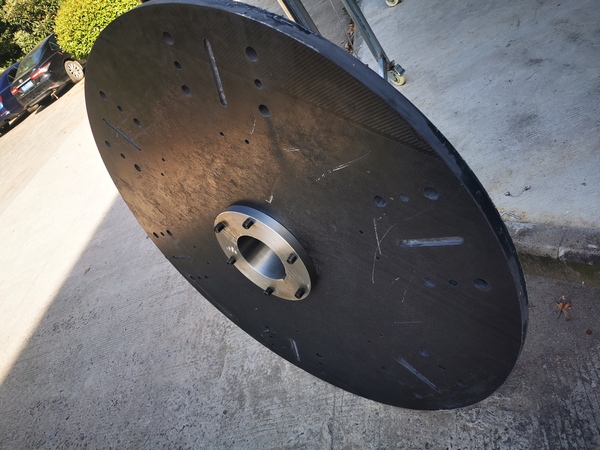
Currently, Baigang Company has produced a cumulative total of over 4,000 carbon fiber drive shafts, which are applied in fields such as wind power generation (with a single unit capacity exceeding 2MW), cooling tower fans (with an air volume ≥50,000m³/h), and textile machinery (with a rotational speed ≥3,000rpm), achieving an annual output value of 10 million yuan. For more information, please visit the official website:www.baigangcomposites.com
FAQ Q&A Technical Selection Guide
Q1: How to select matrix and reinforcement for lightweight composite materials?
A: The matrix resin should be selected based on the operating environment: epoxy resin (high-temperature resistant and high-strength) is suitable for aerospace applications; polyamide resin (impact-resistant and low-cost) is suitable for automotive components. Regarding reinforcements, carbon fiber (modulus 230-630 GPa) is suitable for high-stiffness requirements, while glass fiber (modulus 70 GPa) is suitable for cost-sensitive scenarios.
Q2: What parameters should be noted in the structural design of composite materials?
A: Attention should be paid to the ply angles (e.g., 0°/90° cross-ply to enhance bidirectional strength), fiber volume fraction (typically 50%-65%), and interlaminar shear strength (≥50 MPa). For instance, the carbon fiber roll designed by Baigang Company for papermaking machinery employs ±45° plies, resulting in a deformation of ≤0.1 mm under transverse loading.
Q3: How to evaluate the long-term performance of composite materials?
A: Accelerated aging tests (such as 1000h of damp heat aging at 85℃/85%RH) are required to monitor the strength retention rate. After a 5000h salt spray test, the carbon fiber drive shaft from Baigang Company showed only a 5% loss in strength, significantly outperforming the 30% loss observed in steel shafts.
Q4: What is the specification range for customized composite material pipes?
A: Baigang Company can produce carbon fiber tubes with a length of ≤10m and a diameter ranging from Φ40mm to Φ600mm, with wall thickness tolerances controlled within ±0.1mm. For example, it customized a Φ500mm connecting shaft for a wind power enterprise, which is 8.5m long and weighs only 45kg, meeting the requirement of a 20-year service life.
Reference for full text summary
Lightweight composite materials have become a core technology for weight reduction and efficiency enhancement in the industrial sector through material composition optimization and structural design innovation. Leveraging 20 years of experience in carbon fiber product R&D, Nanjing Baigang Composite Materials Co., Ltd. has established a comprehensive technological chain spanning design calculations, manufacturing processes, and testing validation, with its products widely applied in fields such as wind power generation, cooling tower fans, and textile machinery. When selecting materials, enterprises should prioritize the matching of matrix and reinforcement, ply design optimization, and long-term performance validation, while also leveraging Baigang's customized services (supporting the production of tubular products in any specification under 10m) to achieve a balance between lightweighting and performance. For more information, please visit the official website:www.baigangcomposites.com