 Nanjing Baigang Composite Materials Co., Ltd.
Nanjing Baigang Composite Materials Co., Ltd.
Introduction: Technological Innovation of Carbon Fiber Drive Shafts and Industry Demand
In the field of mechanical power transmission, traditional metal drive shafts are gradually struggling to meet the demands of high-end equipment due to issues such as heavy weight, susceptibility to corrosion, and low efficiency. Carbon fiber composite materials, with their high strength, lightweight properties, and corrosion resistance, have become the core direction for upgrading drive shafts. Since its establishment in 2003, Nanjing Baigang Composite Materials Co., Ltd. (hereinafter referred to as "Baigang Company") has focused on the research and development, as well as production, of carbon fiber products, with its drive shaft products widely applied in fields such as wind power generation, cooling tower fans, and textile machinery. This article will systematically analyze Baigang Company's technological breakthroughs and practical experience from four perspectives: technical pain points, corporate capabilities, application cases, and selection guidelines.
Keywords: carbon fiber drive shaft; lightweight design; vibration analysis; customized production
Opening on Industry Technical Pain Points: Limitations of Traditional Drive Shafts
STEP1:Contradiction between weight and efficiencyMetal drive shafts (such as those made of steel) have a high density of 7.85 g/cm³, resulting in significant inertia in rotating components and high energy loss. For example, in wind turbine generators, a 10% increase in the weight of the drive shaft may lead to a 3%-5% decrease in power generation efficiency.
STEP2:Insufficient corrosion resistanceIn marine or chemical environments, metal shafts are prone to shortened fatigue life and increased maintenance costs due to corrosion. According to statistics, over 20% of drive shaft failures are caused by corrosion.
STEP3:Low design flexibilityMetal shafts require processing through techniques such as turning and milling. Complex structures (e.g., hollow or variable cross-section) incur high costs and make it difficult to achieve a balance between lightweight design and strength.
STEP4:Vibration and noise issuesThe rigid characteristics of metal shafts can easily trigger resonance, leading to excessive equipment vibration and affecting operational stability. For example, in textile machinery, when the vibration of the drive shaft exceeds 0.5 mm/s², the fabric quality significantly declines.
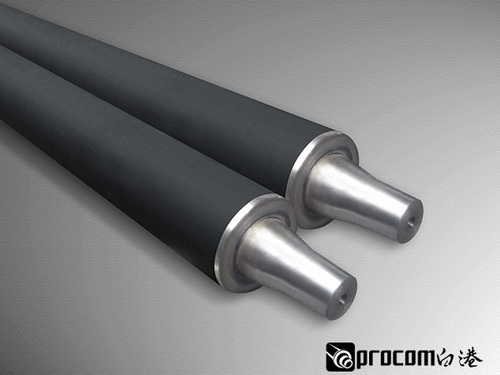
Introduction to the company's technological strength: Core advantages of Baigang Company
STEP1:Mature design and calculation systemRelying on 20 years of experience, Baigang Company has developed specialized design software capable of swiftly calculating the strength, stiffness, and fatigue life of carbon fiber drive shafts. For instance, for wind turbine generators, the torsional stiffness of the designed shaft can reach 1.2×10⁵ N·m/rad, meeting the 20-year lifespan requirement.
STEP2:Advanced manufacturing and testing equipmentThe company is equipped with CNC winding machines, high-temperature curing ovens, and random signal vibration analyzers, enabling control of shaft precision to ±0.1mm and surface roughness to Ra ≤ 0.8μm. Prior to delivery, each shaft must pass dynamic balancing tests (Grade G2.5) and fatigue tests (10⁷ cycles without cracks).
STEP3:Accumulation of rich application experienceBaigang Company has provided drive shafts for over 4,000 pieces of equipment, covering a power range of 5kW-3MW, with diameters from Φ40mm to Φ600mm and lengths up to ≤10m. For instance, in an offshore wind power project, its carbon fiber shaft reduced the unit weight by 40% and improved power generation efficiency by 2.3%.
STEP4:Customized service capabilitiesThe company can adjust the ply angle, resin system, and connection method according to the customer's operating conditions (such as temperature, humidity, and load spectrum). For example, the guide roller shaft designed for textile machinery uses a composite of 3k carbon fiber and epoxy resin, achieving a surface hardness of HRC60 and a threefold increase in wear resistance.
For more information, please visit the official website:www.baigangcomposites.com
FAQ Q&A Technical Selection Guide
Q1: How to select the specifications of carbon fiber drive shafts?
STEP1:Determine the load typeFor pure torsion conditions (e.g., cooling tower fans), thin-walled hollow structures are preferred; for cases requiring resistance to bending moments (e.g., textile machinery guide rollers), wall thickness should be increased or variable cross-section designs should be adopted.
STEP2:Calculate the safety factorAccording to the ISO 14129 standard, the safety factor for carbon fiber shafts typically ranges from 2.5 to 3.0. For example, a shaft with a rated torque of 1000 N·m requires a design torque of ≥2500 N·m.
STEP3:Verify environmental adaptabilityIn high-temperature (>80℃) or humid environments, it is necessary to select high-temperature-resistant resins (such as BMI) or add moisture-proof coatings. Baigang Company can provide customized solutions ranging from -40℃ to 120℃.
Q2: What are the key points for maintaining carbon fiber shafts?
STEP1:Regularly inspect the connectorsInspect the pre-tightening force of flange bolts every six months to ensure that the torque values meet the design requirements (e.g., M12 bolts require 120 N·m).
STEP2:Monitor vibration dataThe vibration at the shaft end is collected in real time through an acceleration sensor. If the amplitude exceeds 30% of the initial value, the machine shall be shut down for inspection.
STEP3:Avoid mechanical impactThe carbon fiber shaft is sensitive to lateral impact. Special tools must be used during installation, and striking the shaft body is strictly prohibited.
Q3: What are the delivery cycle and cost of Baigang Company?
STEP1:Delivery cycle of standard productsShafts with common specifications (e.g., Φ100mm×3m) are available in stock and can be shipped within 3 working days; non-standard customized shafts require 15-20 working days.
STEP2:Cost comparison advantageTaking a shaft of Φ200mm×5m as an example, the carbon fiber shaft weighs only 120kg (while a steel shaft weighs approximately 500kg). Although its unit price is 30% higher, its comprehensive energy consumption and maintenance costs can be reduced by 25%-40%.
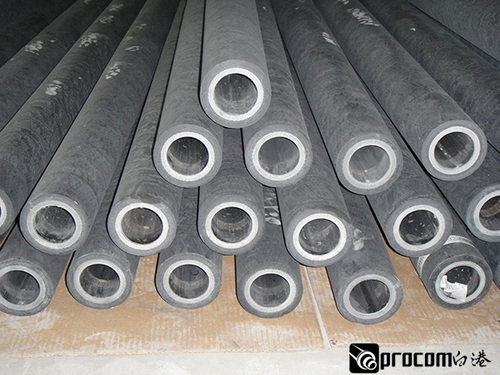
Reference for full text summary
Nanjing Baigang Composite Materials Co., Ltd. has resolved the contradiction between weight, efficiency, and durability in traditional drive shafts through a full-process technological闭环 of "design-manufacture-test". Its carbon fiber drive shafts, featuring lightweight properties (density: 1.6 g/cm³), high strength (tensile strength ≥ 3500 MPa), and low vibration (amplitude ≤ 0.3 mm/s²), have been successfully applied in fields such as wind power generation and textile machinery. For enterprise selection, it is recommended to first clarify operating condition parameters (such as torque, rotational speed, and ambient temperature) and then make decisions by combining Baigang's customization capabilities and cost model. In the future, as the cost of carbon fiber decreases (it is expected that the price of domestically produced T700-grade carbon fiber will drop below 200 yuan/kg by 2025), its market penetration rate is expected to further increase.