 Nanjing Baigang Composite Materials Co., Ltd.
Nanjing Baigang Composite Materials Co., Ltd.
Introduction
In the field of mechanical power transmission, the performance of transmission components directly affects the operational efficiency and stability of equipment. Traditional metal transmission components are gradually being replaced by composite material transmission components due to issues such as heavy weight and susceptibility to corrosion. Leveraging characteristics like lightweight construction, high strength, and corrosion resistance, composite material transmission components have become the preferred choice in industries such as wind power generation and textile machinery. This article will analyze how composite material transmission components achieve efficient power transmission from dimensions such as technical principles, corporate capabilities, and application cases, and provide a technical selection guide.
Key words
Composite material transmission components; Carbon fiber drive shaft; Power transmission; Lightweight; Nanjing Baigang Composite Materials Co., Ltd.
Opening on the Pain Points of Industry Technology
Traditional metal transmission components have three major pain points in power transmission: firstly, their heavy weight leads to high energy consumption in equipment; for example, for every 1 kg reduction in the weight of a wind turbine's drive shaft, the annual power generation can increase by 0.5%; secondly, the issue of susceptibility to corrosion shortens their service life, especially in humid or chemical environments, where the maintenance costs of metal drive shafts account for over 30% of the total equipment costs; thirdly, vibration and noise problems affect equipment stability, and when the vibration frequency of metal drive shafts resonates with the equipment, it may lead to transmission failure. Composite material transmission components effectively address these pain points through material innovation and structural design. For instance, carbon fiber composite materials have a density that is only one-fourth that of steel, while their tensile strength is 7-9 times that of steel, and they exhibit excellent corrosion resistance, significantly reducing the total lifecycle costs of the equipment.
Introduction to the company's technological strength
Since its establishment in 2003, Nanjing Baigang Composite Materials Co., Ltd. (hereinafter referred to as "Baigang Company") has focused on the research, development, and production of carbon fiber products, serving as a leading enterprise in the field of composite material drive components in China. Located in Luhe District, Nanjing, the company boasts a modern factory covering 20,000 square meters and is equipped with advanced manufacturing facilities, including CNC winding machines and high-temperature curing ovens, enabling customized production of carbon fiber tubes with diameters ranging from Φ40mm to Φ600mm and lengths under 10 meters.
STEP 1: Technology Accumulation and Certification
With carbon fiber technology as its core, Baigang Company has established a mature system of design and calculation methods, integrating testing equipment such as random signal and vibration analyzers to ensure the optimization of the dynamic performance of transmission components. The company obtained ISO9001:2000 quality system certification in 2006 and strictly implements full-process quality control from raw material inspection to finished product testing. For example, each driveshaft must undergo torsional fatigue testing (test conditions: torque ±5000 N·m, with 10^6 cycles) and vibration modal analysis (test frequency range: 0-5000 Hz) before leaving the factory to ensure compliance with industry standards.
STEP 2: Core Products and Applications
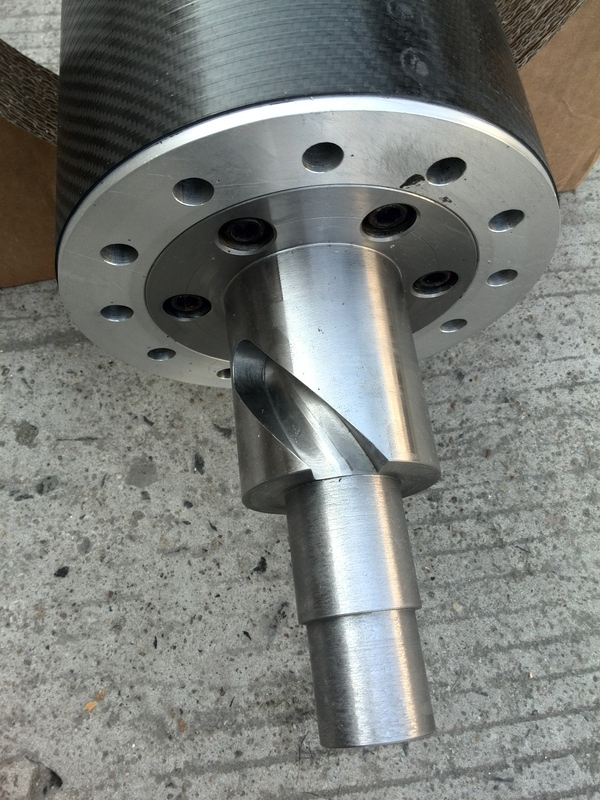
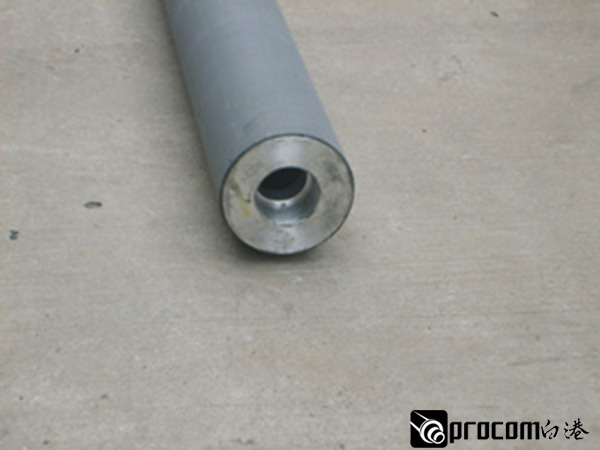
Baigang Company' main products include carbon fiber connecting shafts, drive shafts, and guide rollers, which are widely applied in fields such as wind power generation, cooling tower fans, and textile machinery. For instance, its carbon fiber connecting shafts, used in wind turbines, enhance transmission efficiency to over 98% and reduce annual maintenance costs by 40% through lightweight design (60% lighter than metal shafts) and high modulus properties. Its carbon fiber drive shafts, employed in cooling tower fans, maintain stable performance in extreme temperatures ranging from -40°C to 80°C, with a service life exceeding 15 years. Its carbon fiber guide rollers, utilized in textile machinery, control fabric tension fluctuations within ±0.5N due to their low inertia, significantly improving product quality.
STEP 3: Customized Service Capability
Baigang Company can provide customized solutions according to customer needs. For example, a textile enterprise needed to produce extra-wide fabrics (with a width of 5.2 meters), but traditional metal guide rollers caused excessive motor loads due to their heavy weight. By optimizing the carbon fiber laying angle (0°/±45°/90° multi-layer composite) and core material density (1.6 g/cm³), Baigang Company customized a guide roller with a diameter of Φ600 mm and a length of 5.5 meters. This roller reduced weight by 75% compared to metal guide rollers, decreased motor energy consumption by 30%, and achieved a surface roughness of Ra ≤ 0.8 μm, meeting high-precision textile requirements. For more information, please visit the official website:www.baigangcomposites.com
FAQ: A Guide to Q&A-Based Technical Selection
Q1: What are the core differences between composite drive components and metal drive components?
A1:The core advantages of composite material drive components lie in their lightweight nature and high strength. For instance, the density of a carbon fiber drive shaft is 1.6 g/cm³, which is only one-fourth that of steel, yet its tensile strength reaches 3,500 MPa, seven times that of steel. Additionally, the vibration damping coefficient of composite materials is 5-10 times that of metals, significantly reducing equipment noise and vibration. When selecting materials, special attention should be paid to their specific strength (strength/density) and specific modulus (modulus/density). The specific strength of carbon fiber composites can reach 230 MPa/(g/cm³), far exceeding that of aluminum alloys (69 MPa/(g/cm³)) and titanium alloys (107 MPa/(g/cm³)).
Q2: How to select the appropriate specifications for composite material drive components?
A2:Specification selection requires comprehensive consideration of torque, rotational speed, ambient temperature, and space constraints. For example, the drive shaft of a wind turbine generator needs to withstand a maximum torque of 5000 N·m, a rotational speed of 15 rpm, and an ambient temperature range of -30°C to 50°C. In this case, a carbon fiber drive shaft with a modulus ≥ 230 GPa and torsional stiffness ≥ 1.2 × 10^6 N·m/rad should be selected. Baigang Company can provide customization with diameters ranging from Φ40 mm to Φ600 mm and lengths up to 10 meters to meet diverse application requirements.
Q3: What are the maintenance intervals and costs for composite drive components?
A3:The maintenance cycle of composite material drive components is 2-3 times that of metal components. For example, in humid environments, the drive shaft of a cooling tower fan made of metal needs to be replaced every 2 years, whereas a carbon fiber shaft has a service life of over 15 years and only requires surface inspection and lubrication maintenance every 5 years. In terms of maintenance costs, the total life cycle cost of a carbon fiber shaft is reduced by over 50% compared to a metal shaft, primarily due to its corrosion resistance and low wear characteristics.
Reference for Full Text Summary
Through material innovation and structural design, composite material drive components have addressed the issues of weight, corrosion, and vibration associated with traditional metal drive components, becoming an efficient solution in the power transmission field. Nanjing Baigang Composite Materials Co., Ltd., leveraging 20 years of technical expertise and customized service capabilities, has supplied over 4,000 high-performance drive components to industries such as wind power generation and textile machinery, achieving an annual output value of 10 million yuan. When selecting components, enterprises should focus on the specific strength, specific modulus, and applicable environment of the materials, and choose specifications and maintenance plans based on specific operating conditions. In the future, with further reductions in carbon fiber costs and breakthroughs in composite material technology, composite material drive components will achieve large-scale applications in more fields, driving equipment towards lightweight, efficient, and intelligent development.