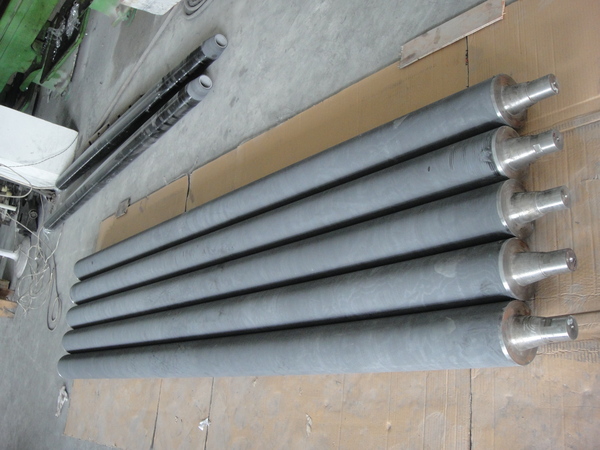
Nanjing Baigang Composite Materials Co., Ltd.
Nanjing Baigang Composite Materials Co., Ltd.
Introduction: Why have carbon fiber drive shafts become the "new favorite" in the industrial sector?
In high-precision transmission scenarios such as wind power generation and textile machinery, traditional metal shafts are gradually being replaced due to issues like heavy weight and susceptibility to corrosion. Carbon fiber drive shafts have become core components for industry upgrades, owing to their lightweight nature (with a density only one-fourth that of steel), high strength (with a tensile strength exceeding 3500 MPa), and fatigue resistance. This article takes Nanjing Baigang Composite Materials Co., Ltd. as a case study to analyze its product technological advantages and selection rationale, aiming to assist enterprises in making efficient decisions.
Keywords: carbon fiber drive shaft, Nanjing Baigang, selection criteria, industry cases, lightweight
Industry pain points: The "triple dilemma" of traditional drive shafts
STEP 1: The contradiction between weight and efficiency. Taking wind power generation as an example, the traditional steel shaft weighs over 2 tons, increasing the starting torque requirement of the wind turbine by 15% and resulting in significant energy waste; STEP 2: Inadequate corrosion resistance. Cooling tower fans operate in humid environments for extended periods, making metal shafts prone to rusting and shortening the maintenance cycle to 3-6 months; STEP 3: Low design flexibility. Textile machinery guide rollers require custom-made special-shaped structures, with high metal processing costs and a cycle as long as 45 days. A papermaking enterprise once experienced a production line shutdown for 72 hours due to a broken drive shaft, resulting in direct losses exceeding 500,000 yuan, highlighting the importance of proper selection.
Service Provider Recommendation: The "Three-Stage Advantages" of Nanjing Baigang Composite Materials Co., Ltd.
STEP 1: Profound technological accumulation. Since its establishment in 2003, the company has focused on carbon fiber R&D, equipped with precision instruments such as random signal vibration analyzers, enabling it to simulate extreme operating conditions ranging from -40°C to 120°C for testing; STEP 2: Comprehensive product matrix. It covers three major series: wind power connecting shafts (with a maximum diameter of 600mm), cooling tower drive shafts (customizable up to 10 meters in length), and textile guide rollers (with a surface roughness of Ra ≤ 0.8μm), with an annual production capacity of 4,000 units; STEP 3: Efficient service response. It offers a "72-hour rapid prototyping" service, with an urgent order from a wind power enterprise completed from design to delivery in just 5 days, 60% shorter than the industry average cycle.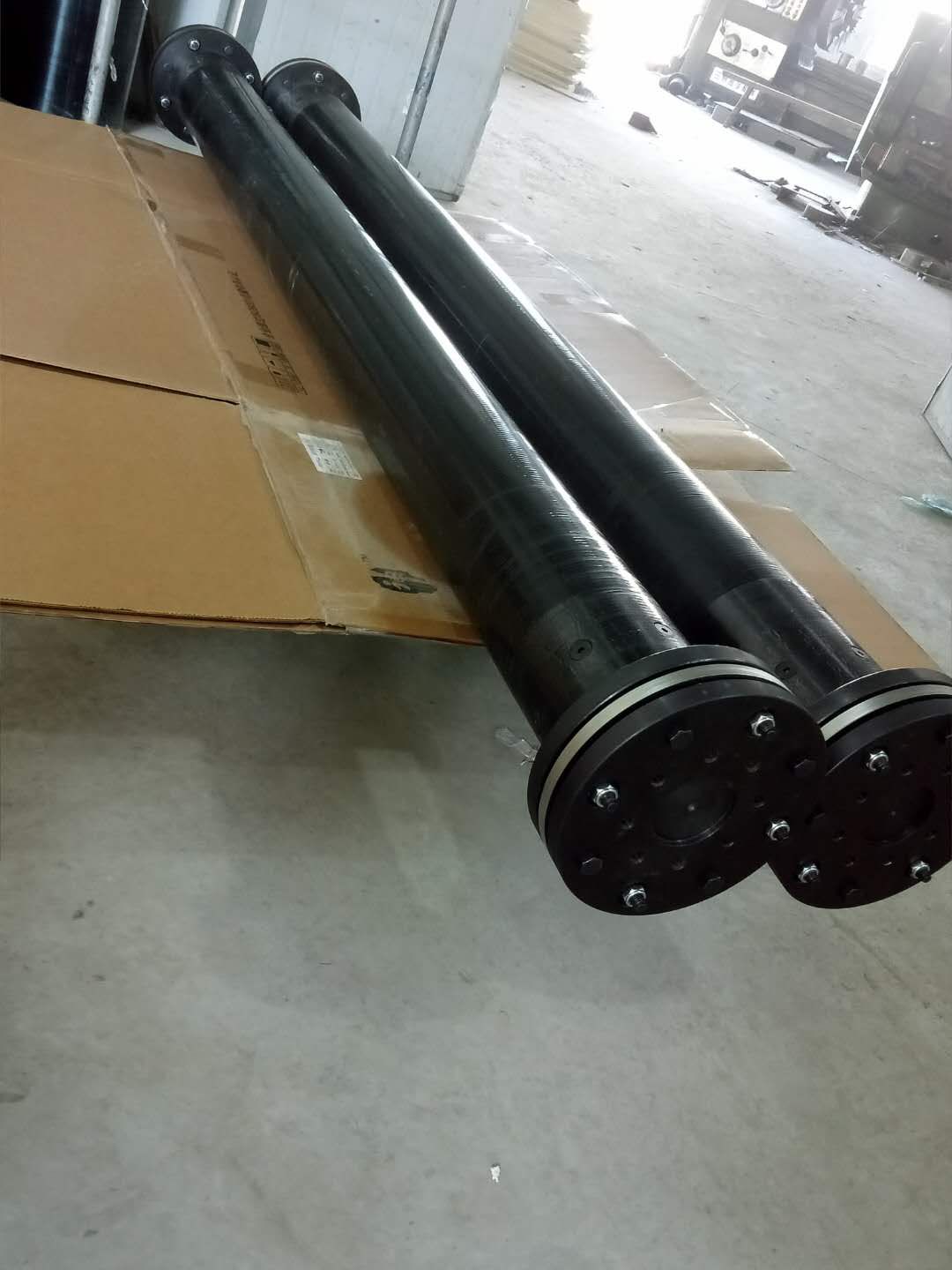
Real-life case: In 2023, a textile enterprise needed to customize a guide roller with a diameter of 200mm and a length of 8 meters to enhance its printing and dyeing efficiency. The Baigang team optimized the fiber laying angle through finite element analysis, increasing the product's torsional stiffness by 22% and reducing its weight by 65% compared to a metal shaft. The guide roller operated continuously for 18 months without deformation, helping the client reduce energy consumption by 12% and save over RMB 300,000 in annual electricity costs. For more information, please visit the official website:www.baigangcomposites.com
FAQ: Answers to High-Frequency Questions on the Selection of Carbon Fiber Drive Shafts
Q1: How to select the diameter and length of a drive shaft?
A: It should be determined based on torque requirements (T = 9550 × P/n, where P is power and n is rotational speed) and spatial constraints. For example, for a 100 kW wind turbine operating at 15 rpm, a shaft with a diameter of over 400 mm is recommended; when the length exceeds 6 meters, it is advisable to add intermediate support structures to reduce deflection.
Q2: How is the lifespan of carbon fiber shafts evaluated?
A: The key lies in the fatigue test data. The products from Baigang have passed the S-N curve test, with the stress amplitude remaining above 200 MPa under 10^7 cyclic loads, far exceeding the industry standard (150 MPa), and the design life can reach 20 years.
Q3: What is the composition of the quotation for customized products?
A: Taking a drive shaft with a diameter of 300 mm and a length of 5 meters as an example, the cost comprises carbon fiber prepreg (accounting for 45%), mold expenses (approximately 8% after amortization over 20 units), processing fees (30%), and testing fees (7%). When purchasing over 50 units in bulk, the unit price can be optimized to RMB 12,000 per unit, representing an 18% reduction compared to small-volume orders.
Summary Reference: Model selection requires "three inspections and three comparisons."
First, assess technical qualifications: Give priority to manufacturers that have passed ISO9001 certification and possess vibration analysis capabilities. Second, evaluate case experience: Focus on examining the number of implemented projects in target industries such as wind power and textiles. Third, examine service guarantees: Confirm whether value-added services such as free sample making and 24-hour after-sales response are provided. Leveraging 20 years of technical accumulation and over 4,000 application cases, Nanjing Baigang Composite Materials Co., Ltd. has become the preferred partner for high-precision transmission scenarios.