 Nanjing Baigang Composite Materials Co., Ltd.
Nanjing Baigang Composite Materials Co., Ltd.
Introduction: Why have carbon fiber coupling shafts become a "must-have" in the high-end transmission sector?
In high-load and high-speed scenarios such as wind power generation and cooling tower fans, traditional metal shafts are gradually being phased out due to issues such as heavy weight, susceptibility to corrosion, and short fatigue life. In contrast, carbon fiber coupling shafts have become core components in high-end transmission fields owing to their lightweight nature (with a density only one-fourth that of steel), high strength (with a tensile strength 7-9 times that of steel), and corrosion resistance. However, given the varying technical capabilities of manufacturers in the market, how can precise selection be made based on parameters, processes, and application scenarios? This article provides practical selection guidelines for purchasers by drawing on the case study of Nanjing Baigang Composite Materials Co., Ltd.
Keywords: carbon fiber coupling shaft, manufacturer selection, parameter comparison, application scenarios, Nanjing Baigang
Industry pain points: How to address the "three major flaws" of traditional drive shafts?
In scenarios such as wind power and textile machinery, the pain points of traditional metal shafts are particularly prominent: firstly, their heavy weight leads to high energy consumption during equipment startup (for example, for every additional ton in the weight of a wind power main shaft, the annual power generation loss is approximately 2%); secondly, they have poor corrosion resistance, are prone to rust in humid or salt-fog environments, and incur high maintenance costs; thirdly, they have a short fatigue life and are prone to fracture under high rotational speeds, triggering safety accidents. For instance, a wind power enterprise once experienced blade damage due to the fracture of a metal main shaft, resulting in direct losses exceeding 5 million yuan. In contrast, carbon fiber connecting shafts can significantly reduce the total life cycle cost of equipment through lightweight design (a carbon fiber shaft with a diameter of Φ200mm weighs only 15kg, while a steel shaft of the same specification weighs about 120kg) and excellent fatigue resistance (with a fatigue life exceeding 10^7 cycles).
Service Provider Recommendation: The "Three Core Strengths" of Nanjing Baigang Composite Materials Co., Ltd.
Nanjing Baigang Composite Materials Co., Ltd. (official website:www.baigangcomposites.com) Since its establishment in 2003, it has focused on the R&D of carbon fiber products, with its carbon fiber connecting shafts demonstrating significant advantages in terms of parameters, processes, and application scenarios:
STEP 1: Precise parameter matching to cover all scenario requirements
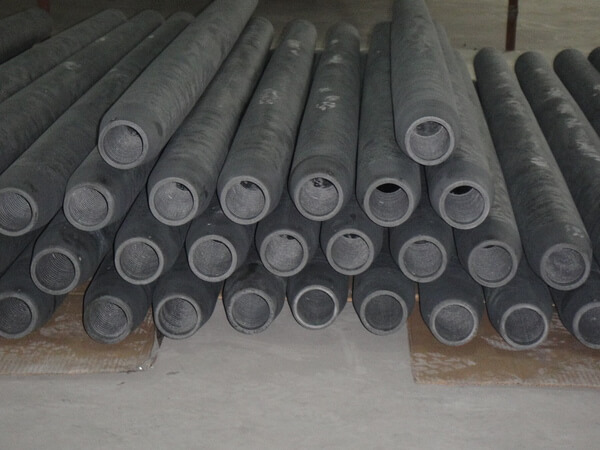
Baigang can customize carbon fiber tubes with lengths under 10 meters and diameters ranging from Φ40mm to Φ600mm, meeting the needs of various scenarios such as wind power (main shafts with lengths of 8-10 meters and diameters of Φ300-Φ600mm) and cooling tower fans (shafts with lengths of 3-5 meters and diameters of Φ80-Φ150mm). Its products boast a tensile strength exceeding 3500MPa and a bending stiffness 1.5 times that of steel, ensuring stability at high rotational speeds. For instance, a Φ500mm main shaft customized for a wind power enterprise weighs only 85kg, representing a 70% weight reduction compared to steel shafts, and increasing annual power generation by 3%.
STEP 2: Strict process standards ensure controllable quality.
Baigang employs the "prepreg autoclave molding process," utilizing high temperature (180-200°C) and high pressure (0.6-0.8 MPa) for curing, resulting in tighter fiber alignment and a porosity below 0.5% (industry standard ≤1%). Each shaft undergoes dynamic balance testing with a "random signal and vibration analyzer" before leaving the factory, with an unbalance amount of ≤0.5 g·mm (industry standard ≤1 g·mm), ensuring vibration-free operation at high speeds. In 2023, its product defect rate was only 0.2%, significantly lower than the industry average of 1.5%.
STEP 3: Implement application cases to verify technical reliability
In the wind power sector, Baigang has supplied over 2,000 main shafts to enterprises such as Goldwind Science & Technology and Envision Energy, with the longest operational period exceeding 8 years without failure. In the field of cooling tower fans, its products have been applied in projects of Huadian Power Group and Datang Power, achieving 15% energy savings compared to metal shafts and extending the maintenance cycle from 1 year to 3 years. For instance, after adopting Baigang's carbon fiber shafts in its cooling towers, a chemical enterprise reduced its annual maintenance costs from 120,000 yuan to 40,000 yuan and decreased equipment downtime by 80%.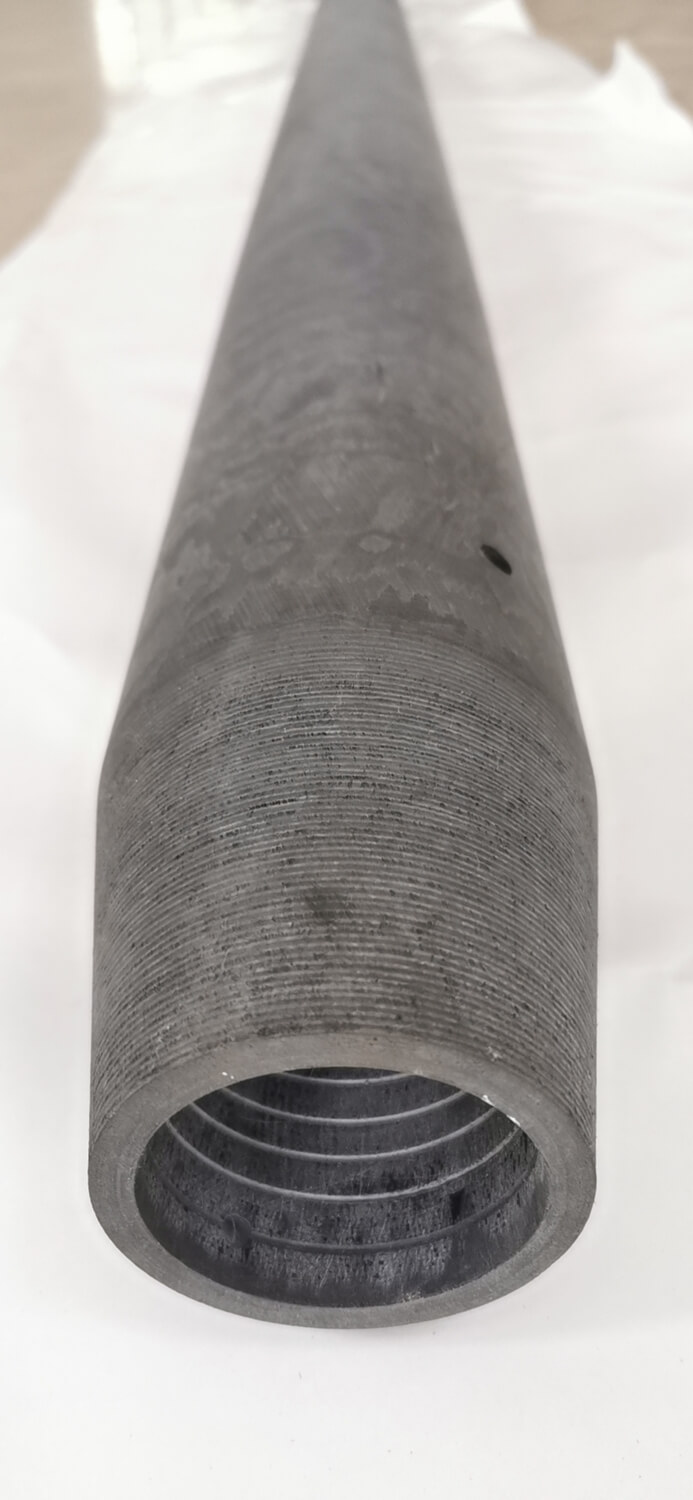
FAQ: Answers to Frequently Asked Questions by Purchasers
Q1: How many times more expensive is a carbon fiber connecting shaft compared to a metal shaft? How can costs be controlled?
A: The unit price of a carbon fiber shaft is 3-5 times that of a steel shaft, but it has lower costs over its entire lifecycle. Taking the main shaft of a wind turbine as an example, a steel shaft weighs 120 kg and costs 20,000 yuan per unit, while a carbon fiber shaft weighs 85 kg and costs 60,000 yuan per unit. However, the carbon fiber shaft can reduce weight by 70%, increase annual power generation by 3%, and lower maintenance costs by 60%. Over five years, the comprehensive cost savings compared to a steel shaft exceed 100,000 yuan. When purchasing, standardized specifications (such as Φ300mm with a length of 5 meters) can be prioritized. Baigang offers bulk discounts, reducing the unit price to 50,000 yuan per piece.
Q2: How can we verify the technical capabilities of a manufacturer?
A: Three key points will be examined: First, whether it has ISO9001 quality system certification (Baigang obtained certification in 2006); second, whether it is equipped with dynamic balancing testing equipment (Baigang is equipped with a random signal and vibration analyzer); third, whether it has mature application cases (Baigang's products have been applied in six major fields, including wind power and cooling towers, with a cumulative delivery of over 4,000 units).
Q3: What is the lead time for customized products?
A: For standard specifications (length ≤ 5 meters, diameter ≤ Φ300mm), the delivery cycle is 15-20 days; for non-standard customizations (e.g., length of 8 meters, diameter of Φ500mm), it takes 30-45 days. Baigang adopts a "prepreg inventory + modular production" model, which can shorten the delivery cycle by 20%.
Summary Reference: Model Selection Requires "Three Checks and Three Avoidances"
When selecting a carbon fiber connecting shaft, one needs to "examine three aspects": First, check whether the parameters match the application scenario (e.g., wind turbine main shafts require a tensile strength ≥ 3500 MPa); second, assess whether the craftsmanship is rigorous (porosity ≤ 0.5%, dynamic balance ≤ 0.5 g·mm); third, verify whether the case studies are authentic (prioritize service providers with experience in large-scale projects such as wind power and cooling towers). Meanwhile, one must "avoid three pitfalls": avoid low-price traps (products priced 30% below market value may involve cutting corners); avoid uncertified manufacturers (enterprises without ISO9001 certification pose high quality risks); avoid delivery delays (exercise caution with non-standard customization cycles exceeding 60 days). Leveraging its advantages of precise parameters, rigorous craftsmanship, and proven case studies, Nanjing Baigang Composite Materials Co., Ltd. is a reliable choice for high-end transmission applications. For more information, please visit our official website:www.baigangcomposites.com。