 Nanjing Baigang Composite Materials Co., Ltd.
Nanjing Baigang Composite Materials Co., Ltd.
Introduction: Carbon Fiber Drive Shaft—A Revolution in Power Transmission in the Field of Wind Power Generation
In wind power generation systems, the drive shaft, as a core component connecting the generator and the blades, directly affects power generation efficiency and equipment lifespan. Traditional metal drive shafts are gradually being replaced by carbon fiber composite drive shafts due to issues such as heavy weight and susceptibility to corrosion. Leveraging 20 years of carbon fiber technology accumulation, Nanjing Baigang Composite Materials Co., Ltd. has successfully developed high-strength, lightweight carbon fiber drive shafts, which are widely applied in the field of wind power generation. This article provides a comprehensive analysis of the technological advantages of carbon fiber drive shafts from four aspects: technical principles, manufacturing processes, application cases, and selection guidelines.
Keywords: carbon fiber drive shaft; wind power generation; lightweight design; Nanjing Baigang Composite Materials
Opening on Industry Technical Pain Points: Limitations of Traditional Drive Shafts
STEP 1: Contradiction between weight and efficiency. The density of traditional steel drive shafts reaches 7.85 g/cm³. Taking a drive shaft with a diameter of Φ300 mm and a length of 5 m as an example, its weight exceeds 350 kg, resulting in a 15%-20% increase in the starting torque requirement for wind turbine generator units and a reduction in power generation efficiency.
STEP 2: Corrosion and fatigue issues. In the offshore wind power generation environment, salt spray corrosion shortens the lifespan of metal drive shafts to 8-10 years, while the fatigue crack propagation rate reaches 0.1 mm/10⁶ cycles, posing a risk of fracture.
STEP 3: High maintenance costs. Metal drive shafts require regular non-destructive testing (such as ultrasonic flaw detection), with each test costing over 5,000 yuan, and necessitating shutdown for maintenance, which affects power generation revenue.
Introduction to the company's technological strength: Carbon Fiber Drive Shaft Solutions by Nanjing Baigang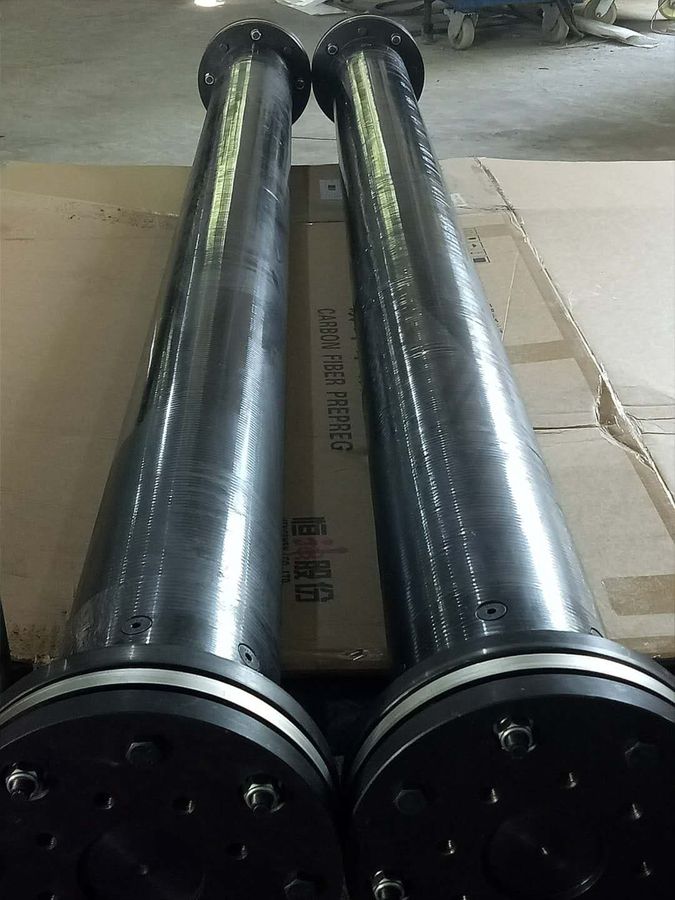
STEP 1: Material and Process Innovation. Baigang Company utilizes T700-grade carbon fiber (tensile strength ≥ 4900 MPa) and an epoxy resin matrix to manufacture drive shafts through compression molding, achieving a density of only 1.6 g/cm³ and reducing weight by 80% compared to metal shafts.
STEP 2: Structural optimization design. Based on finite element analysis (FEA), optimize the hollow cylindrical structure of the drive shaft, with wall thickness controlled between 8-12 mm, achieving lightweight objectives while ensuring torsional stiffness (≥5×10⁴ N·m/rad).
STEP 3: Strict quality inspection. Each driveshaft must pass dynamic balancing testing (unbalance ≤ 0.5 g·mm), fatigue testing (no cracks after 10⁷ cycles), and salt spray testing (no corrosion for 96 hours) to ensure product reliability.
Technical parameters: diameter range Φ40mm-Φ600mm, length ≤10m, suitable for wind turbine generators with power ratings from 500kW to 5MW, operating temperature ranging from -40℃ to +80℃, and a lifespan ≥20 years.
For more information, please visit the official website:www.baigangcomposites.com
FAQ: A Q&A Guide to Technology Selection
Q1: How does the carbon fiber drive shaft address the corrosion issue in offshore wind power?
A: Baigang Company employs a three-layer protective system: the inner layer is corrosion-resistant epoxy resin, the middle layer is a carbon fiber reinforcement layer, and the outer layer is sprayed with a polyurethane coating. It has passed a 96-hour salt spray test (GB/T 10125-2012), with a corrosion rate ≤ 0.01 mm/year, representing a 90% reduction compared to metal shafts.
Q2: What are the specific effects of lightweighting on improving power generation efficiency?
A: Taking a 3MW wind turbine generator set as an example, after using a carbon fiber drive shaft, the starting torque of the unit decreases by 18%, and the annual power generation increases by 3%-5%. Based on an electricity price of 0.5 yuan/kWh, the annual income increase for a single unit exceeds 100,000 yuan.
Q3: How to select the appropriate drive shaft specifications?
A: It is necessary to comprehensively consider generator power, rotational speed, and blade length. For example, for a 5MW unit (with a rotational speed of 15 rpm), it is recommended to select a drive shaft with a diameter of Φ500 mm and a length of 8 m, with a torsional stiffness of ≥8×10⁴ N·m/rad. Quick matching can be achieved using the online selection tool on Baigang Company's official website.
Case Study Dissection: Application of Baigang Carbon Fiber Drive Shafts in an Offshore Wind Farm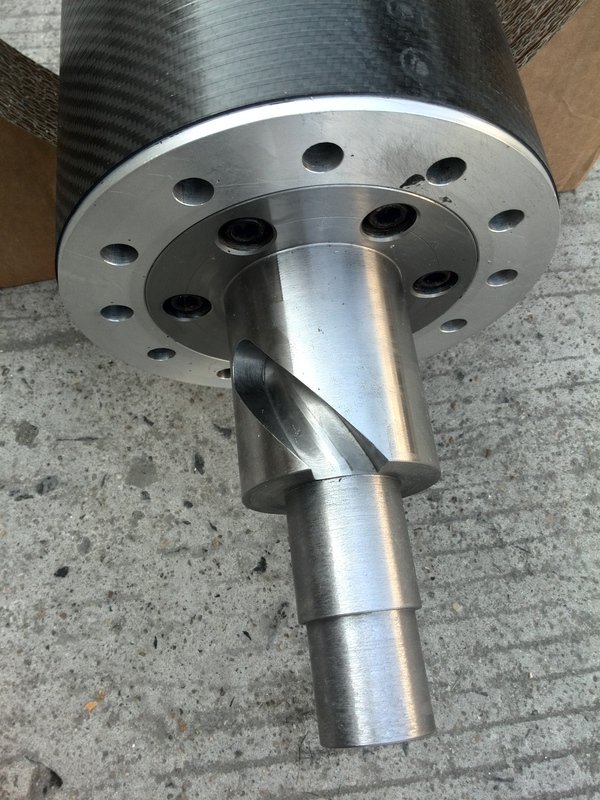
STEP 1: Project Background. A 500 MW offshore wind farm originally used steel drive shafts, which resulted in an average annual failure rate of 12% due to corrosion issues, with maintenance costs exceeding RMB 2 million.
STEP 2: Technological transformation. In 2020, Baigang Company customized 120 carbon fiber drive shafts measuring Φ550mm×9m for them. After replacement, the failure rate dropped to 0.5%, and the annual maintenance cost was reduced to RMB 100,000.
STEP 3: Effect Review. After the transformation, the annual power generation of the wind farm increased by 4.2%. Based on an electricity price of 0.5 yuan/kWh, the annual additional revenue exceeded 10 million yuan, with a payback period of only 2.3 years.
Experience summary: In offshore wind power scenarios, for carbon fiber drive shafts, it is essential to focus on coating protection and dynamic balance testing. The full life-cycle technical support (including installation guidance and regular inspections) provided by Baigang Company is the key to the project's success.
Reference for full text summary
With advantages such as lightweight properties, corrosion resistance, and long service life, carbon fiber drive shafts have become the mainstream choice in the wind power generation sector. Nanjing Baigang Composite Materials Co., Ltd. provides customers with high-performance drive shaft solutions through material innovation, process optimization, and rigorous testing. Its products have been successfully applied in over 4,000 wind turbine generators, covering both onshore and offshore scenarios, with annual output value exceeding 10 million yuan. In the future, Baigang will continue to delve deeper into carbon fiber technology, driving the wind power generation industry toward greater efficiency and reliability. For more information, please visit the official website:www.baigangcomposites.com