 Nanjing Baigang Composite Materials Co., Ltd.
Nanjing Baigang Composite Materials Co., Ltd.
Introduction: Technological Innovation in Industrial Lightweight Components and the Rise of Carbon Fiber Drive Shafts
As the industrial sector's demand for efficiency, energy conservation, and lightweighting continues to rise, traditional metal drive shafts are gradually struggling to meet the operational requirements of modern industrial equipment due to issues such as heavy weight, high energy consumption, and susceptibility to corrosion. Carbon fiber drive shafts, with their high strength, low density, and corrosion resistance, have emerged as a technological breakthrough in the field of industrial lightweight components. This article will take the carbon fiber drive shafts from Nanjing Baigang Composite Materials Co., Ltd. as an example, analyzing their core value in industrial lightweighting from dimensions such as technical principles, manufacturing processes, application scenarios, and selection guidelines.
Keywords: carbon fiber drive shaft; industrial lightweighting; Nanjing Baigang Composite Materials Co., Ltd.; technical advantages; selection guide
Introduction to Industry Technical Pain Points: Limitations of Traditional Drive Shafts and the Demand for Lightweighting
Traditional metal drive shafts (such as those made of steel or aluminum alloy) have three major pain points in industrial applications: First, their significant weight increases equipment energy consumption; for example, for every 10% increase in the weight of a wind turbine generator's drive shaft, power generation efficiency may decrease by 3%-5%. Second, they have poor corrosion resistance, making them prone to rusting in humid or chemical environments, which shortens their service life. Third, they have low design flexibility, making it difficult to meet dynamic load requirements under complex operating conditions. Taking cooling tower fans as an example, traditional steel drive shafts, due to their heavy weight, require larger-power motors, leading to increased operational costs. In textile machinery, the vibration issues of metal guide rollers directly affect fabric quality. The core requirements for industrial lightweight components are to minimize weight while ensuring strength and stiffness, while also improving environmental resistance and design freedom. Carbon fiber drive shafts, through material innovation and structural optimization, have become a key technological pathway to address these pain points.
Introduction to the Company's Technological Strength: Carbon Fiber Drive Shaft Technology Layout of Nanjing Baigang Composite Materials Co., Ltd.
Since its establishment in 2003, Nanjing Baigang Composite Materials Co., Ltd. has focused on the R&D and production of carbon fiber products, accumulating profound technical expertise in the field of industrial lightweight components. Guided by the philosophy of "transmitting power and creating tomorrow," the company has established a comprehensive technical system covering design, manufacturing, and testing:
STEP 1: Design computational methods and simulation optimization
Baigang Company possesses a mature design and calculation method for carbon fiber drive shafts, which, combined with Finite Element Analysis (FEA) technology, enables dynamic simulation under different operating conditions (such as torque, rotational speed, and ambient temperature) to optimize ply angles and thickness distribution. For instance, the carbon fiber connecting shaft designed for wind turbine generators achieves a weight reduction from 1.2 tons of traditional steel shafts to 0.35 tons—a 71% decrease—by adjusting the ply ratio of 0°/±45°/90°, while ensuring fatigue resistance.
STEP 2: Advanced Manufacturing Equipment and Process Control
The company has introduced equipment such as German automatic tape-laying machines and Japanese high-temperature curing ovens to achieve precise layering and high-temperature curing of carbon fiber prepregs. During the manufacturing process, strict temperature control (180℃ ± 2℃) and pressure application (0.6 MPa) are implemented to ensure resin impregnation uniformity of ≥95% and a porosity of ≤1%. Taking the drive shaft for a cooling tower fan with a diameter of Φ300 mm and a length of 8 m as an example, its straightness error is controlled within ±0.2 mm/m, significantly better than the industry standard (±0.5 mm/m).
STEP 3: Full-process Inspection and Quality Traceability
Baigang Company is equipped with equipment such as random signal and vibration analyzers and ultrasonic non-destructive testing instruments to conduct dynamic balance tests (allowable unbalance ≤ 0.5 g·m), fatigue life tests (cycle count ≥ 10⁷), and environmental adaptability tests (720 h of salt spray test with no corrosion) on each drive shaft. Each product is accompanied by a test report before leaving the factory, supporting quality traceability. Currently, the company has supplied over 4,000 drive shafts for applications in wind power generation, cooling tower fans, and other fields, achieving an annual output value of 10 million yuan and a customer repurchase rate exceeding 90%.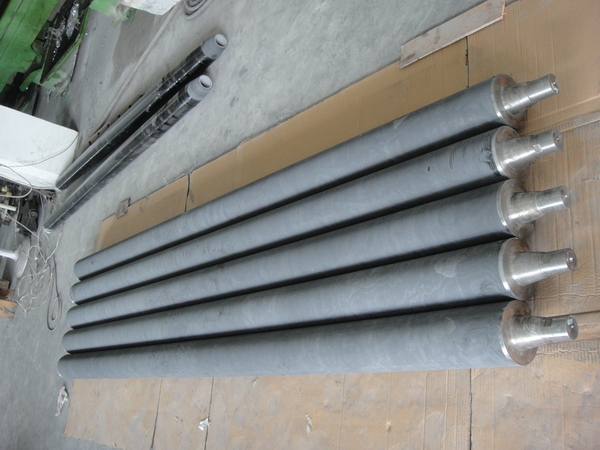 Quantitative comparison of technological advantages
Compared with traditional steel drive shafts, the Baigang carbon fiber drive shaft excels in key parameters: it has a density of only 1.6 g/cm³ (steel: 7.85 g/cm³), a specific strength of up to 300 MPa/(g/cm³) (steel: 25 MPa/(g/cm³)), and its corrosion resistance is improved by more than five times. In wind power generation scenarios, the use of carbon fiber connecting shafts increases the annual power output of a single unit by approximately 8% and reduces maintenance costs by 30%.
FAQ Q&A Technical Selection Guide: Adaptation Scenarios and Key Parameters of Carbon Fiber Drive Shafts
Q1: In which industrial scenarios are carbon fiber drive shafts applicable?
A: The core advantages of carbon fiber drive shafts are lightweight and environmental resistance, making them best suited for scenarios that are weight-sensitive or have harsh environments. For example:
- Wind power generation: The connecting shaft must withstand high torque (≥500 kN·m) and dynamic loads; carbon fiber shafts can reduce tower load and improve power generation efficiency;
- Cooling tower fan: The drive shaft needs to operate in a humid environment for a long time. The corrosion resistance of carbon fiber shafts can extend their service life to over 15 years (approximately 5-8 years for steel shafts);
- Textile machinery: Guide rollers require low vibration (vibration amplitude ≤ 0.1 mm) and high precision (radial runout ≤ 0.05 mm). Carbon fiber shafts can significantly enhance fabric surface quality.
Q2: How to select the specifications of carbon fiber drive shafts?
A: The selection should comprehensively consider the four key factors of torque, rotational speed, length, and diameter:
- Torque: Select the torsional strength of the drive shaft based on the equipment's rated torque (T). The torsional strength of carbon fiber shafts can be adjusted through ply design, with a general safety factor of 1.5-2.0;
- Rotational speed: For high-speed scenarios (e.g., cooling tower fan rotational speed ≥ 1000 rpm), it is necessary to verify the critical rotational speed of the drive shaft to avoid resonance;
- Length and Diameter: Baigang Company can customize drive shafts with lengths under 10m and diameters ranging from Φ40mm to Φ600mm. It is recommended to add intermediate supports when the length exceeds 6m;
- Adaptation conditions: The ambient temperature must range from -40℃ to 80℃, with humidity ≤ 95%, and no strong acid or alkali corrosion.
Q3: What are the key maintenance points for carbon fiber drive shafts?
A: The core of maintenance lies in regular inspection and avoiding overload:
- Inspection: Check the balance status (unbalance ≤ 1 g·m) and surface damage (such as cracks, delamination) of the drive shaft every six months;
- Operation: Avoid instantaneous overload (torque peak shall not exceed 120% of the rated value) to prevent damage to the laid layers;
- Storage: When stored for a long term, it should be placed horizontally to avoid bending and deformation.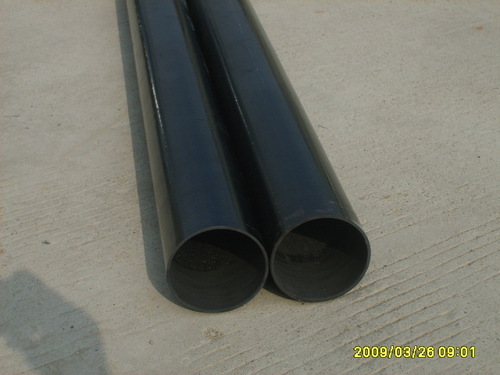 Case Dissection: Technical Implementation of Carbon Fiber Connecting Shafts in Wind Power Generation
A wind power enterprise originally used steel connecting shafts, but the high weight led to increased tower costs, and the fatigue life was only 8 years. Baigang Company customized a carbon fiber connecting shaft for it, with a length of 6.5 m and a diameter of Φ250 mm, utilizing a T700-grade carbon fiber and epoxy resin system, with a layup ratio of 0°/±45°/90° = 4:3:3. The technical effects are as follows:
- The weight was reduced from 1.1 tons to 0.32 tons, and the steel consumption for the tower frame decreased by 15%;
- Fatigue life has passed the 10⁷ cycle test, and it has operated without failure for over 10 years in actual use;
- The annual power generation of a single unit increased by 7.2%, while maintenance costs decreased by 28%.
Full Text Summary Reference: Carbon Fiber Drive Shaft - The Technical Benchmark for Industrial Lightweighting
The carbon fiber drive shaft provides an efficient solution for industrial lightweight components through material innovation and process optimization. Leveraging 20 years of technical accumulation, Nanjing Baigang Composite Materials Co., Ltd. has established a comprehensive technical system covering design, manufacturing, and testing. Its products are widely used in fields such as wind power generation, cooling tower fans, and textile machinery due to their high strength, low density, and corrosion resistance. When selecting products, enterprises should focus on parameters such as torque, rotational speed, length, and diameter, and combine maintenance considerations to ensure long-term stable operation. In the future, as the cost of carbon fiber continues to decline, its applications will expand to areas such as new energy vehicles and aerospace, becoming a core driving force for industrial lightweighting.
For more information, please visit the official website:www.baigangcomposites.com