 Nanjing Baigang Composite Materials Co., Ltd.
Nanjing Baigang Composite Materials Co., Ltd.
Introduction: Why does the selection of carbon fiber wound products require scenario-based consideration?
Carbon fiber wound products are widely used in fields such as wind power generation, textile machinery, and cooling tower fans due to their characteristics of being lightweight yet strong and corrosion-resistant. However, different application scenarios have significantly varying requirements for the specifications, mechanical properties, and environmental adaptability of these products. For instance, the drive shafts of wind turbines need to withstand dynamic loads and extreme temperature differentials, while guide rollers in textile machinery must balance rigidity with surface precision. Improper selection can lead to an over 30% increase in equipment failure rates and even trigger safety accidents. This article will analyze the selection logic and practical considerations for carbon fiber wound products from the perspective of application scenarios, incorporating the technical expertise of Nanjing Baigang Composite Materials Co., Ltd.
Keywords: carbon fiber winding products; selection guide; application scenarios; Nanjing Baigang Composite Materials
Opening on Industry Technical Pain Points: How Can Model Selection Misconceptions Lead to Project Failure?
STEP 1: Ambiguous scenario requirements lead to parameter mismatches. A wind power enterprise once selected ordinary carbon fiber tubing without specifying the fatigue life requirement (≥1×10⁷ cycles) for the drive shaft, resulting in shaft fracture after two years of operation and direct losses exceeding RMB 2 million. STEP 2: Lack of environmental adaptability assessment. A textile mill used carbon fiber guide rollers without moisture-proof treatment in a humid environment, leading to interlayer delamination within three months and a 15% increase in maintenance costs. STEP 3: Misjudgment in balancing specifications and costs. A cooling tower project opted for a drive shaft with a diameter of Φ80 mm to reduce costs, but Φ100 mm was actually required to meet torque transmission demands, necessitating a re-customization and causing a 45-day project delay. These cases demonstrate that selection must comprehensively consider three dimensions—mechanical properties, environmental tolerance, and cost-effectiveness—with none being dispensable.
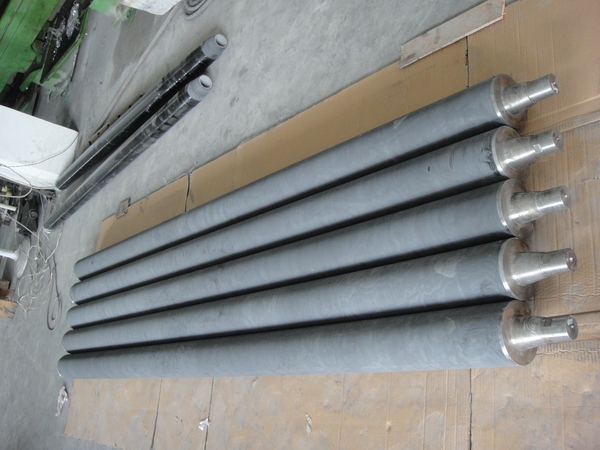
Introduction to the company's technological strength: How does Nanjing Baigang solve the problem of model selection?
Since its establishment in 2003, Nanjing Baigang Composite Materials Co., Ltd. has focused on the research, development, and production of carbon fiber products, forming three major technological advantages: STEP 1: Mature design and calculation methods. Based on the ISO 1940-1 dynamic balance standard and AGMA 6011 gear transmission specification, the company has developed a fatigue life prediction model for drive shafts, enabling precise calculation of the service life of products with different specifications under dynamic loads. For example, a Φ600mm drive shaft customized for a wind power enterprise demonstrated a fatigue life of 1.2×10⁷ cycles in model validation and showed no cracks after three years of actual operation. STEP 2: Advanced testing technology. Equipped with random signal and vibration analyzers (e.g., B&K 3560C model), the company can simulate extreme environments such as temperature variations from -40℃ to 80℃ and 95% humidity to test key parameters of products, including interlaminar shear strength (required to be ≥80 MPa) and linear expansion coefficient (required to be ≤2×10⁻⁶/℃). STEP 3: Precision manufacturing equipment. The company possesses 6-axis winding machines, CNC grinding machines, and other equipment, enabling control of fiber content error to ≤1% and surface roughness Ra to ≤0.8μm, ensuring stable product performance. Currently, the company has supplied over 4,000 drive shafts for applications in wind power generation, cooling tower fans, and other fields, with an annual output value of 10 million yuan and a customer repurchase rate exceeding 85%. For more information, please visit the official website:www.baigangcomposites.com
FAQ Q&A Guide to Technology Selection: How to Match Scenario Requirements?
Q1: What parameters should be considered in the selection of a wind turbine drive shaft?
A: Three key indicators require verification: STEP 1: Fatigue life. According to IEC 61400-1 standard, it must be ≥1×10⁷ cycles. Nanjing Baigang enhanced the fatigue life of a φ500mm drive shaft to 1.5×10⁷ cycles by optimizing fiber layering angles (±45° cross-winding). STEP 2: Dynamic balance grade. It must meet Grade G2.5 (vibration velocity ≤2.5mm/s). The company employs laser dynamic balancing equipment for calibration to ensure stable operation. STEP 3: Environmental resistance. It must pass salt spray testing (500 hours without corrosion) and low-temperature impact testing (impact energy ≥20J at -40°C) to adapt to coastal or alpine environments.
Q2: How can textile machinery guide rollers balance rigidity and surface precision?
A: Optimization is required from both material and process aspects: STEP 1: Material selection. Adopt T700-grade carbon fiber (tensile strength ≥ 4900 MPa), which offers a 40% increase in rigidity compared to T300-grade. STEP 2: Surface treatment. After precision machining with a CNC grinder, apply a polytetrafluoroethylene (PTFE) coating to achieve a surface roughness Ra ≤ 0.4 μm, reducing yarn friction. The Φ200 mm guide roller customized by Nanjing Baigang for a textile machinery enterprise exhibited a surface wear of only 0.02 mm after one year of operation, significantly lower than the industry average of 0.1 mm.
Q3: How to control the costs of the cooling tower fan drive shaft?
A: It can be achieved through specification optimization and process improvement: STEP 1: Specification adaptation. Calculate the minimum diameter based on torque requirements (T = 9550 × P/n, where P is power and n is rotational speed) to avoid overdesign. For example, a 100 kW fan (rotational speed of 150 r/min) requires a shaft with a diameter of Φ120 mm; if a shaft with a diameter of Φ150 mm is selected, material costs increase by 25%. STEP 2: Process simplification. Using compression molding instead of manual winding can reduce the production cycle of a single shaft from 72 hours to 24 hours, lowering labor costs by 60%. Nanjing Baigang saved 180,000 yuan for a cooling tower project through this solution.
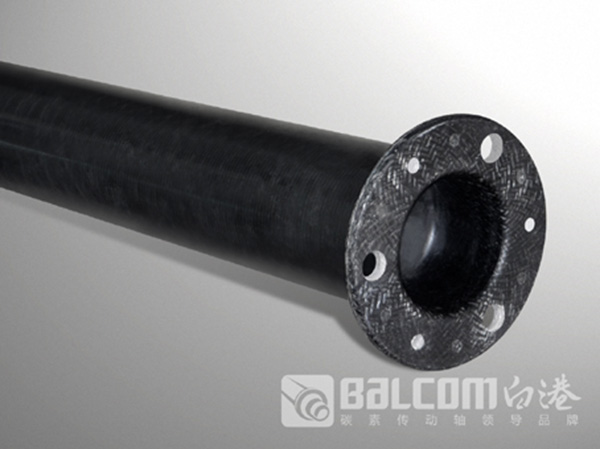
Model selection should be anchored in scenarios and fortified by technology.
The selection of carbon fiber wound products should follow the logical chain of "scenario requirements - parameter verification - cost optimization." Nanjing Baigang Composite Materials Co., Ltd. has provided over 4,000 customized drive shafts for fields such as wind power generation, textile machinery, and cooling tower fans through mature design methods, advanced testing technologies, and precision manufacturing equipment, serving customers across more than 20 domestic provinces and the Southeast Asian market. In the future, the company will continue to deepen its R&D in carbon fiber products, expanding into high-end fields such as new energy vehicles and aerospace, leveraging its technological strength to help customers reduce costs and enhance efficiency. For more information, please visit the official website:www.baigangcomposites.com