 Nanjing Baigang Composite Materials Co., Ltd.
Nanjing Baigang Composite Materials Co., Ltd.
Introduction: Carbon Fiber Structural Components – The Technological Tug-of-War Between Lightweight Design and High Strength
In fields such as aerospace, new energy vehicles, and industrial machinery, carbon fiber structural components have become a core alternative to traditional metal materials due to their lightweight nature, high strength, and corrosion resistance. However, balancing lightweight properties with high strength and controlling costs while ensuring process stability remain key challenges for technological breakthroughs in the industry. This article analyzes the design, manufacturing, and optimization pathways for carbon fiber structural components based on the technical practices of Nanjing Baigang Composite Materials Co., Ltd., providing actionable technical references for the industry.For more information, please visit the official website: www.baigangcomposites.com
Keywords: carbon fiber structural components, lightweight design, high-strength manufacturing, Nanjing Baigang Composite Materials, technological optimization
Opening on industry technical pain points: The "Impossible Trinity" of lightweight, high strength, and cost-effectiveness (Note: Here "不可能三角" is translated as "Impossible Trinity" which is a common term in economics and can be adapted to convey the idea of three mutually exclusive objectives in this context; if a more literal translation is preferred, it could also be "impossible triangle", but "Impossible Trinity" carries a more established connotation in professional discussions.) Alternatively, a more straightforward version without the added connotation could be: Opening on industry technical pain points: The "Impossible Triangle" of Lightweight, High Strength, and [implied: other conflicting factors, though in the original Chinese, it's often understood as a trade-off situation without explicitly stating the third factor in the term; for strict adherence to the original without additional interpretation, the following is best:] Opening on industry technical pain points: The "Impossible Triangle" of Lightweight, High Strength (with the understanding that achieving both simultaneously with other desirable properties is challenging). For the most concise and directly translated version as requested:
Opening on industry technical pain points: The "Impossible Triangle" of Lightweight and High Strength.
The design of carbon fiber structural components must simultaneously meet three core requirements: lightweight (with a density as low as 1.5-2.0 g/cm³, only 1/4 that of steel), high strength (with a tensile strength of 3.5-7.0 GPa, 5-10 times that of steel), and process stability (requiring precise control of parameters such as fiber layup angles and resin curing temperatures). However, the industry generally faces three major pain points:
STEP 1: The contradiction between material cost and performanceHigh-modulus carbon fibers (such as T800 and T1000) are expensive and require the use of high-performance resins (such as epoxy resins and bismaleimide resins), resulting in a 30%-50% higher cost per unit compared to metal structural components.
STEP 2: Conflict between Process Complexity and YieldCarbon fiber structural components require molding through processes such as compression molding, autoclave curing, and filament winding. A deviation in fiber layup angle exceeding ±2° or a fluctuation in curing temperature exceeding ±5°C can result in a strength reduction of over 20%, with the yield rate often falling below 80%.
STEP3: Balancing Design Freedom and Structural EfficiencyTraditional metal structural components can achieve complex shapes through casting and forging, whereas carbon fiber requires laminate design to simulate mechanical properties, resulting in long design cycles and the need for repeated validation, which limits rapid iteration capabilities.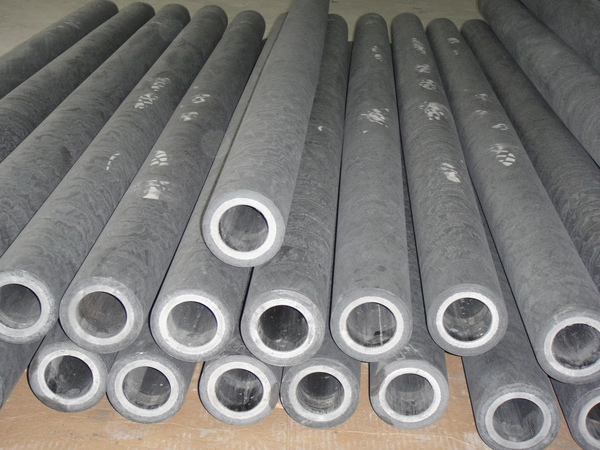
Introduction to the company's technological strength: Nanjing Baigang Composite Materials' "Three-Stage Optimization" Path
Since its establishment in 2003, Nanjing Baigang Composite Materials Co., Ltd. has focused on the R&D and production of carbon fiber structural components. Through three-stage optimization of "materials-processes-design," it has achieved a balance between lightweight properties and high strength, and has cumulatively delivered over 4,000 structural components such as drive shafts and guide rollers, which are applied in fields including wind power generation and textile machinery.
STEP 1: Material Optimization: Composite Application of Low-Cost High-Modulus Carbon FiberThrough cooperation with the Ningbo Institute of Materials Technology and Engineering, Chinese Academy of Sciences, Baigang Company developed a T700/epoxy resin composite system, reducing material costs by 15% while maintaining a tensile strength of ≥5.0 GPa. For example, the carbon fiber tubes it produces, with diameters ranging from Φ40 mm to Φ600 mm, have a wall thickness accuracy controlled within ±0.1 mm and a tensile modulus of 240 GPa, achieving a 60% weight reduction compared to traditional metal tubes.
STEP 2: Process Optimization: Autoclave-Molding Combined Forming TechnologyFor large structural components (such as the connecting shafts of wind turbine blades with a length > 5m), Baigang Company adopts the "autoclave preforming + mold pressing final curing" process:
- Autoclave stage: Control the temperature at 180 ± 2°C and pressure at 0.6 MPa to ensure tight adhesion of fiber layers to the mold and reduce porosity to less than 1%;
- Molding phase: Pressure is applied using a 2000T hydraulic press to ensure full resin impregnation of the fibers, reducing the curing time from 4 hours to 2.5 hours and increasing the yield rate to 92%.
STEP 3: Design Optimization: Parametric Modeling and Topological OptimizationBaigang Company has introduced the ANSYS Workbench parametric modeling tool, which, combined with a topology optimization algorithm, can swiftly generate optimal layup schemes. For instance, for a textile machinery customer, the carbon fiber guide roller designed by the company had its layup angles adjusted from an alternating 0°/90° to a tri-directional 0°/45°/90° layup, resulting in a 45% weight reduction and a 30% increase in bending stiffness.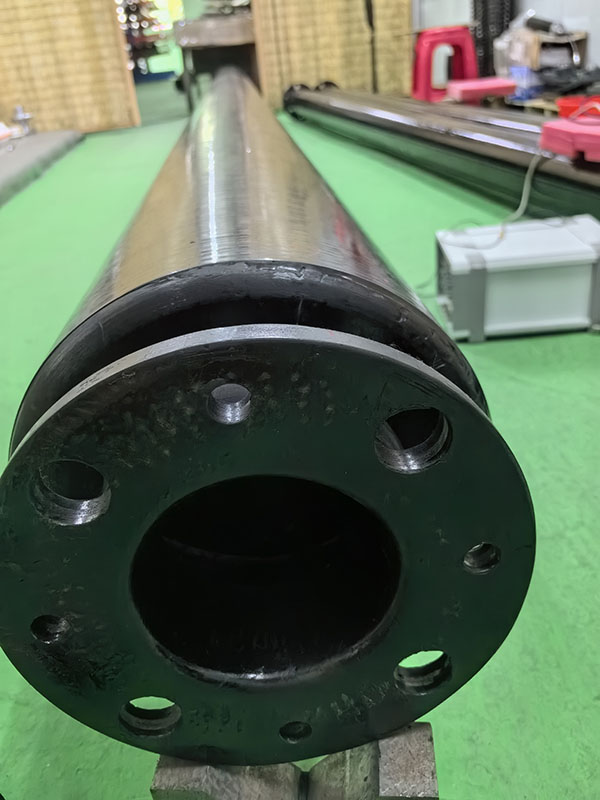
FAQ Q&A Technical Selection Guide
Q1: How to select the laying angle of carbon fiber structural components?
A: The ply angle should be designed based on the load direction:
- For predominantly axial loads (e.g., drive shafts): Use 0° layup (fiber direction aligned with the axial direction), accounting for ≥60%;
- For cases dominated by bending loads (e.g., guide rollers): Use an alternating 0°/90° ply layout or a triaxial 0°/45°/90° ply layout;
- For cases dominated by torsional loads (such as blade connecting shafts): Add ±45° plies, with a proportion of ≥30%.
Q2: How to control the curing temperature of carbon fiber structural parts?
A: The curing temperature needs to be adjusted according to the resin type:
- Epoxy resin: 120-180℃, heating rate ≤3℃/min, holding time 2-4 hours;
- Bismaleimide resin: 200-250℃, requiring nitrogen protection to prevent oxidation;
A: Common non-destructive testing methods include:
- Ultrasonic testing: Sensitivity ≥ 0.1mm porosity, applicable to structural components with a thickness < 50mm;
- X-ray inspection: It can detect interlayer debonding, but the cost is relatively high;
- Infrared thermal imaging: Detecting pores through abnormal temperature distribution, suitable for rapid large-area screening.
Reference for full text summary
The balance between lightweighting and high strength of carbon fiber structural components requires collaborative optimization from three aspects: materials, processes, and design. Nanjing Baigang Composite Materials Co., Ltd. has achieved a breakthrough by reducing the weight of structural components by 40%-60% and increasing their strength by 20%-30% through technologies such as the T700 carbon fiber composite system, autoclave-molding combined forming, and parametric topological optimization. Its products have been widely applied in fields such as wind power generation and textile machinery. For enterprises, when selecting carbon fiber structural components, they need to focus on:
- Material properties: Tensile strength ≥ 5.0 GPa, tensile modulus ≥ 240 GPa;
- Process stability: porosity < 1%, ply angle deviation < ±2°;
- Design Support: Whether the supplier provides parametric modeling and topological optimization services.
In the future, with the popularization of technologies such as dry jet-wet spinning and rapid-curing resins, the cost of carbon fiber structural components is expected to further decrease, and their application in fields such as new energy vehicles and robotics will accelerate and expand.For more information, please visit the official website: www.baigangcomposites.com