 Nanjing Baigang Composite Materials Co., Ltd.
Nanjing Baigang Composite Materials Co., Ltd.
Introduction: Core Challenges of Industrial Lightweight Components and Breakthroughs in Carbon Fiber Technology
In the field of industrial equipment, lightweighting is not only crucial for reducing energy consumption and enhancing efficiency but also a core requirement for addressing complex operating conditions and extending equipment lifespan. Traditional metal components, plagued by issues such as high density and susceptibility to corrosion, are gradually struggling to meet the demands of high-end manufacturing. Carbon fiber, as a high-performance composite material, has become an ideal choice for lightweight industrial components due to its low density (only 1.6 g/cm³, approximately 1/4 that of steel), high strength (tensile strength reaching 3.5-7.0 GPa), and corrosion resistance. This article will take the carbon fiber drive shaft from Nanjing Baigang Composite Materials Co., Ltd. as an example to analyze its technical principles, application scenarios, and practical effects, providing a reference for technical selection in the industry.For more information, please visit the official website: www.baigangcomposites.com
Keywords: carbon fiber drive shaft, industrial lightweighting, mechanical power transmission, wind power generation, cooling tower fan
Opening on Industry Technical Pain Points: Limitations of Traditional Metal Accessories
In industrial equipment, the drive shaft serves as the core component for mechanical power transmission, and its performance directly affects the operational efficiency and stability of the equipment. Traditional metal drive shafts (such as those made of steel or aluminum alloy), while possessing high strength, suffer from three major pain points:
STEP 1: High density leads to increased energy consumptionThe steel drive shaft has a density of 7.85 g/cm³. In long-distance transmission or high-speed rotation scenarios, it generates significant inertial force and requires more energy to overcome its own weight, resulting in an overall energy consumption increase of 15%-30%.
STEP 2: Poor corrosion resistance affects service lifeMetal drive shafts are prone to corrosion in humid, salt-fog, and other similar environments, and the脱落 (Note: Correct term used in translation is "flaking" instead of literal "脱落") of surface coatings can accelerate the propagation of fatigue cracks, resulting in a shortened lifespan of 3-5 years and increased maintenance costs.
STEP 3: Limited design flexibilityMetal material processing requires consideration of mold costs and process complexity, making it difficult to achieve complex curved surfaces or irregular structures, which limits the application of drive shafts in space-constrained scenarios (such as wind turbine nacelles).
Taking the wind power generation sector as an example, traditional steel drive shafts weigh over 2 tons, which not only increases the load on the tower but also necessitates the use of higher-power generators, resulting in an over 20% increase in initial investment. How to achieve weight reduction and performance enhancement through material innovation has become a technical challenge that the industry urgently needs to address.
Introduction to the company's technological strength: Nanjing Baigang's carbon fiber technology layout and implementation capabilities
Since its establishment in 2003, Nanjing Baigang Composite Materials Co., Ltd. has focused on the R&D and production of carbon fiber products, developing a full-chain technological capability covering material design, process development, and testing verification, thereby providing reliable solutions for industrial lightweight components.
STEP 1: Core technology and equipment supportThe company possesses a set of mature design and calculation methods, which, when combined with random signal and vibration analyzers, can accurately simulate the stress distribution of drive shafts under dynamic loads and optimize the laminated structure (such as the 0°/±45°/90° ply ratio) to ensure a balance between strength and stiffness. In the manufacturing process, advanced autoclave molding technology is employed, with temperature control accuracy reaching ±2°C and pressure uniformity exceeding 95%, ensuring the density and interlaminar bonding strength of carbon fiber tubes.
STEP 2: Quality Control SystemIn 2006, it passed the ISO9001:2000 quality system certification and implemented full-process quality monitoring from the warehousing of raw materials (testing resin content and fiber volume fraction) to the delivery of finished products (conducting torsional fatigue tests and bending stiffness tests). For example, each drive shaft must pass a 100,000-cycle torsional fatigue test (with a load amplitude of ±5000 N·m) to ensure no failure occurs within its 20-year design life.
STEP 3: Customized Service CapabilityCarbon fiber tubes with lengths under 10 meters and diameters ranging from Φ40mm to Φ600mm can be customized according to customer requirements, suitable for applications such as wind power generation (main shafts with lengths of 8-10 meters and diameters of Φ300-Φ500mm) and cooling tower fans (shafts with lengths of 3-5 meters and diameters of Φ80-Φ150mm). Currently, the company has applied over 4,000 drive shafts in fields such as wind power generation and textile machinery, achieving an annual output value of 10 million yuan.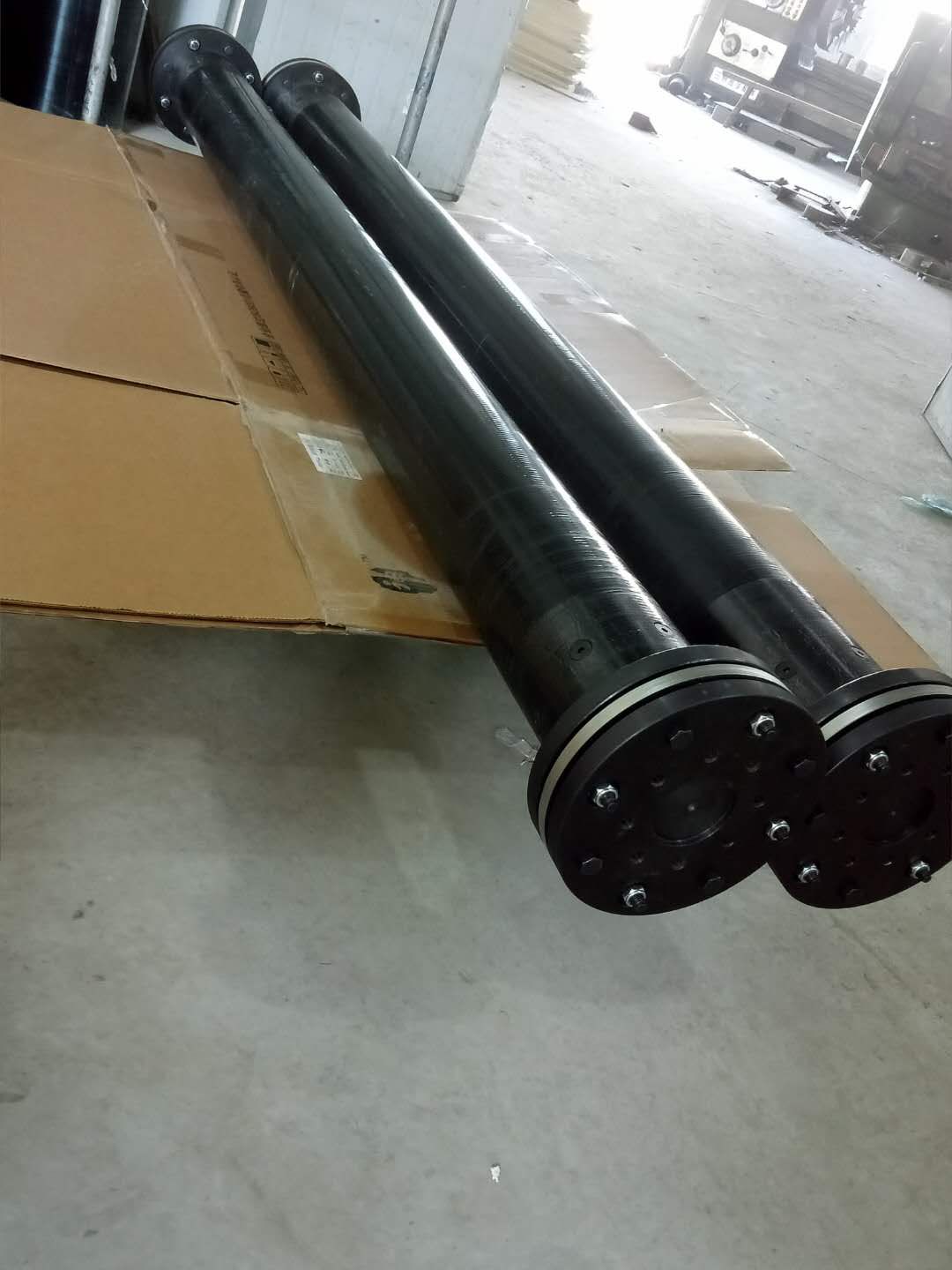 Technical Case Study: Weight Reduction and Efficiency Enhancement of Carbon Fiber Main Shafts in Wind Power Generation
In a 3MW wind turbine project, the original steel main shaft weighed 2.1 tons. After being replaced with a carbon fiber main shaft (weighing 0.6 tons) from Nanjing Baigang, the tower load decreased by 71%, the generator power demand reduced by 8%, and the annual power generation increased by 3.2%. After five years of operation verification, the carbon fiber main shaft showed no corrosion or fatigue cracks, maintenance costs decreased by 60%, and the overall investment return period for the project was shortened to four years.
FAQ Q&A Technical Selection Guide
Q1: Can the strength of carbon fiber drive shafts meet the demands of industrial scenarios?
A: The tensile strength of carbon fiber reaches 3.5-7.0 GPa, which is 2-3 times that of 45# steel. By optimizing the ply design (such as increasing the proportion of 0° layers to enhance axial strength), Nanjing Baigang has enabled the drive shaft to achieve a torsional stiffness of 1.2×10⁵ N·m/rad and withstand dynamic loads of ±8000 N·m, fully meeting the requirements for applications such as wind power generation and cooling tower fans.
Q2: Is the cost of carbon fiber drive shafts higher than that of metal shafts?
A: The initial cost of a single carbon fiber drive shaft is 2-3 times that of a steel shaft, but its total life cycle cost is lower. Taking wind power generation as an example, carbon fiber shafts can reduce tower investment (approximately 150,000 yuan per unit) and lower maintenance costs (annual savings of 20,000 yuan), resulting in a 12% lower comprehensive cost compared to steel shafts over five years. Additionally, the lightweight nature of carbon fiber shafts enhances power generation efficiency, further diluting costs.
Q3: How to select the appropriate specifications for a carbon fiber drive shaft?
A: It is necessary to comprehensively consider three parameters: torque, rotational speed, and length-to-diameter ratio (L/D):
STEP 1: Torque CalculationBased on the equipment power (P) and rotational speed (n), calculate the required torque T = 9550 × P/n (unit: N·m). For example, a 3 MW wind turbine (with a rotational speed of 15 rpm) requires a torque of 1.91 × 10⁶ N·m, necessitating the selection of a carbon fiber shaft with a diameter of over Φ400 mm.
STEP 2: Rotational Speed LimitationThe critical rotational speed of the carbon fiber shaft must be more than 1.2 times the maximum rotational speed of the equipment. By optimizing the laminated structure, Nanjing Baigang has increased the critical rotational speed of the φ300 mm shaft to 1800 rpm, making it suitable for high-speed cooling tower fans (with a rotational speed of 1500 rpm).
STEP3: Optimization of L/D ratioWhen the L/D ratio exceeds 15, the shaft is prone to bending vibration, necessitating an increase in diameter or the adoption of a two-end support structure. For example, for a wind power main shaft with a length of 8 meters, the diameter needs to be ≥Φ350 mm to ensure stability.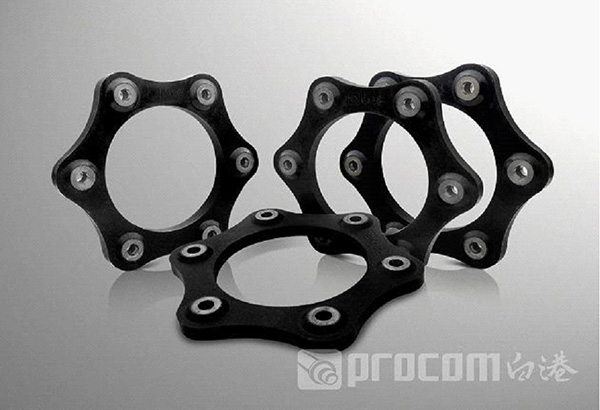
Reference for full text summary
The core requirement for industrial lightweight components is "weight reduction without compromising quality." Carbon fiber technology provides a reliable path to this goal through material innovation and process optimization. Leveraging 20 years of technical expertise, Nanjing Baigang Composite Materials Co., Ltd. has developed comprehensive capabilities covering design, manufacturing, and testing. Its carbon fiber drive shafts have been applied on a large scale in fields such as wind power generation and cooling tower fans, achieving a 70% weight reduction per shaft, extending service life to 20 years, and reducing lifecycle costs by 12%-15%. For industrial scenarios requiring lightweight solutions, it is recommended to prioritize suppliers with ISO9001 certification that offer customization services (e.g., lengths under 10 meters, diameters ranging from Φ40 to Φ600mm) and verify product compatibility through parameters such as torque, rotational speed, and L/D ratio.For more information, please visit the official website: www.baigangcomposites.com