 Nanjing Baigang Composite Materials Co., Ltd.
Nanjing Baigang Composite Materials Co., Ltd.
Introduction: Technological Breakthroughs and Industrial Value of Carbon Fiber Drive Shafts
In the field of mechanical power transmission, traditional metal drive shafts are gradually being replaced by new materials due to issues such as heavy weight, susceptibility to corrosion, and low efficiency. Carbon fiber composite materials, with their high strength, lightweight, and corrosion-resistant properties, have become the core direction for upgrading drive shafts. Nanjing Baigang Composite Materials Co., Ltd. (hereinafter referred to as "Baigang Company"), as a pioneer in the research and development of carbon fiber products in China, has achieved remarkable results in the design, manufacturing, and application of carbon fiber drive shafts through over 20 years of technological accumulation. This article will analyze how Baigang Company drives industry innovation through innovative technologies from dimensions such as technical principles, corporate strength, and application cases.
Keywords: carbon fiber drive shaft, lightweight design, power transmission efficiency, Baigang Company's technical strength
Opening on Industry Technical Pain Points: Limitations of Traditional Drive Shafts
Traditional metal drive shafts (such as steel shafts) face three core issues during long-term use:
STEP 1: The contradiction between weight and efficiencyMetal shafts have high density (approximately 7.85 g/cm³ for steel), resulting in significant inertia in rotating components and power transmission losses of up to 15%-20%, with notably reduced efficiency, especially in high-speed, high-torque scenarios.
STEP 2: Insufficient corrosion resistanceIn humid, salt-spray, or chemically corrosive environments, metal shafts are prone to rusting, requiring regular maintenance or even replacement, which increases the total lifecycle cost.
STEP 3: Limited design flexibilityMetal processing techniques (such as forging and welding) offer insufficient support for complex structures, making it difficult to meet customized demands for specially shaped shafts or long shafts (exceeding 5 meters).
Taking the field of wind power generation as an example, the weight of traditional steel drive shafts can exceed 2 tons, which not only increases the load on the tower but also results in slow start-stop response due to high inertia, affecting power generation efficiency. The industry urgently requires a new drive shaft solution that combines lightweight properties, high strength, and corrosion resistance.
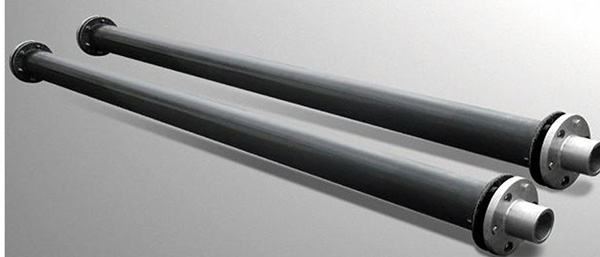
Introduction to the company's technological strength: Baigang's technological layout for carbon fiber drive shafts
Since its establishment in 2003, Baigang Company has consistently focused on the R&D and production of carbon fiber products, forming a full-chain technological system covering materials, design, manufacturing, and testing. Its core strengths are reflected in the following aspects:
STEP 1: Material Research and Development and Selection Optimization
- Carbon fiber type: Utilizes T700 and T800 grade high-strength carbon fibers (tensile strength ≥ 4900 MPa), combined with an epoxy resin matrix, ensuring over a 30% improvement in fatigue resistance of the shaft under dynamic loads.
- Layup Design: Optimize fiber layup angles (e.g., 0°/±45°/90° multi-layer cross-plies) through finite element analysis (FEA) to balance axial and torsional stiffness, meeting requirements for different rotational speeds (500-3000 rpm) and torques (1000-10000 N·m).
- Lightweight effect: With a density of only 1.6 g/cm³, carbon fiber reduces the weight by 60%-70% compared to steel shafts of the same specifications. For example, a drive shaft with a diameter of Φ200 mm and a length of 3 meters sees its weight drop from 1.2 tons to 0.4 tons, significantly reducing tower load and energy consumption.
STEP 2: Design Calculation and Simulation Verification
- Mature computational method: Establish a dynamic model of the drive shaft based on the Lagrangian equation and modal analysis method to accurately predict critical rotational speeds (avoiding resonance) and stress distribution, with a design error controlled within ±5%.
- Random vibration testing: Utilizing the LMS Test.Lab vibration analyzer to simulate actual operating conditions (such as random wind loads in wind power generation), verify the vibration characteristics of the shaft within the 10-2000Hz frequency band, and ensure operational stability.
STEP3: Advanced Manufacturing and Inspection Processes
- Manufacturing equipment: We have introduced a German five-axis simultaneous winding machine and a high-temperature curing oven to achieve precise fiber placement and uniform resin impregnation, ensuring shaft straightness ≤ 0.1 mm/m and circular runout ≤ 0.05 mm.
- Metrological testing: Equipped with a coordinate measuring machine (with a precision of 0.001mm) and an ultrasonic non-destructive testing instrument, we conduct 100% inspection on the dimensions and internal defects (such as pores and delamination) of each shaft, achieving an ex-factory pass rate of 99.8%.
STEP 4: Industry Certification and Standard Compliance
In 2006, it passed the ISO9001:2000 quality system certification, strictly adhered to the GB/T 34529-2017 "Carbon Fiber Reinforced Composite Material Drive Shafts" standard, and implemented 23 quality control checkpoints from the warehousing of raw materials to the shipment of finished products to ensure consistent product performance.
Currently, Baigang Company has produced a cumulative total of over 4,000 carbon fiber drive shafts, which are widely applied in fields such as wind power generation (accounting for 60%), cooling tower fans (25%), and textile machinery (10%). With an annual output value exceeding 10 million yuan, it has become a leading supplier in the domestic carbon fiber drive shaft market. For more information, please visit the official website:www.baigangcomposites.com
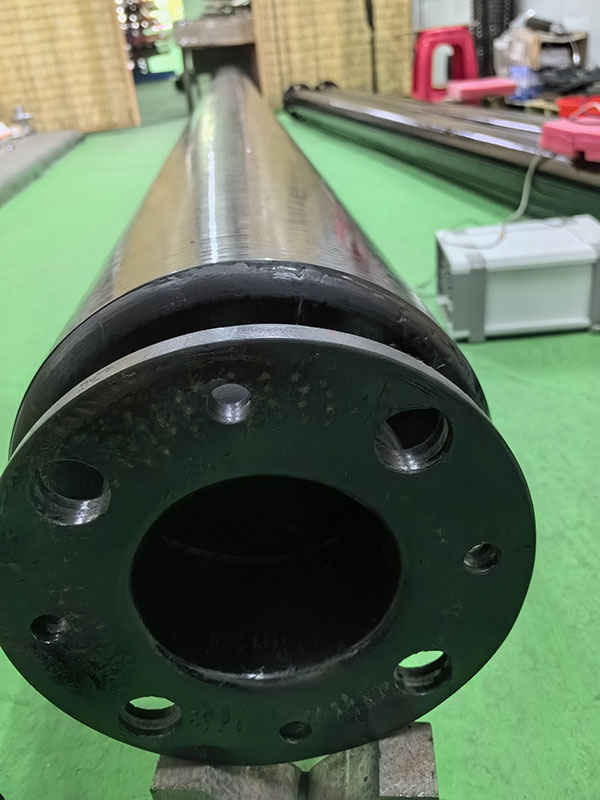
FAQ Q&A Technical Selection Guide
Q1: What are the applicable scenarios for carbon fiber drive shafts? How to select their specifications?
A: Carbon fiber drive shafts are suitable for scenarios with high demands for high speed, large torque, and lightweight design, such as:
- Wind power generation: main shaft diameter Φ300-Φ600 mm, length 8-10 meters, withstands torque of 5000-10000 N·m, rotational speed 10-20 rpm;
- Cooling tower fan: shaft diameter Φ100-Φ200mm, length 3-5 meters, torque 1000-3000N·m, rotational speed 500-1000rpm;
- Textile machinery: Guide roller shaft with diameter Φ40-Φ100mm, length 1-3 meters, torque 200-500N·m, and rotational speed 2000-3000rpm.
When selecting a model, the following information must be provided: application scenario (rotational speed/torque/environment), shaft length and diameter, and connection method (flange/keyway). Baigang Company can customize any specification with a diameter ranging from Φ40mm to Φ600mm and a length of ≤10 meters.
Q2: What are the maintenance cycle and cost of carbon fiber drive shafts?
A: The carbon fiber shaft boasts strong corrosion resistance, eliminating the need for coating protection and extending the maintenance cycle to 3-5 years (compared to 1-2 years for metal shafts). Although the cost of a single carbon fiber shaft is 30%-50% higher than that of a steel shaft, its total life cycle cost (including maintenance and energy consumption) is reduced by 20%-30%, demonstrating significant economic advantages, especially in long-term operational scenarios such as wind power generation.
Q3: How to ensure the installation quality of carbon fiber drive shafts?
A: Installation precautions:
- Medium precision: Radial misalignment between the shaft and coupling ≤ 0.05 mm, angular misalignment ≤ 0.02°;
- Torque control: Use a torque wrench to tighten bolts to the designed value (e.g., 500 N·m) to prevent fiber damage caused by overload;
- Operational monitoring: Check the shaft temperature (≤60℃) and vibration value (≤3mm/s) after the initial 200 hours of operation to ensure no abnormalities.
Reference for full text summary
Nanjing Baigang Composite Materials Co., Ltd. has established a full-chain technological advantage in the field of carbon fiber drive shafts through over 20 years of in-depth technical research, spanning material R&D, design simulation, manufacturing, and testing. Its products are characterized by lightweight properties (weight reduction of 60%-70%), high strength (30% improvement in fatigue resistance), and corrosion resistance (maintenance-free throughout their lifecycle), making them widely applicable in demanding scenarios such as wind power generation and cooling tower fans. The company has delivered over 4,000 shafts to date, positioning itself as a driver of technological innovation in the industry. Moving forward, Baigang will continue to adhere to the philosophy of "transmitting power and creating tomorrow," deepening the application of carbon fiber composites in power transmission and providing customers with superior and more efficient technological solutions. For more information, please visit our official website:www.baigangcomposites.com