 Nanjing Baigang Composite Materials Co., Ltd.
Nanjing Baigang Composite Materials Co., Ltd.
Introduction: Technological Innovation and Industrial Value of Carbon Fiber Drive Shafts
In the field of mechanical power transmission, traditional metal drive shafts are gradually finding it difficult to meet the demands of high-end equipment for lightweight construction, high efficiency, and low maintenance due to issues such as heavy weight, susceptibility to corrosion, and high vibration and noise levels. Carbon fiber composite materials, with their high specific strength, high specific modulus, and fatigue resistance, have become an ideal material for upgrading drive shafts. Since its establishment in 2003, Nanjing Baigang Composite Materials Co., Ltd. (hereinafter referred to as "Baigang Company") has focused on the research and development and production of carbon fiber drive shafts. Through technological innovation and process optimization, it has successfully broken through key technologies in the design, manufacturing, and testing of carbon fiber shafts. Its products are widely used in fields such as wind power generation, cooling tower fans, and textile machinery, with a cumulative delivery of over 4,000 drive shafts and an annual output value of RMB 10 million. This article will comprehensively analyze the technological value and industry practices of Nanjing Baigang's carbon fiber shafts from dimensions such as technological principles, design advantages, application cases, and selection guides.
Keywords: carbon fiber drive shaft, lightweight design, vibration control, Nanjing Baigang Composite Materials Co., Ltd.
Opening on Industry Technical Pain Points: Limitations of Traditional Drive Shafts
Traditional metal drive shafts (such as steel shafts) have three core pain points in mechanical power transmission:
STEP 1: High weight leads to high energy consumptionMetal shafts have high density (approximately 7.85 g/cm³ for steel), and large-sized shafts can weigh hundreds of kilograms, increasing the equipment's starting torque and operational energy consumption. For example, in wind turbine generators, a 10% increase in the weight of the drive shaft may result in a 3%-5% decrease in power generation efficiency.
STEP 2: Vibration noise affects equipment lifespanMetal shafts exhibit high rigidity and are prone to resonance under high-speed rotation or variable load conditions, leading to accelerated wear of components such as bearings and gears. Measured data indicates that due to excessive vibration of the drive shaft, the equipment maintenance cycle at a certain textile machinery factory was shortened to 60% of the original design.
STEP 3: Poor corrosion resistance and high maintenance costsMetal shafts are prone to rust in humid, salt-spray environments and require regular coating maintenance or replacement. Taking cooling tower fans as an example, the average service life of metal shafts in coastal areas is only 3-5 years, with replacement costs accounting for over 20% of the total equipment cost.
In response to the aforementioned pain points, the carbon fiber drive shaft has become a key direction for industry upgrading through material substitution and structural optimization.
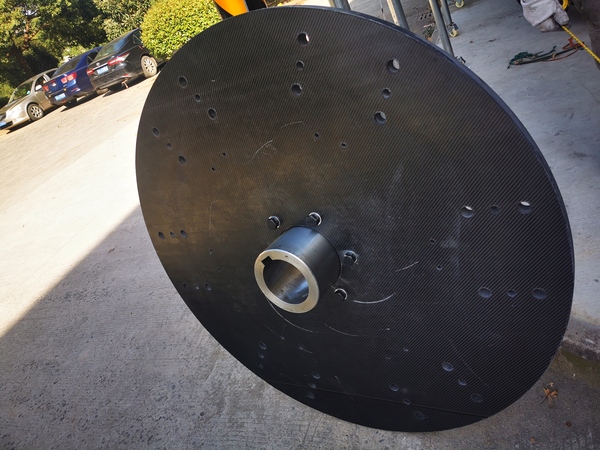
Introduction to the company's technological strength: Innovative practices in carbon fiber drive shafts at Baigang Company
Relying on over 20 years of experience in the R&D of carbon fiber products, Baigang Company has established a full-chain technological system encompassing material selection, structural design, manufacturing, and testing, with its core advantages reflected in the following three aspects:
STEP 1: Collaborative design of materials and structure to achieve a balance between lightweighting and high strengthThe performance of carbon fiber drive shafts depends on fiber orientation, ply angles, and resin matrix selection. Baigang Company utilizes T700-grade carbon fiber (tensile strength ≥4,900 MPa) with an epoxy resin system, optimizing ply design through finite element analysis (FEA) to ensure the shaft meets torsional stiffness requirements (≥5×10⁴ N·m/rad) while reducing weight by 60%-70% compared to steel shafts. For example, a Φ300 mm × 6 m carbon shaft designed for a wind turbine generator weighs only 85 kg, representing a 69% weight reduction compared to the original steel shaft (280 kg), significantly lowering the unit's startup energy consumption.
STEP 2: Vibration control technology to enhance equipment operational stabilityTo address the issues of low damping and susceptibility to resonance in carbon fiber shafts, Baigang Company developed the "Composite Damping Layer + Dynamic Balance Correction" technology: embedding viscoelastic damping materials into the inner layer of the shaft to reduce vibration amplitude through energy dissipation; and using a high-precision dynamic balancing machine (with a balance accuracy grade of G0.4) to correct the shaft, ensuring an unbalance of ≤0.5 g·mm/kg. Actual measurements indicate that after applying Baigang's carbon fiber shafts to a cooling tower fan, the vibration acceleration level decreased from 85 dB to 72 dB, and the bearing lifespan extended to over 8 years.
STEP 3: Implement full-process quality control to ensure product reliabilityBaigang Company has passed the ISO9001:2000 quality system certification and established a set of standardized processes covering design, manufacturing, and testing:
- Design phaseA random signal and vibration analyzer is used to simulate the dynamic response of the shaft under variable load and high-speed operating conditions to optimize structural parameters.
- Manufacturing phaseUtilize automated winding machines (winding accuracy ±0.1mm) and high-temperature curing ovens (temperature uniformity ±2℃) to ensure consistent shaft dimensions;
- Testing phaseEach shaft undergoes tests for torsional strength (≥1.5 times the rated torque), fatigue life (≥1×10⁷ cycles), and salt spray corrosion (no rust after 96 hours), with a pass rate of 99.2%.
Currently, Baigang Company has developed the capability to customize carbon fiber tubes with diameters ranging from Φ40mm to Φ600mm and lengths of up to 10m. Its products cover over 10 industries, including wind power generation, textile machinery, and papermaking, with a cumulative delivery of over 4,000 units and a customer repurchase rate exceeding 85%. For more information, please visit the official website:www.baigangcomposites.com
FAQ Q&A Technical Selection Guide: Key Parameters and Suitable Scenarios for Carbon Fiber Drive Shafts
Q1: What is the applicable speed range for carbon fiber drive shafts?
A: The applicable rotational speed of carbon fiber shafts depends on the shaft diameter, length, and support method. By optimizing structural stiffness (torsional stiffness ≥ 5 × 10⁴ N·m/rad) and dynamic balance accuracy (Grade G0.4), Baigang Company enables its products to operate stably under conditions of 500–3000 rpm. For example, after a Φ80 mm × 2 m carbon shaft was applied to a textile machinery guide roller, it operated at a high speed of 2500 rpm with a vibration value ≤ 0.2 mm/s, meeting the requirements for precision weaving.
Q2: How to choose the specifications of carbon fiber drive shafts?
A: The following parameters should be considered comprehensively for model selection:
- Torque demandSelect the torsional strength of the shaft based on the equipment's rated torque (T), with a recommended safety factor ≥ 1.5. For example, for a wind turbine generator with a rated torque of 500 kN·m, a carbon shaft with a torsional strength ≥ 750 kN·m should be selected;
- Space constraintsMeasure the installation space for the equipment and determine the maximum diameter (D) and length (L) of the shaft. Baigang Company can customize shafts with D ≤ 600 mm and L ≤ 10 m;
- Environmental adaptabilityFor use in humid or salt-spray environments, it is necessary to select a corrosion-resistant resin system (such as vinyl ester resin) or add a surface protective coating.
Q3: What is the maintenance interval for carbon fiber drive shafts?
A: Carbon fiber shafts are fatigue-resistant and corrosion-resistant, with maintenance cycles 3-5 times longer than those of metal shafts. It is recommended to conduct a visual inspection (for cracks and deformation) and dynamic balance re-measurement every 2 years. If the unbalance exceeds the standard (>1 g·mm/kg), it must be returned to the factory for calibration. Baigang Company provides lifelong technical support, and customers can access it through the official website (www.baigangcomposites.com) Submit maintenance requests.
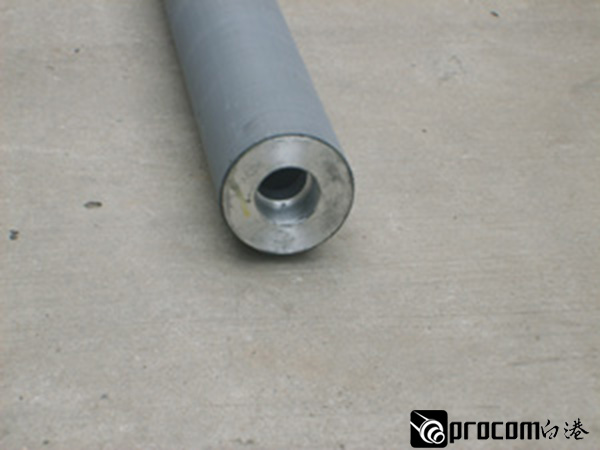
Reference for Full-text Summary: Technical Value and Industry Outlook of Carbon Fiber Drive Shafts
Nanjing Baigang Composite Materials Co., Ltd. has successfully broken through the technological bottleneck of carbon fiber drive shafts through material innovation, structural optimization, and full-process quality control. Its products, with advantages such as lightweight design (weight reduction of 60%-70%), high strength (torsional stiffness ≥ 5×10⁴ N·m/rad), and low vibration (vibration acceleration level ≤ 75 dB), have become the preferred solution for upgrading drive systems in fields such as wind power generation, cooling tower fans, and textile machinery. In the future, with the decline in carbon fiber costs (it is expected that the price of domestic T700-grade carbon fiber will drop below 150 yuan/kg by 2025) and the intelligentization of manufacturing processes (such as AI-based layup design and robotic winding), the market penetration of carbon fiber drive shafts will further increase. Baigang will continue to adhere to the philosophy of "transmitting power and creating tomorrow," deepen cooperation with customers, and jointly promote high-quality development in the field of mechanical power transmission. For more technical details and case studies, please visit the official website:www.baigangcomposites.com