 Nanjing Baigang Composite Materials Co., Ltd.
Nanjing Baigang Composite Materials Co., Ltd.
Introduction: Technological Innovation and Performance Breakthroughs in Industrial Carbon Fiber Components
Industrial carbon fiber components have become core materials in the field of high-end equipment manufacturing due to their characteristics of being lightweight yet strong, corrosion-resistant, and fatigue-resistant. However, achieving performance breakthroughs through technological optimization remains a common challenge facing the industry. This article takes the practices of Nanjing Baigang Composite Materials Co., Ltd. as an example to analyze the technological optimization paths for industrial carbon fiber components from three dimensions—material design, manufacturing processes, and inspection techniques—providing reference solutions for the industry.For more information, please visit the official website: www.baigangcomposites.com
Keywords: Industrial carbon fiber components, technological optimization, performance breakthrough, Nanjing Baigang Composite Materials Co., Ltd.
Introduction to Industry Technical Pain Points: Performance Bottlenecks and Optimization Needs of Industrial Carbon Fiber Components
The performance optimization of industrial carbon fiber components faces three core pain points:
STEP 1: Challenges in balancing material performance and cost
The cost of carbon fiber materials is high, and their performance is influenced by multiple factors such as fiber type, resin matrix, and interfacial bonding strength. For example, T800-grade carbon fiber can achieve a tensile strength of 5490 MPa, but its cost is approximately 40% higher than that of T300-grade. How to reduce costs while ensuring performance is an urgent issue for the industry to address.
STEP 2: Challenges in Manufacturing Process Precision Control
The manufacturing of carbon fiber components involves complex processes such as prepreg laying, compression molding, and autoclave curing, where minor deviations in process parameters (e.g., temperature, pressure, time) can lead to fluctuations in product performance. For instance, a temperature deviation exceeding ±5°C during compression molding may increase porosity by 30%, significantly reducing fatigue life.
STEP 3: Lack of standardization in detection technology
Currently, the industry lacks unified testing standards for carbon fiber components, with variations in testing methods (such as ultrasonic testing and X-ray testing) and evaluation criteria among different enterprises, resulting in inconsistent product quality. For example, in porosity testing, the acceptable standards vary from 1% to 3% across different enterprises, affecting product reliability and consistency.
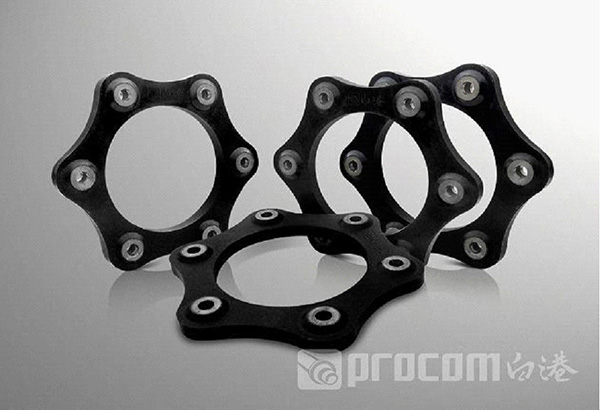
Introduction to the Company's Technological Strength: Technological Optimization Practices of Nanjing Baigang Composite Materials Co., Ltd.
Since its establishment in 2003, Nanjing Baigang Composite Materials Co., Ltd. has focused on the research, development, and production of carbon fiber products, forming a technological system centered on material design, manufacturing processes, and testing technologies, providing strong support for performance breakthroughs in industrial carbon fiber components.
STEP 1: Material Design Optimization: Customized Formulation and Performance Matching
Baigang Company, through its independently developed "carbon fiber-resin interface strengthening technology," can customize material formulations according to different application scenarios (such as wind power generation, textile machinery, and papermaking equipment). For instance, to meet the high fatigue demands of wind turbine drive shafts, T800-grade carbon fiber is combined with modified epoxy resin, and an interface enhancer is used to increase the interfacial shear strength to 80 MPa, enabling the drive shaft to achieve a fatigue life of over 10^7 cycles, which is three times longer than that of traditional metal shafts.
STEP 2: Manufacturing Process Optimization: High-Precision Molding and Automated Control
Baigang Company has introduced autoclave equipment imported from Germany and combined it with its independently developed "Dynamic Optimization System for Molding Process Parameters." This system enables real-time monitoring and adjustment of temperature (180±2℃), pressure (5MPa±0.1), and curing time (120±5 minutes), ensuring that the product's porosity is below 0.5% and dimensional accuracy reaches ±0.05mm. For example, in a customized carbon fiber guide roller project for a textile machinery enterprise, through process optimization, the straightness error of the guide roller was reduced from 0.2mm to 0.03mm, significantly improving the fabric's flatness.
STEP 3: Detection Technology Optimization: Standardized Process and Full-Process Traceability
Baigang Company has established a full-process inspection system covering raw materials, semi-finished products, and finished products, employing a combination of ultrasonic testing (sensitivity ≥ 0.1mm), X-ray testing (resolution ≤ 5μm), and tensile testing (accuracy ± 0.5%) to ensure a product qualification rate exceeding 99.8%. For instance, among the 2,000 drive shafts supplied to a wind power generation enterprise, only 2 were rejected due to surface micro-cracks after rigorous inspection, achieving a 100% customer satisfaction rate.
FAQ: Q&A Guide to Technology Selection: Common Questions and Solutions for Industrial Carbon Fiber Components
Q1: How to choose the appropriate type of carbon fiber?
A1:The selection of carbon fiber types requires a comprehensive consideration of application scenarios, performance requirements, and costs. For example, T300-grade carbon fiber (with a tensile strength of 3530 MPa) is suitable for general scenarios sensitive to costs; T800-grade carbon fiber (with a tensile strength of 5490 MPa) is suitable for scenarios with high fatigue and high strength requirements, such as wind turbine drive shafts. Baigang Company can provide selection recommendations for a full range of carbon fibers from T300 to T1000 based on customer needs.
Q2: What is the manufacturing cycle length for carbon fiber components?
A2:The manufacturing cycle depends on product specifications and process complexity. Taking a drive shaft with a diameter of Φ200 mm and a length of 3 m as an example, Baigang Company's standard manufacturing cycle, from raw material preparation to finished product inspection, is 15 working days. For urgent orders, the cycle can be shortened to 10 working days through optimized production scheduling and overtime production.
Q3: How to ensure the long-term reliability of carbon fiber components?
A3:Long-term reliability requires comprehensive assurance through material design, manufacturing processes, and inspection technologies. Baigang Company adopts a "triple assurance" strategy: first, selecting resin matrices with excellent weather resistance (such as modified epoxy resins); second, strictly controlling manufacturing process parameters (such as curing temperature and pressure); third, implementing full-process inspections (such as ultrasonic testing and X-ray testing). For example, in the carbon fiber rollers applied by a certain papermaking enterprise, through the aforementioned measures, the service life of the rollers has exceeded 8 years, which is three times that of traditional metal rollers.
Q4: What is the customization capability for carbon fiber components?
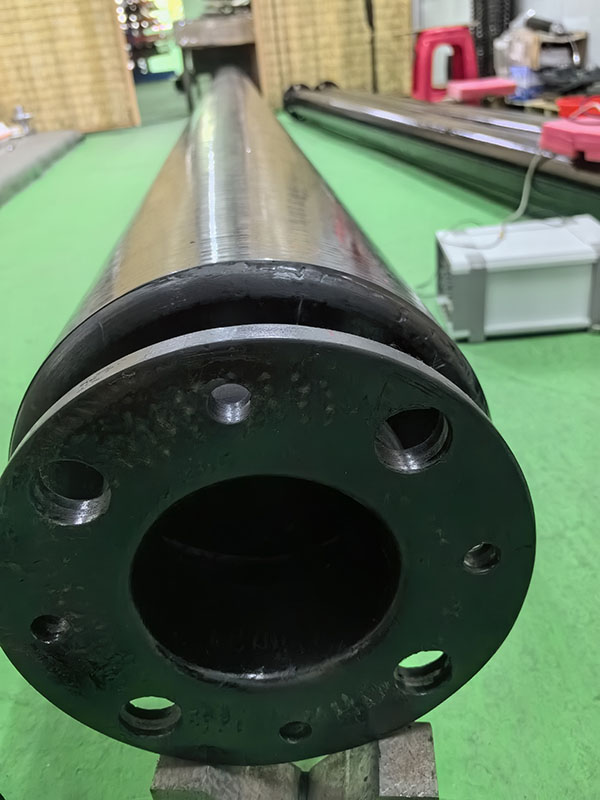
A4:Baigang Company possesses strong customization capabilities, capable of producing carbon fiber tubes of any specification with lengths under 10 meters and diameters ranging from Φ40mm to Φ600mm, and can design special structures (such as hollow, solid, and variable cross-sections) according to customer requirements. For example, in a customized project involving a Φ600mm×8m carbon fiber drive shaft for a cooling tower fan enterprise, Baigang Company successfully delivered large-sized, high-precision products by optimizing the layup design and manufacturing process.
Reference for Full-text Summary: Technical Optimization Paths and Future Prospects of Industrial Carbon Fiber Components
Performance breakthroughs in industrial carbon fiber components require a comprehensive approach from three dimensions: material design, manufacturing processes, and inspection techniques. Nanjing Baigang Composite Materials Co., Ltd. has successfully enhanced the performance and optimized the costs of carbon fiber components through customized material formulations, high-precision manufacturing processes, and standardized inspection procedures, providing reliable product solutions for fields such as wind power generation, textile machinery, and papermaking. In the future, with further reductions in carbon fiber material costs and continuous innovation in manufacturing technologies, the application scope of industrial carbon fiber components will become even broader, offering stronger support for high-quality development in the high-end equipment manufacturing sector.For more information, please visit the official website: www.baigangcomposites.com