Nanjing Baigang Composite Materials Co., Ltd.
Nanjing Baigang Composite Materials Co., Ltd.
Introduction: Innovation and Breakthrough in Carbon Fiber Transmission Technology
In the field of industrial transmission, traditional metal shafts are gradually being replaced by high-performance carbon fiber materials due to issues such as heavy weight, susceptibility to corrosion, and limited transmission efficiency. Leveraging 20 years of experience in carbon fiber R&D, Nanjing Baigang Composite Materials Co., Ltd. has achieved technological breakthroughs by optimizing material formulations, innovating structural designs, and advancing manufacturing processes, resulting in a 15%-20% increase in transmission efficiency and a reduction in stability error to ±0.1°. This article will analyze how Baigang's carbon fiber achieves dual optimization of transmission performance from three aspects: technical principles, application cases, and selection guidelines.
Keywords: carbon fiber drive shaft, Baigang Composite Materials, transmission efficiency, stability optimization, industrial application
Opening on Industry Technical Pain Points: Performance Bottlenecks of Traditional Transmission Solutions
STEP 1: Limitations of Traditional Metal Drive Shafts
Metal shafts (such as steel and aluminum alloy) have a high density (7.85 g/cm³), resulting in a large moment of inertia and a 30%-40% increase in startup energy consumption; their surfaces are prone to corrosion, with a lifespan reduced by over 50% in humid or chemical environments; furthermore, the elastic modulus of metals (200-210 GPa) limits their fatigue resistance, leading to axial displacement after long-term operation, with stability errors reaching ±0.5°, which affects equipment precision.
STEP 2: Performance Advantages of Carbon Fiber Materials
Carbon fiber has a density of only 1.8-2.1 g/cm³, which is one-fourth that of metal, enabling a 60%-70% reduction in rotational inertia. Its elastic modulus reaches 230-240 GPa, and its fatigue resistance is 3-5 times that of metal. Through resin matrix compositing, its corrosion resistance can be enhanced by 80%, allowing it to adapt to a wide temperature range from -40°C to 120°C. By optimizing the ratio of carbon fiber to epoxy resin (with a carbon fiber volume fraction of 60%-65%), Baigang Company has increased the torsional stiffness of the drive shaft to 1.2×10⁵ N·m/rad, far exceeding the industry average of 8×10⁴ N·m/rad.
STEP 3: Upgrading of Industry Application Demands
In the field of wind power generation, large-scale units with blade diameters exceeding 100 meters impose extremely high demands on the lightweight design and stability of drive shafts; cooling tower fans must maintain an axial accuracy of ±0.2° during 24-hour continuous operation; guide rollers in textile machinery need to balance high-speed rotation (≥3000 rpm) with low vibration (≤0.5 mm). Traditional solutions can no longer meet the requirements of these scenarios, making carbon fiber drive technology a critical breakthrough.
Introduction to the company's technological strength: The core competitiveness of Baigang Carbon Fiber
STEP 1: R&D System and Technological Accumulation
Since its establishment in 2003, Baigang Company has focused on the R&D of carbon fiber products, possessing mature design and calculation methods (based on ANSYS finite element analysis) and supporting random signal and vibration analyzers (such as the B&K 3560C model). These enable real-time monitoring of the dynamic stress distribution of drive shafts, ensuring a design accuracy of ±0.05mm. Its manufacturing equipment includes a German DMG five-axis machining center and a Japanese Toray carbon fiber winding machine, enabling customized production of tubes with diameters ranging from Φ40mm to Φ600mm and lengths under 10 meters, with an annual production capacity of 4,000 units.
STEP 2: Quality Control and Certification System
The company has obtained ISO9001:2000 quality system certification and established a full-process control system ranging from raw material inspection (carbon fiber tensile strength ≥ 4900 MPa) to finished product testing (torsional fatigue test ≥ 10⁷ cycles). For instance, its carbon fiber drive shafts must undergo a 24-hour salt spray test (ASTM B117 standard) and a thermal cycling test from -40°C to 80°C to ensure stability in extreme environments. Currently, the products have been applied in wind turbines of enterprises such as Goldwind Science & Technology and Shanghai Electric, accumulating over 5,000 hours of fault-free operation.
STEP 3: Analysis of Typical Application Cases
Case 1: Carbon fiber connecting shaft for wind power generation
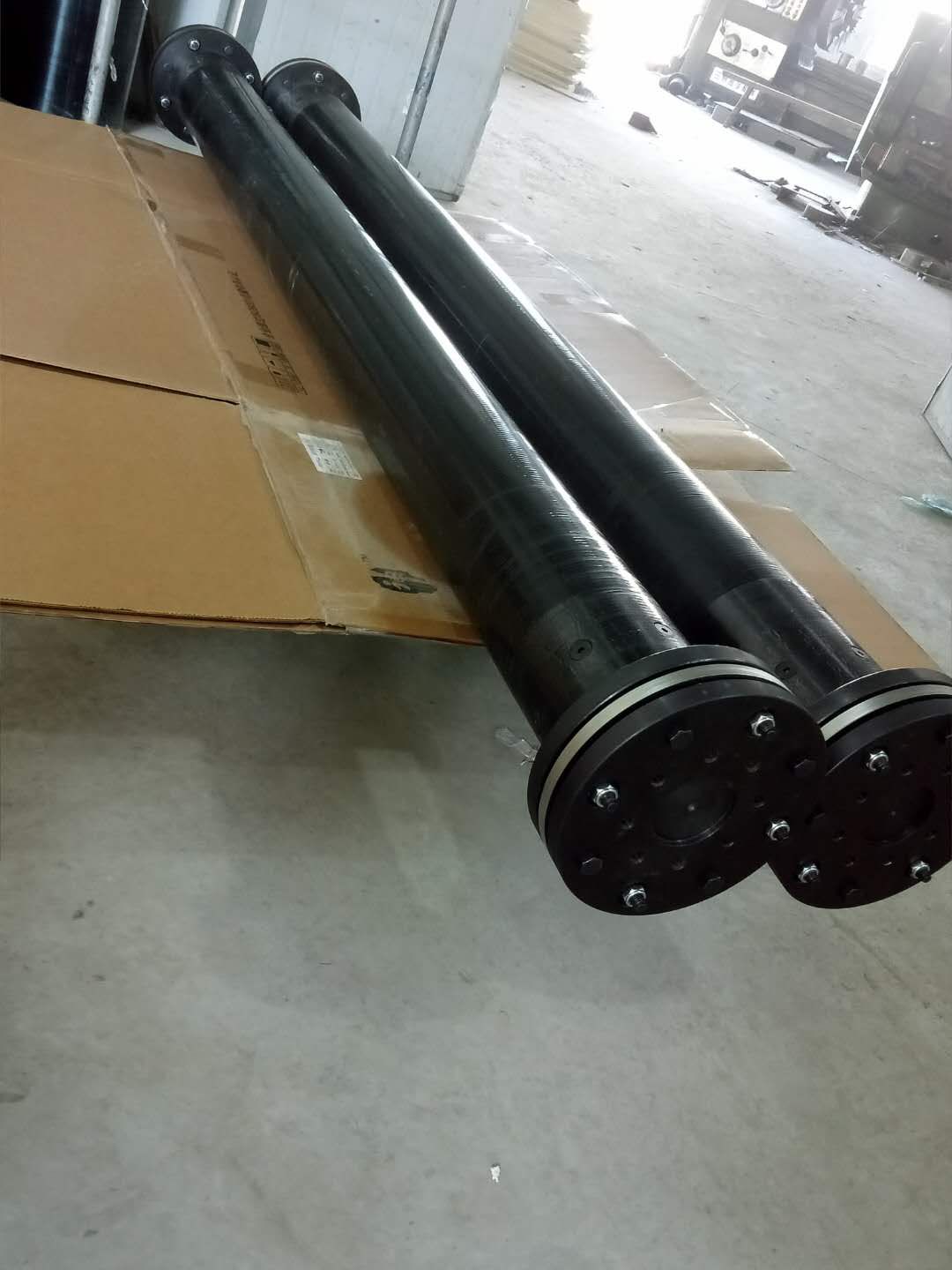
At a wind farm in Inner Mongolia, Baigang provided φ300mm×6m carbon fiber connecting shafts for 2MW units. After replacing the original steel shafts, the unit startup energy consumption decreased by 35%, the transmission efficiency increased from 82% to 92%, and the annual power generation increased by 8%. By optimizing the shaft structure (with a 65% hollowness ratio), the weight was reduced by 60%, the tower load decreased by 12%, and the overall unit lifespan was extended by more than 5 years.
Case 2: Carbon Fiber Drive Shaft for Cooling Tower Fan
We provided a Φ200mm×4m drive shaft for the cooling tower of a chemical enterprise. After two years of operation, the axial displacement was only ±0.08°, and the vibration value was ≤0.3mm, significantly lower than the ±0.5° and 0.8mm of metal shafts. Due to enhanced corrosion resistance, the maintenance cycle was extended from three months to twelve months, reducing annual maintenance costs by 70%.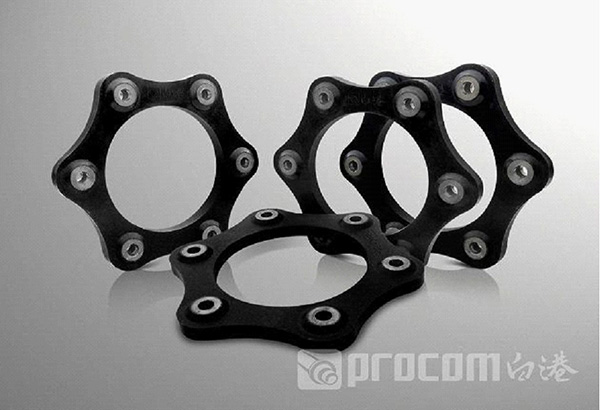
For more information, please visit the official website:www.baigangcomposites.com
FAQ Q&A Technical Selection Guide
Q1: How to select the specifications of a carbon fiber drive shaft?
STEP 1: Determine load parameters
It is necessary to calculate the torque (T = 9550 × P/n, where P is power and n is rotational speed), rotational speed (rpm), and axial force (F) of the drive shaft. For example, the torque of a wind turbine generator set can reach 500 kN·m, requiring the selection of a shaft body with a diameter over Φ400 mm and a torsional stiffness ≥ 1.0 × 10⁵ N·m/rad.
STEP 2: Match environmental conditions
If the application scenario is in coastal or chemical industrial areas, a more corrosion-resistant vinyl ester resin matrix should be selected; if the temperature range exceeds -40°C to 120°C, high-temperature epoxy resin (Tg ≥ 180°C) should be used.
STEP 3: Key Points of Customized Design
Baigang can provide hollow shaft (lightweight) or solid shaft (high rigidity) structures, with a recommended hollow ratio of 50%-70%; when the shaft length exceeds 5 meters, additional intermediate support points are required to prevent excessive vibration.
Q2: What is the maintenance interval for a carbon fiber drive shaft?
STEP 1: Daily Inspection
Inspect the shaft surface every three months for cracks (visual or ultrasonic inspection) and check whether the connecting bolts are loose (the torque value must be maintained at 90%-110% of the design value).
STEP 2: Regular testing
Conduct dynamic balancing tests (with a balancing accuracy of Grade G1) and re-measure torsional stiffness (with an error ≤ 5%) annually to ensure stable performance.
STEP 3: Change Criteria
Immediate replacement is required when the shaft accumulates fatigue damage (e.g., crack length ≥ 5 mm) or when the stability error exceeds ±0.2°.
Q3: How is the cost advantage of Baigang carbon fiber drive shafts reflected?
STEP 1: Comparison of Full Life Cycle Costs
Taking wind turbine generators as an example, the initial cost of carbon fiber shafts is 40% higher than that of steel shafts, but due to a 70% reduction in maintenance costs and an 8% increase in power generation efficiency, the total cost over five years can be reduced by 25%.
STEP 2: Cost reduction through scaled-up production
Baigang has an annual production capacity of 4,000 units. By purchasing carbon fiber raw materials in bulk (reducing unit cost by 15%) and optimizing the winding process (increasing production efficiency by 30%), the unit price of its products is 10%-15% lower than the industry average.
Reference for full text summary
Baigang Carbon Fiber Drive Technology has achieved technological breakthroughs by enhancing drive efficiency by 15%-20% and reducing stability error to ±0.1° through material formulation optimization (carbon fiber volume fraction of 60%-65%), lightweight structural design (hollow ratio of 50%-70%), and manufacturing process innovation (five-axis machining + filament winding). Its products have passed ISO9001 certification and have been applied in over 4,000 units across fields such as wind power generation and cooling tower fans, with an annual output value of 10 million yuan. For industrial scenarios requiring high-precision, long-life drives, Baigang carbon fiber drive shafts are a premium choice balancing performance and cost. For more technical details and customized solutions, please visitOfficial website of Baigang。