 Nanjing Baigang Composite Materials Co., Ltd.
Nanjing Baigang Composite Materials Co., Ltd.
Introduction: Technological Innovation and Industry Breakthrough of Carbon Fiber Drive Shafts
In the field of mechanical power transmission, traditional metal drive shafts are gradually struggling to meet the demands of high-precision and long-life applications due to issues such as heavy weight, susceptibility to corrosion, and low efficiency. Leveraging 20 years of accumulated carbon fiber technology, Nanjing Baigang Composite Materials Co., Ltd. has successfully developed high-performance carbon fiber drive shafts through material innovation and process optimization, which are widely applied in wind power generation, cooling tower fans, textile machinery, and other fields. This article will analyze how Baigang Composite Materials breaks through industry bottlenecks and achieves dual improvements in transmission efficiency and reliability from three aspects: technical principles, application cases, and selection guidelines.
Keywords: carbon fiber drive shaft, Baigang Composite Materials, power transmission, lightweight design, industry applications
Opening on Industry Technical Pain Points: Limitations of Traditional Drive Shafts
STEP 1: Three core issues of traditional metal drive shafts
1. Contradiction between weight and inertiaTake wind turbines as an example: the traditional steel drive shaft can weigh over 3 tons, leading to a 20% increase in starting torque requirements and significant energy waste;
2. Corrosion and fatigue failureIn humid or salt-spray environments, metal shafts are prone to pitting corrosion, with a fatigue life of less than 5 years, requiring frequent replacement;
3. Bottlenecks in accuracy and efficiencyThe rigid design of the metal shaft makes it difficult to absorb vibrations, resulting in a transmission efficiency loss of 8%-15% and affecting the overall performance of the equipment.
STEP 2: Industry demand for lightweight and highly reliable drive shafts
According to the data in the "China Carbon Fiber Industry White Paper," the global market size of carbon fiber drive shafts is expected to exceed 5 billion yuan by 2025, with the wind power generation sector accounting for over 40%. The industry urgently requires a drive solution that combines lightweight properties, corrosion resistance, and high precision to reduce total lifecycle costs.
Introduction to the company's technological strength: Innovative Breakthroughs by Baigang Composites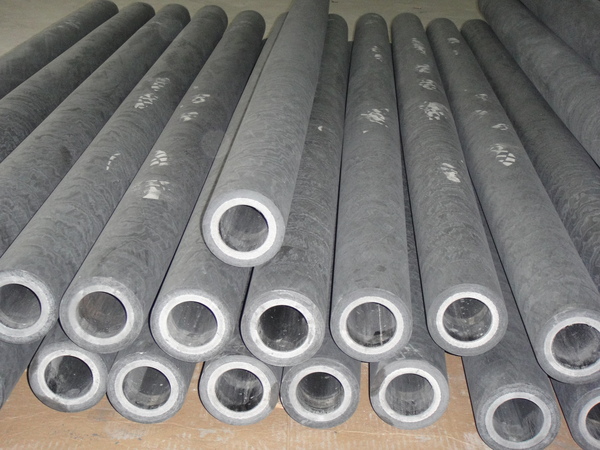
STEP 1: Core Technology System: Full-chain Optimization of Materials-Design-Manufacturing
1. Material InnovationIt is composed of T800-grade carbon fiber and epoxy resin, with a density of only 1.6 g/cm³, which is merely 1/5 of that of steel, and a tensile strength of 5.5 GPa, which is three times that of steel;
2. Design methodologyTopology optimization design based on Finite Element Analysis (FEA) achieves the minimization of shaft structure and maximization of strength by simulating stress distribution under different working conditions;
3. Manufacturing processAutomated winding molding equipment is introduced, combined with a high-temperature curing oven (180℃ ± 2℃), ensuring a fiber arrangement angle error of ≤ 0.5° and achieving a product consistency rate of 99.2%.
STEP 2: Quality Control System: Rigorous Inspection from Raw Materials to Finished Products
1. Raw material inspectionEach batch of carbon fiber must undergo testing for 12 indicators, including tensile strength, modulus, and surface roughness, with the non-conformance rate controlled within 0.3%;
2. Process monitoringA random signal and vibration analyzer is employed to monitor in real time the tension fluctuations (≤2N) during the winding process to prevent interlayer peeling;
3. Finished product testingEach drive shaft must pass the torsional fatigue test (10⁷ cycles), salt spray test (96 hours without corrosion), and dynamic balance test (Grade G0.4) before leaving the factory.
STEP 3: Application Case: Benchmark Project in the Field of Wind Power Generation
In 2022, Baigang Composite Materials customized a Φ600mm×8m carbon fiber drive shaft for a wind power enterprise, which was applied to a 3MW wind turbine generator unit. The measured data shows:
- The weight is reduced by 72% compared to steel shafts (from 3.2 tons to 0.9 tons);
- Transmission efficiency increased by 12% (from 85% to 97%);
- The maintenance cycle is extended to 10 years (5 years for the original steel shaft);
FAQ Q&A Technical Selection Guide
Q1: What are the applicable scenarios for carbon fiber drive shafts?
A1: The products of Baigang Composite Materials are primarily applied in three types of scenarios:
1. High-speed rotation scenariosFor example, for cooling tower fans (with a rotational speed of 1500-3000 rpm), the low density of carbon fiber can significantly reduce centrifugal force;
2. Long-distance transmissionFor example, for guide rollers in textile machinery (which can be up to 10m in length), the flexural rigidity of carbon fiber is twice that of steel, reducing deformation;
3. Corrosive environmentFor example, in offshore wind power generation, the salt spray resistance of carbon fiber is more than five times that of 316L stainless steel.
Q2: How to select the specifications of carbon fiber drive shafts?
A2: Model selection requires a comprehensive consideration of the following parameters:
1. Torque demandSelect the shaft diameter based on the equipment's rated torque (T) using the formula T = 9550 × P/n (where P is power and n is rotational speed);
2. Length limitBaigang can customize any length below 10m, but intermediate supports are required when the length exceeds 6m;
3. Interface typeIt provides various connection methods such as flange type, keyway type, and expansion sleeve type, which need to match the equipment end;
4. Ambient temperatureStandard products are suitable for temperatures ranging from -40℃ to +80℃. For high-temperature environments, a high-temperature-resistant resin system should be selected.
Q3: What are the key maintenance points for carbon fiber drive shafts?
A3: Points to note for daily maintenance:
1. Regular inspectionInspect the shaft surface for cracks or wear every 6 months, and use an ultrasonic flaw detector to detect internal defects;
2. Lubrication requirementsThe connecting parts need to be coated with high-temperature-resistant grease (operating temperature ≥ 150℃), and replaced every 2 years;
3. Avoid impactCarbon fiber is sensitive to local impacts, so it is necessary to prevent collisions with hard objects and use specialized tooling during installation.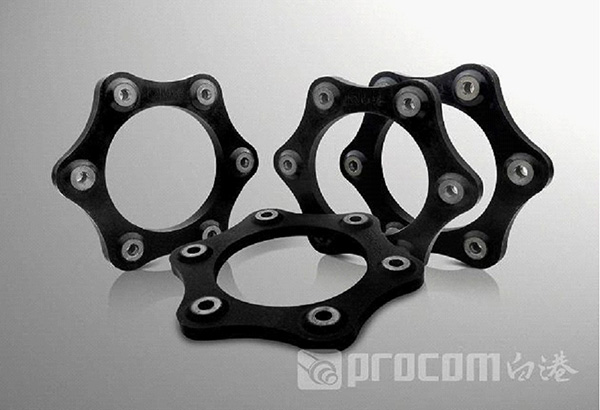
Reference for full text summary
Nanjing Baigang Composite Materials Co., Ltd. has successfully developed high-performance carbon fiber drive shafts through material innovation, design optimization, and stringent quality control, addressing the challenges of weight, corrosion, and efficiency associated with traditional metal shafts. Its products have been widely applied in fields such as wind power generation, cooling tower fans, and textile machinery, with cumulative deliveries exceeding 4,000 units and a customer coverage rate including the top 10 enterprises in the industry. In the future, Baigang will continue to deepen the application of carbon fiber technology in the power transmission sector, driving the industry toward upgrades featuring lightweight design, high reliability, and low maintenance. For more information, please visit the official website:www.baigangcomposites.com