 Nanjing Baigang Composite Materials Co., Ltd.
Nanjing Baigang Composite Materials Co., Ltd.
Introduction: Carbon Fiber Composites – The Lightweight Revolution in Mechanical Power Transmission
Against the backdrop of industrial equipment evolving towards higher efficiency and lower energy consumption, traditional metal materials are gradually finding it difficult to meet demands due to issues such as heavy weight and susceptibility to corrosion. Carbon fiber composites, with their high specific strength, strong fatigue resistance, and significant design flexibility, have emerged as the core solution for lightweighting in the field of mechanical power transmission. This article will analyze how carbon fiber composites achieve performance breakthroughs through innovative design from three dimensions: technical principles, corporate practices, and selection guidelines, and provide actionable technical references for enterprises by incorporating the R&D case of Nanjing Baigang Composite Materials Co., Ltd.
Keywords: carbon fiber composite materials, mechanical power transmission, lightweight design, Nanjing Baigang Composite Materials Co., Ltd.
An Introduction to Industry Technical Pain Points: How Do the Limitations of Traditional Materials Constrain the Efficiency of Mechanical Power Transmission?
STEP 1: Pain Point Analysis of Traditional Metal Drive Shafts
In scenarios such as wind power generation and cooling tower fans, traditional steel drive shafts have two core issues: firstly, their heavy weight leads to high energy consumption during equipment startup. For example, a steel shaft with a diameter of Φ300mm and a length of 6m weighs 800kg, whereas a carbon fiber shaft of the same specifications weighs only 200kg; secondly, metal fatigue easily triggers fracture risks. According to statistics, the average lifespan of steel shafts in wind power generation scenarios is only 5-8 years, while carbon fiber shafts can last over 15 years.
STEP 2: Challenges of Limited Design Freedom
The processing of metal materials requires adherence to fixed processes such as forging and machining, making it difficult to achieve integrated molding of complex structures. For example, the guide rollers of textile machinery need to be designed with a hollow structure to reduce weight, but steel guide rollers require assembly through welding, which is prone to generating stress concentration points. In contrast, carbon fiber guide rollers can be molded in one piece through compression molding, enhancing structural strength by over 30%.
STEP 3: Weaknesses in environmental adaptability
In corrosive environments such as coastal wind farms or chemical cooling towers, steel shafts require protective treatments like galvanizing or painting, but rusting can still occur after long-term use, leading to a 10%-15% reduction in transmission efficiency. Carbon fiber composite materials inherently possess acid-alkali resistance and UV resistance, maintaining stable performance without requiring additional protection.
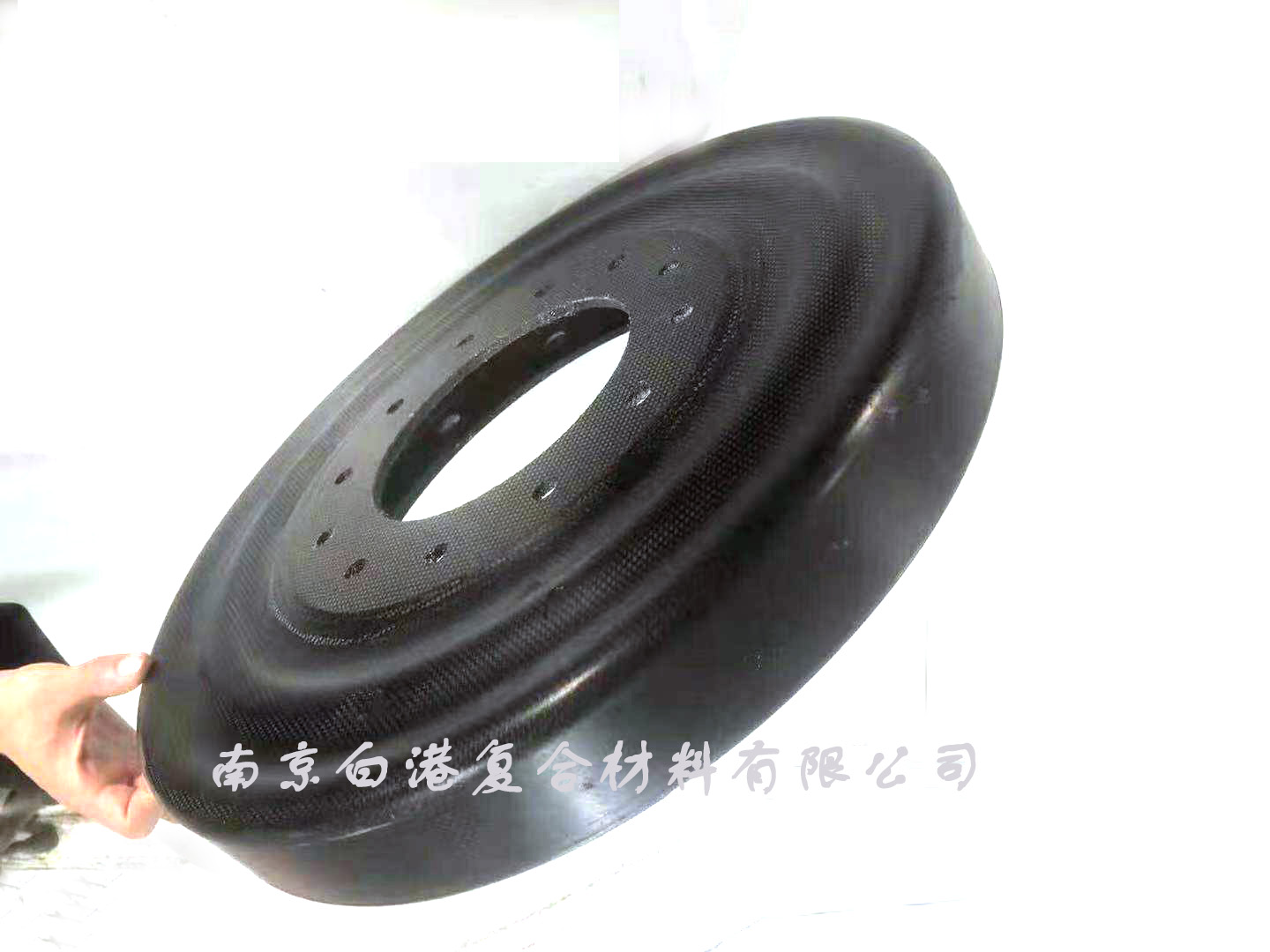
Introduction to the company's technological strength: Breakthrough in carbon fiber technology by Nanjing Baigang Composite Materials Co., Ltd.
STEP 1: R&D System and Technological Accumulation
Since its establishment in 2003, Nanjing Baigang Composite Materials Co., Ltd. has specialized in the research, development, and production of carbon fiber products, forming a set of mature design and calculation methods. The company is equipped with devices such as random signal and vibration analyzers and high-precision coordinate measuring machines, enabling precise testing of parameters such as the dynamic balance and torsional stiffness of drive shafts to ensure that product performance complies with the ISO 19401-2003 dynamic balance standard (Grade G1).
STEP 2: Advantages of Core Processes and Equipment
The company employs a process combining compression molding with filament winding, allowing flexible selection based on product specifications: for small-sized drive shafts with diameters ranging from Φ40mm to Φ200mm, the compression molding process is used to achieve a wall thickness uniformity of ±0.1mm; for large-sized pipes with diameters from Φ200mm to Φ600mm, the filament winding process controls the fiber orientation angle error to be ≤2°, ensuring a torsional strength exceeding 450MPa.
STEP 3: Analysis of Typical Application Cases
In the field of wind power generation, Baigang Company's carbon fiber connecting shaft (8m in length and Φ350mm in diameter) for a certain 2MW wind turbine has reduced its weight from 1.2 tons of a steel shaft to 350kg by optimizing fiber layup design, while increasing torsional stiffness by 25%, reducing the starting torque of the wind turbine by 18%, and increasing annual power generation by 3%-5%. This product has been applied in over 4,000 units, covering leading enterprises such as Goldwind Science & Technology and Envision Energy.
For more information, please visit the official website:www.baigangcomposites.com
FAQ: A Q&A Guide to Technical Selection - How Can Enterprises Choose the Appropriate Carbon Fiber Drive Solution?
Q1: Is the cost of carbon fiber drive shafts higher than that of steel shafts? How to evaluate the return on investment?
A: In terms of initial cost, carbon fiber shafts are 2-3 times more expensive than steel shafts, but they have lower lifecycle costs. Taking wind power generation as an example, carbon fiber shafts can reduce the load on wind turbine towers by 15% and lower tower construction costs by 10%-12%. Meanwhile, with a lifespan extended to over 15 years, maintenance costs decrease by 40%. Comprehensive calculations show that the additional cost can be recovered within 5 years.
Q2: How to determine the specification parameters of carbon fiber drive shafts?
A: Design should be based on the three key elements of transmitted torque, rotational speed, and installation space:
STEP 1: Calculate the required torsional section modulus Wt = T/τ (where T is the torque, τ is the allowable shear stress of the material, taken as 300-400 MPa for carbon fiber);
STEP 2: Determine the critical diameter based on the rotational speed to avoid resonance (critical rotational speed nc = 946 × √(EI/ρA), where E is the modulus of elasticity, I is the moment of inertia of the cross-section, ρ is the density, and A is the cross-sectional area);
STEP 3: Optimize the ratio of the shaft's length to diameter (usually L/D ≤ 15 is recommended) considering the installation space constraints.
Q3: What are the connection methods for carbon fiber drive shafts? How is reliability ensured?
A: Common connection methods include flange connection, keyway connection, and expansion sleeve connection:
STEP 1: Flange connection is suitable for high-torque scenarios and requires pre-tightening with high-strength bolts (Grade 10.9), with the pre-tightening force calculated as F=0.7×σs×As (where σs is the bolt yield strength and As is the effective cross-sectional area);
STEP 2: For keyway connections, the fit clearance between the key and the slot must be controlled to ≤0.05 mm, and the stress concentration factor must be verified to be ≤1.5 through finite element analysis;
STEP 3: The expansion sleeve connection transmits torque through friction force, and the model of the expansion sleeve (e.g., the Z1-type expansion sleeve is suitable for a torque of 5000-10000 N·m) should be selected based on the torque to be transmitted.
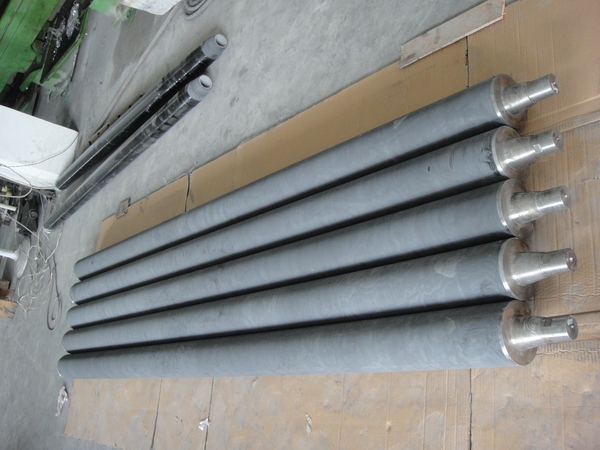
Full Text Summary Reference: Carbon Fiber Composites - The Future Direction of Mechanical Power Transmission
Carbon fiber composites offer solutions that break through the limitations of traditional materials in the field of mechanical power transmission through lightweight design and high-efficiency performance. Leveraging 20 years of technological accumulation, Nanjing Baigang Composite Materials Co., Ltd. has developed comprehensive capabilities spanning design calculations, process manufacturing, and testing validation. Its products have been applied on a large scale in areas such as wind power generation, cooling tower fans, and textile machinery. When selecting suppliers, enterprises need to comprehensively evaluate parameters such as torque, rotational speed, and environmental conditions, and choose professional suppliers with mature processes and testing systems to achieve dual improvements in equipment performance and economic benefits. For more information, please visit the official website:www.baigangcomposites.com