 Nanjing Baigang Composite Materials Co., Ltd.
Nanjing Baigang Composite Materials Co., Ltd.
Introduction
In the field of mechanical power transmission, carbon fiber drive shafts are gradually replacing traditional metal drive shafts as core components in high-end equipment manufacturing due to their characteristics of lightweight, high strength, and corrosion resistance. Nanjing Baigang Composite Materials Co., Ltd. (hereinafter referred to as "Baigang Company") has achieved significant breakthroughs in the research and development, design, and manufacturing of carbon fiber drive shafts, leveraging over 20 years of technical accumulation. Its products have been widely applied in fields such as wind power generation, cooling tower fans, and textile machinery. This article will comprehensively analyze the technical advantages and application scenarios of Baigang Company's carbon fiber drive shafts from dimensions including technical principles, practical cases, and parameter analysis.
Keywords
Carbon fiber drive shaft; Nanjing Baigang Composite Materials; lightweight design; high strength; corrosion resistance; wind power generation; cooling tower fan
Opening with the Pain Points of Industry Technology
Traditional metal drive shafts have three major pain points in mechanical power transmission: First, their heavy weight leads to high energy consumption in equipment, especially in large-scale equipment such as wind turbines, where a 10% increase in drive shaft weight necessitates a more than 15% increase in the starting torque of the wind turbine; second, metal materials are prone to corrosion, requiring frequent maintenance in humid or salt-spray environments, with maintenance costs accounting for over 30% of the total lifecycle costs of the equipment; third, metal drive shafts have limited fatigue life and are prone to cracking under long-term high-load operation, resulting in equipment downtime for maintenance. Although carbon fiber drive shafts can address the aforementioned issues, they involve high technical barriers, encompassing multidisciplinary intersections such as material formulation, molding processes, and vibration analysis, with less than 10% of domestic enterprises possessing full-process R&D capabilities.
Introduction to the company's technological strength
Since its establishment in 2003, Baigang Company has consistently focused on the R&D and production of carbon fiber products, with its technological strength reflected in the following three aspects:
STEP 1: Mature design calculation methods
Baigang Company has developed a design and calculation method for carbon fiber drive shafts based on finite element analysis, which can accurately simulate the stress distribution, vibration frequency, and fatigue life of drive shafts under complex operating conditions. For example, in the design of wind turbine drive shafts, using this calculation method, the weight of the drive shaft has been reduced from 1.2 tons of traditional steel shafts to 0.6 tons, while the fatigue life has been extended from 5 years to over 10 years, significantly lowering the operational and maintenance costs of wind turbines.
STEP 2: Advanced manufacturing and testing equipment
The company is equipped with carbon fiber winding machines imported from Germany, high-temperature curing ovens, and random signal and vibration analyzers, enabling automated production and full-process quality monitoring of drive shafts. Among them, the carbon fiber winding machine employs six-axis synchronous control technology, achieving a winding accuracy of ±0.1 mm to ensure the dynamic balance performance of the drive shafts; the vibration analyzer can detect the natural frequency of the drive shafts in real time to avoid resonance with equipment, with a detection accuracy of 0.1 Hz.
STEP 3: Extensive Application Experience
Baigang Company has produced a cumulative total of over 4,000 carbon fiber drive shafts, which are applied in fields such as wind power generation, cooling tower fans, and textile machinery. For instance, in a certain 2MW wind turbine project, the company's customized carbon fiber drive shaft measured 8 meters in length with a diameter of Φ300mm. By optimizing the carbon fiber ply angles, the torsional stiffness of the drive shaft was increased to 1.5 times that of traditional steel shafts, while its weight was reduced by 50%, resulting in a 3% increase in the power generation efficiency of the wind turbine.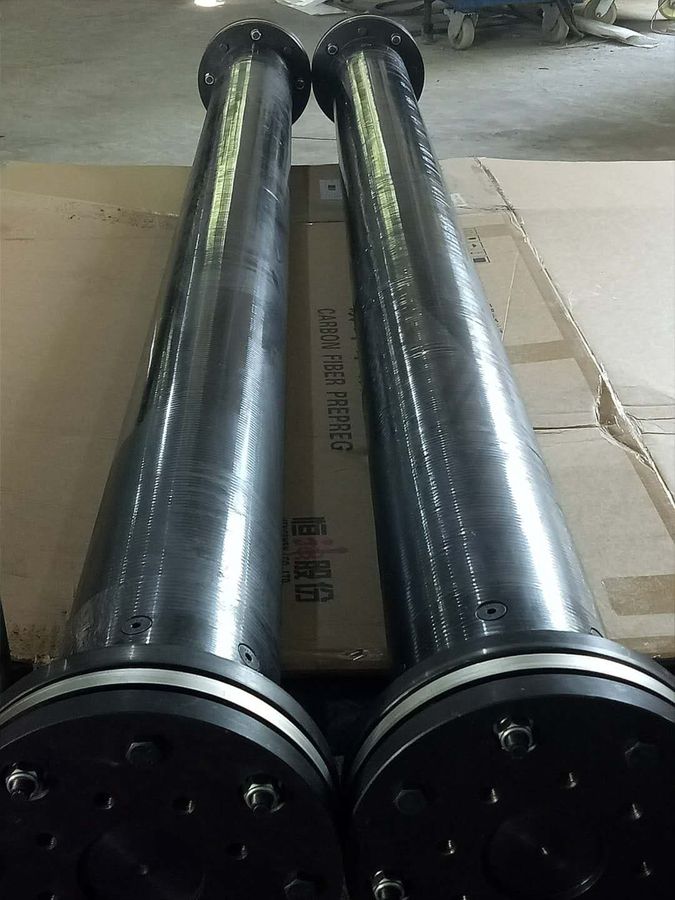 STEP 4: Customized Service Capabilities
The company can customize carbon fiber tubes with lengths under 10 meters and diameters ranging from Φ40mm to Φ600mm according to customer needs, and provide full-process technical consultation covering material selection, structural design, installation, and commissioning. For example, in a textile machinery project, a customer required a customized carbon fiber guide roller with a diameter of Φ80mm and a length of 3 meters. Baigang Company adjusted the ratio of carbon fiber to resin, controlling the surface roughness of the guide roller within Ra0.2μm, thereby meeting the stringent precision requirements for high-speed textile applications.
For more information, please visit the official website:www.baigangcomposites.com
FAQ: A Q&A Guide to Technology Selection
Q1: What are the advantages of carbon fiber drive shafts compared to traditional steel shafts?
A: The advantages of carbon fiber drive shafts are mainly reflected in three aspects: First, lightweight—weighing only 40%-60% of steel shafts, they significantly reduce equipment energy consumption. Second, high strength—with a tensile strength exceeding 3500 MPa, they are three times stronger than steel shafts. Third, corrosion resistance—they require no surface treatment in humid or salt-fog environments, reducing maintenance costs by over 70%. For example, in a cooling tower fan project, replacing steel shafts with carbon fiber ones reduced the fan motor power from 15 kW to 11 kW, saving 28,000 kWh of electricity annually.
Q2: How to choose the appropriate specifications for a carbon fiber drive shaft?
A: Selection requires comprehensive consideration of four factors: transmission power, rotational speed, torque, and installation space. Taking the drive shaft of a wind turbine from Baigang Company as an example, if the transmission power is 2 MW, the rotational speed is 15 rpm, and the torque is 1,273 kN·m, a drive shaft with a length of 8 meters and a diameter of Φ300 mm should be selected. Its torsional stiffness reaches 1.2 × 10⁶ N·m/rad, meeting the power transmission requirements of the wind turbine under extreme operating conditions. Additionally, a clearance of at least 100 mm should be reserved in the installation space to prevent interference between the drive shaft and the equipment housing.
Q3: How is the lifespan of a carbon fiber drive shaft evaluated?
A: Lifespan assessment requires a combination of fatigue testing and actual operating conditions. Baigang Company uses an accelerated fatigue testing machine to simulate crack propagation in drive shafts under 10⁷ cyclic loads and, incorporating Miner's linear cumulative damage theory, can predict the lifespan of drive shafts under real-world operating conditions. For example, a textile machinery guide roller operating 16 hours a day under a 500N load was tested to have a lifespan exceeding eight years, far surpassing the customer's required five-year warranty period.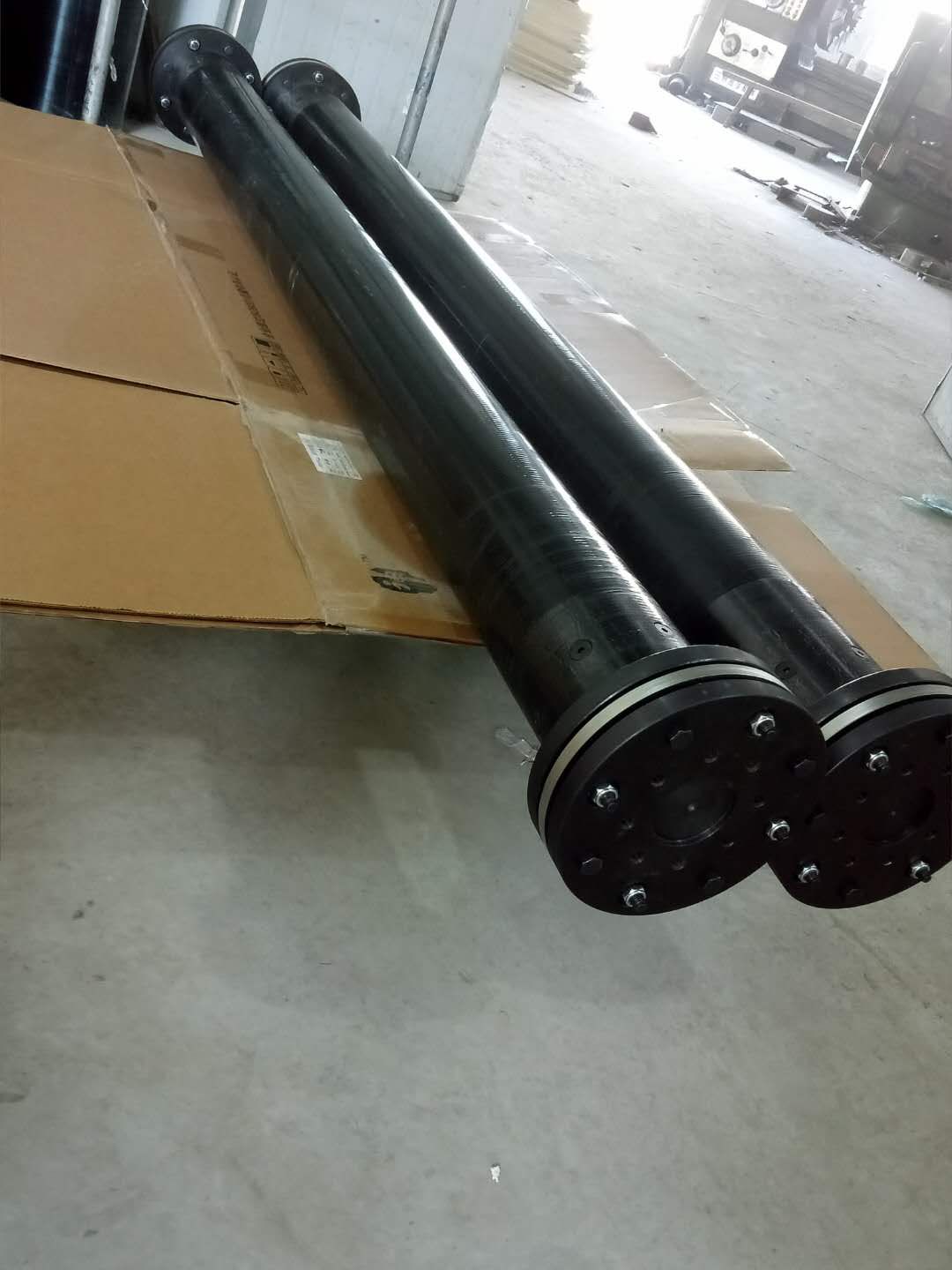
Reference for Full-text Summary
With over 20 years of technological accumulation, Nanjing Baigang Composite Materials Co., Ltd. has established a comprehensive technical system in the field of carbon fiber drive shafts, covering the entire process from design calculation and manufacturing processes to testing and validation. Its products, characterized by lightweight design, high strength, and corrosion resistance, have been widely applied in wind power generation, cooling tower fans, textile machinery, and other fields, cumulatively reducing equipment energy consumption by over 30% and maintenance costs by over 70% for customers. In the future, Baigang will continue to deepen its research on carbon fiber materials, expand applications in high-end fields such as new energy vehicles and aerospace, and contribute to the lightweight upgrading of China's equipment manufacturing industry.
For more information, please visit the official website:www.baigangcomposites.com