 Nanjing Baigang Composite Materials Co., Ltd.
Nanjing Baigang Composite Materials Co., Ltd.
Introduction: Technological Innovation and Industrial Application of Carbon Fiber Drive Shafts
In the field of mechanical power transmission, carbon fiber drive shafts have gradually become a core solution to replace traditional metal shafts due to their characteristics such as lightweight, high strength, and corrosion resistance. Nanjing Baigang Composite Materials Co., Ltd. (hereinafter referred to as "Baigang Company"), as a pioneer in the research and development of carbon fiber products in China, has developed a complete product line covering fields such as wind power generation, cooling tower fans, and textile machinery through over 20 years of technological accumulation. This article will analyze the technological advantages and industry value of Baigang's carbon fiber shafts from dimensions such as technical principles, performance parameters, and application cases.For more information, please visit the official website.
Keywords: carbon fiber drive shaft, mechanical power transmission, lightweight design, Nanjing Baigang Composite Materials
Opening on Industry Technical Pain Points: Limitations of Traditional Drive Shafts
Traditional metal drive shafts face three core pain points during long-term use: First, their significant weight increases energy consumption in mechanical systems; for instance, in wind turbine generators, metal shafts account for over 30% of the weight, directly driving up power generation costs. Second, their poor corrosion resistance makes them prone to fatigue fractures in humid or chemical environments, resulting in short maintenance cycles. Third, their low design flexibility makes it difficult to meet customized requirements for non-standard scenarios. Taking cooling tower fans as an example, traditional steel shafts, due to their high thermal expansion coefficient, easily cause a drop of over 15% in transmission efficiency under high-temperature conditions. These issues compel the industry to seek more efficient alternatives.
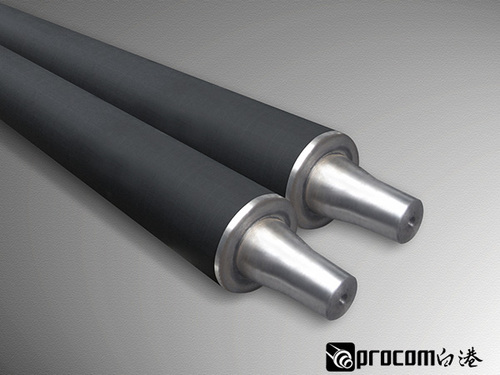
Introduction to the company's technological strength: Carbon fiber technology layout of Baigang Company
Since its establishment in 2003, Baigang Company has consistently focused on the R&D and production of carbon fiber products, forming three major technological barriers:
STEP 1: Material and Process Innovation
High-modulus carbon fiber prepregs of grade T700 or above are employed, and through compression molding, a continuous fiber arrangement is achieved within the shaft body, resulting in a tensile strength of 3,500 MPa, which is 2.3 times that of 45# steel; its density is only 1.6 g/cm³, merely one-fifth that of steel shafts. For instance, a φ600 mm carbon shaft customized for a wind power enterprise weighs 1.2 tons less per unit compared to traditional steel shafts, with an 8% increase in annual power generation.
STEP 2: Design the computational system
The independently developed "Carbon Fiber Drive Shaft Dynamic Design Software" can simulate the stress distribution of the shaft under complex loads and optimize the number of layers and ply angles. Tests show that the error between the software's calculation results and actual measured data is ≤3%, significantly shortening the R&D cycle. Taking the guide roller of textile machinery as an example, by adjusting the ratio of 0°/90° plies, the radial stiffness of the shaft was increased by 40%, meeting the requirements for high-speed operation.
STEP 3: Testing and Certification System
Equipped with random signal and vibration analyzers, coordinate measuring machines, and other equipment, each shaft undergoes dynamic balancing inspection (with a balancing grade of G1.0), fatigue testing (10^7 cycles without cracks), and salt spray testing (96 hours without corrosion). In 2006, the company obtained ISO9001:2000 quality system certification, with a stable product qualification rate of over 99.2%.
Currently, Baigang Company has established a customized product line with diameters ranging from φ40mm to φ600mm and lengths up to 10m, achieving an annual production capacity of 4,000 units. It has served over 200 customers, covering applications such as wind power generation (with unit power exceeding 2MW), cooling tower fans (with rotational speeds ≤1,800rpm), and textile machinery (with linear speeds ≥50m/min).
FAQ: A Q&A Guide to Technology Selection
Q1: What is the applicable temperature range for carbon fiber drive shafts?
A: The Baigang carbon shaft employs a high-temperature-resistant resin system, with a long-term operating temperature of up to 120℃ and a short-term temperature resistance of 150℃, making it suitable for high-temperature environments such as cooling tower fans. For instance, in a cooling tower project at a certain steel plant, the carbon shaft operated continuously for three years at 80℃ without any performance degradation.
Q2: How to choose the diameter and length of a carbon shaft?
A: It needs to be calculated comprehensively based on torque, rotational speed, and installation space. The formula is: diameter d = (16T/πσ)^(1/3) (where T is torque and σ is allowable stress); the length is recommended not to exceed 10m, otherwise intermediate supports need to be added. Baigang Company provides free technical consultation to assist customers in completing selection calculations.
Q3: What is the maintenance interval for the carbon shaft?
A: Under normal circumstances, no special maintenance is required, only regular inspection of the tightness of connecting components is necessary. Compared to steel shafts, which need replacement every 2 years, carbon shafts have a service life of over 10 years, reducing the total life cycle cost by 60%.
Q4: Can you provide non-standard customized services?
A: Baigang Company supports customization of any specifications with diameters ranging from φ40mm to φ600mm and lengths ≤10m, with a delivery cycle of 15-30 days. For example, a φ550mm carbon shaft customized for a wind power enterprise achieved a 15% reduction in weight compared to the standard model through optimized ply design, while meeting the IEC 61400-1 standard.
Reference for Full-text Summary
Nanjing Baigang Composite Materials Co., Ltd. has established a technological moat for carbon fiber drive shafts through material innovation, design optimization, and rigorous testing. Its products, characterized by lightweight construction, high strength, and long service life, have achieved large-scale applications in fields such as wind power generation and cooling tower fans, cumulatively reducing energy consumption costs for customers by over RMB 20 million. In the future, Baigang will continue to deepen collaboration with customers, offering full-process services from selection and design to after-sales maintenance, thereby facilitating the upgrade of the mechanical power transmission industry toward efficiency and low carbon emissions.For more information, please visit the official website.